
Key Highlights
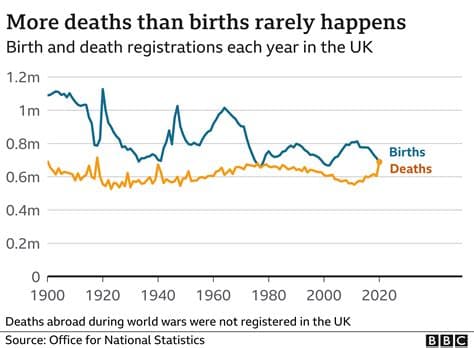
- Demographic Shift:The UK is projected to see more deaths than births annually starting this year.
- Aging Population:Factors include increasing life expectancy and declining birth rates.
- Economic Implications:The trend raises concerns about labor shortages and economic pressures.
Starting this year, the United Kingdom is expected to witness a significant demographic shift, with annual deaths surpassing births. This trend is primarily driven by an aging population and declining birth rates, raising critical questions about the future of the UK's workforce, economy, and social systems.
The anticipated change is attributed to several interrelated factors. First, the UK has seen a consistent increase in life expectancy, which, while a positive development, contributes to a growing elderly population. Simultaneously, the fertility rate has declined, leading to a shrinking younger demographic. As the population ages, the ratio of older individuals to younger generations will continue to rise, resulting in greater demands on healthcare services and pension systems.
Experts warn that without a substantial increase in birth rates or immigration to offset this demographic decline, the UK could face significant labor shortages and economic pressures. The implications of this trend are profound, as a smaller workforce may struggle to support an increasingly dependent elderly population. This situation could lead to heightened strain on public services and social welfare systems.
In response to these challenges, government officials are being urged to implement policies that encourage higher birth rates or attract skilled migrants. Discussions are already underway regarding how to support families and create environments conducive to raising children. Potential measures could include enhanced parental leave, affordable childcare options, and financial incentives for families.
This impending demographic trend underscores the urgency of adapting social and economic policies to ensure that the country can sustainably manage its population dynamics. As the UK enters this new phase, stakeholders across various sectors—including government, healthcare, and education—will need to collaborate in addressing the implications of a shrinking workforce and the need for enhanced support systems for an aging populace.
Overall, the expectation of more deaths than births highlights the critical need for proactive planning to navigate the complexities of future demographic changes in the UK. Policymakers must act swiftly to mitigate the potential adverse effects of this demographic shift, ensuring that the nation remains resilient in the face of these challenges.
Published by Banx Network. This article is part of the Banx decentralized media programme, powered by the BXE token on the XRP Ledger.



