
Key Highlights
- Over 100 clergy members arrested during protest.
- Demonstration aimed at challenging immigration policies.
- Protesters advocate for reform and compassionate treatment.
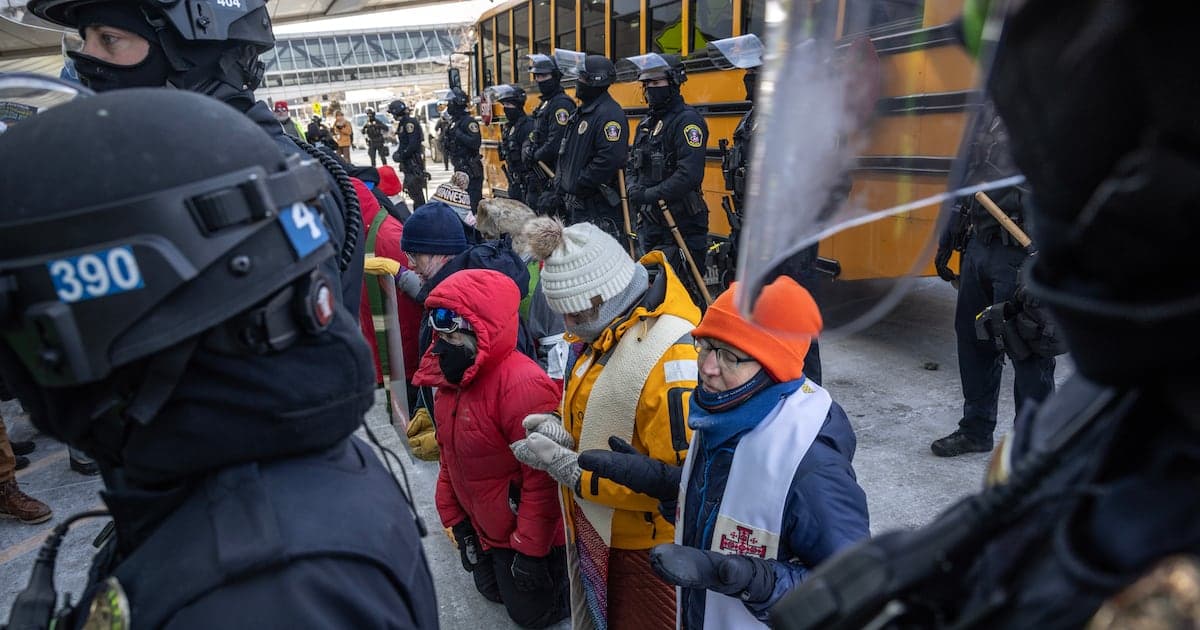
In a powerful show of solidarity, more than 100 clergy members were arrested during an anti-ICE protest in Minnesota. The demonstration aimed to challenge current immigration policies and highlight the impact of enforcement actions on families and communities. This event underscores the ongoing national debate surrounding immigration enforcement and the role of faith leaders in advocating for social justice.
The protest took place outside an ICE facility, where clergy from various faiths gathered to voice their opposition to the agency's practices. Participants argued that these policies contribute to fear and separation within immigrant communities, and they called for reform and compassionate treatment of those affected. The gathering was marked by speeches and chants that emphasized the need for humane immigration policies.
Law enforcement officials stated that the clergy were arrested for obstructing traffic and failing to disperse after warnings. However, protesters maintain that their actions were a moral stand against injustices perpetuated by immigration enforcement and that they were exercising their rights to peaceful assembly. Many participants expressed their belief that their faith compels them to act against what they see as systemic injustices.
Leaders of the protest emphasized the role of faith communities in advocating for social justice, asserting that their faith compels them to protect the rights and dignity of all individuals, regardless of their immigration status. They hope that the visibility of their actions will spur broader conversations about immigration reform and human rights. The clergy's commitment to these issues reflects a growing trend among religious leaders to engage actively in social justice movements.
The mass arrests have drawn national attention, highlighting the ongoing tensions surrounding immigration enforcement in the U.S. and underscoring the commitment of community leaders to advocate for vulnerable populations. As discussions around immigration policy evolve, the role of faith-based advocacy continues to be a significant factor in addressing these critical issues. The protest serves as a reminder of the power of collective action and the moral imperative many feel to stand up for those affected by immigration policies.
As the situation develops, it remains to be seen how these protests will influence public opinion and policy changes regarding immigration enforcement. The involvement of clergy and faith leaders may play a crucial role in shaping the narrative around immigration reform in the coming months.
Published by Banx Network. This article is part of the Banx decentralized media programme, powered by the BXE token on the XRP Ledger.



