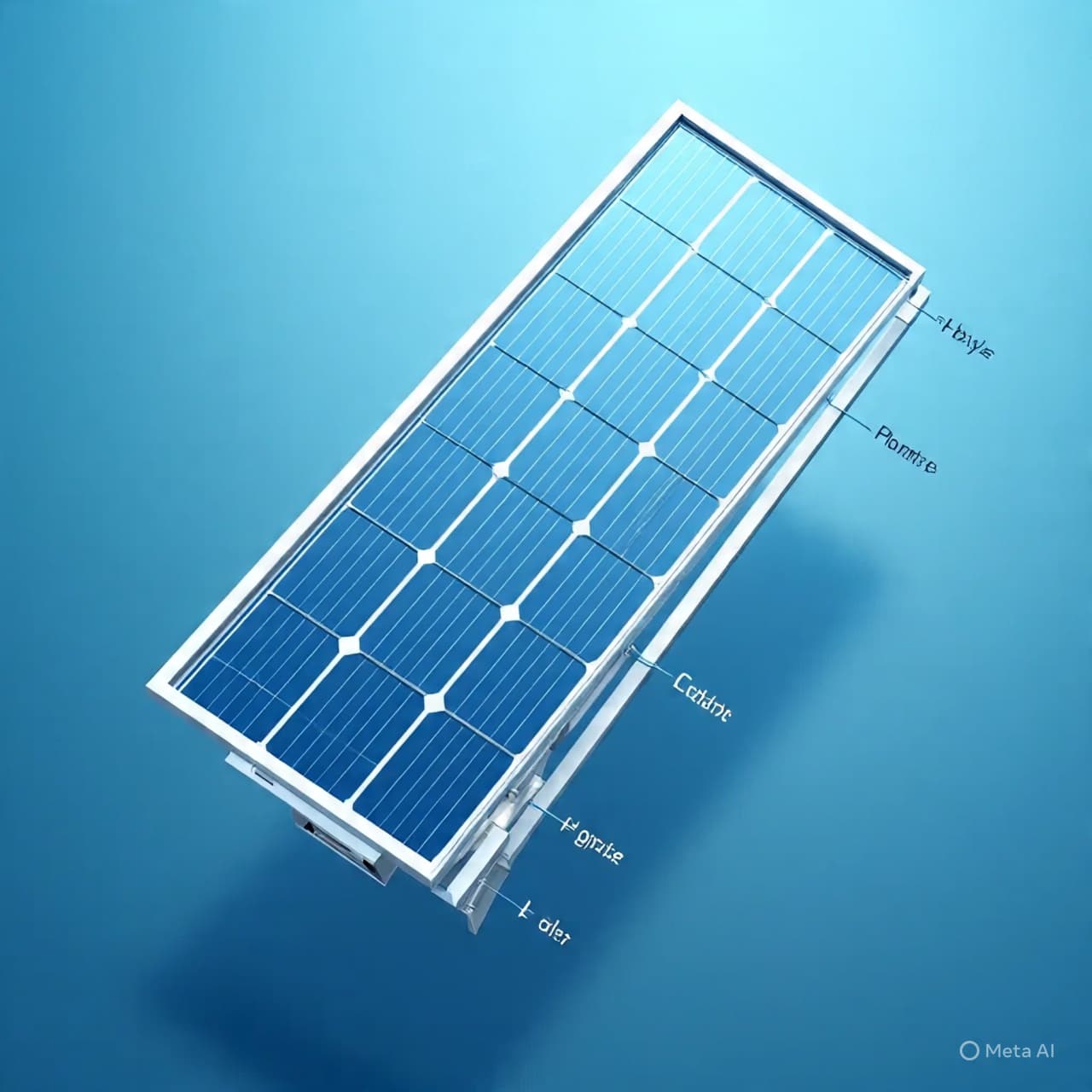
There is a long-standing understanding in science that some limits are less like barriers and more like agreements—thresholds drawn from what has been observed, refined, and repeated. In the world of solar energy, such limits have guided expectations for decades, shaping how efficiently sunlight can be turned into electricity.
And yet, from time to time, a result appears that seems to stretch that agreement, not by overturning it entirely, but by revealing that it was perhaps narrower than the full story.
Recent research in photovoltaics has drawn attention to what has been described as a “130%” breakthrough in solar cell performance. At first glance, the number suggests something beyond the expected—an efficiency exceeding what is typically considered possible. But the meaning of this figure lies in how efficiency is being measured, and what kind of light is being counted.
Traditional solar cells operate within well-defined limits, often described by the Shockley–Queisser boundary, which sets an upper range for how much of the Sun’s energy can be converted into electrical power under standard conditions. These limits assume that each photon of light contributes, at most, a single unit of electrical excitation.
The new findings explore a different pathway. In certain advanced materials and device structures, a single high-energy photon can produce more than one charge carrier—a process known as multiple exciton generation. In effect, the energy carried by light is used more fully, rather than partially lost as heat.
Under specific experimental conditions, this can lead to what appears as efficiencies exceeding 100%—not in total energy output compared to input, but in the number of electrical charges generated per photon absorbed. The “130%” figure refers to this internal quantum efficiency, a measure of how effectively incoming light is converted into usable electrical states within the material.
The distinction is subtle but important. It does not mean that the device produces more energy than it receives, but rather that it uses certain photons more efficiently than traditional models would predict. It is a refinement of process, not a violation of physical law.
These developments are often associated with emerging materials such as quantum dots or specially engineered semiconductors, where the behavior of electrons can be carefully controlled. In such systems, energy pathways that are typically lost can be redirected, extending the usefulness of incoming light.
There remain, however, distances between laboratory observation and widespread application. Stability, scalability, and cost continue to shape how such technologies move from experimental setups to practical use. What is achieved under controlled conditions must be translated into devices that can operate reliably over time and across varying environments.
Still, the direction is notable. It suggests that the boundaries of solar efficiency are not fixed, but responsive to how materials are designed and how energy is managed at the smallest scales. The idea of extracting more from each photon, once theoretical, is becoming increasingly tangible.
Researchers report that advanced solar cell designs can achieve internal efficiencies exceeding 100% by generating multiple charge carriers from single photons. While this does not violate energy conservation, it represents a significant step in improving how solar energy is utilized.
AI Image Disclaimer
These images are AI-generated and intended for conceptual illustration only.
Sources
Nature Energy Science IEEE Spectrum Scientific American MIT Technology Review
Published by Banx Network. This article is part of the Banx decentralized media programme, powered by the BXE token on the XRP Ledger.