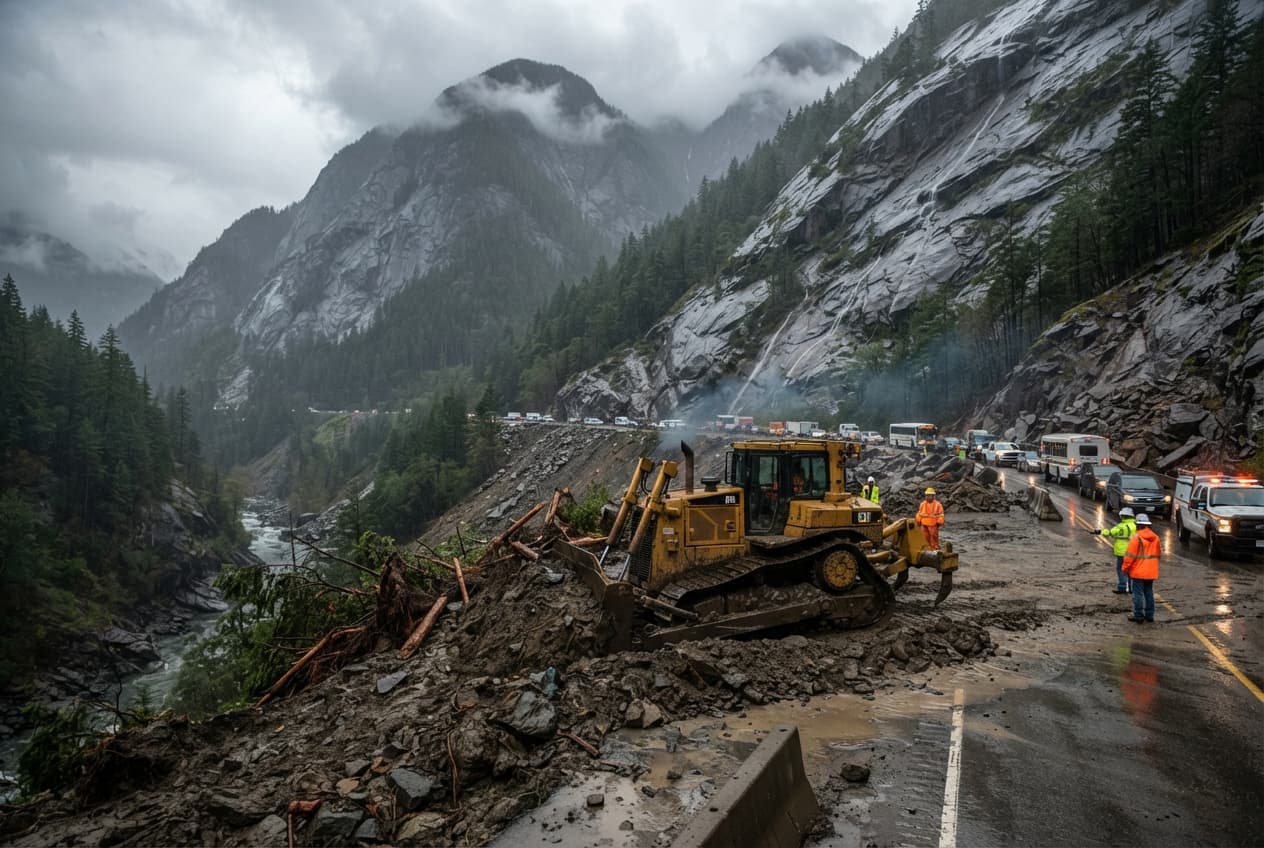
Kathmandu, Nepal—Relentless downpours saturated steep mountain slopes across the Himalayan nation, dislodging massive walls of mud and rock onto primary transit arteries. Emergency response divisions confirmed that at least twenty-two individuals lost their lives in structural collapses and vehicle entrapments.
Torrential precipitation overwhelmed drainage systems in multiple valley settlements beginning late Friday evening. Local police units reported multiple arterial roads blocked by debris fans, cutting off commerce between northern districts and the capital. Heavy equipment operators struggled to reach remote mountain passes due to ongoing secondary slides.
Meteorological departments recorded unprecedented precipitation totals across several central districts within a thirty-six-hour observation window. River gauges approached danger thresholds, threatening low-lying agricultural communities along the southern plains. District administrators ordered precautionary evacuations for riverside hamlets vulnerable to sudden bank erosions.
Transport authorities deployed bulldozers to clear arterial choke points where thousands of commuters remained stranded overnight. Maintenance crews faced falling stones while attempting to restore single-lane access through narrow gorge sections. Bus operators suspended long-distance departures until route safety inspections concluded.
"Weather officials say rains are likely to lash the Himalayan nation until Monday and authorities say they are taking maximum care and precautions to help people affected by the disaster," a regional disaster management spokesperson stated during a press briefing in Kathmandu.
Red Cross volunteers established temporary shelters inside municipal school buildings to accommodate displaced families arriving from hillside hamlets. Medical supplies arrived via utility vehicles to treat minor injuries sustained during hurried nighttime evacuations. Food distribution networks prepared emergency rations for communities isolated by severed bridge connections.
Power distribution grids suffered widespread failures after utility poles tumbled down unstable embankments. Technicians awaited stable weather windows before dispatching repair teams into high-altitude sectors prone to lightning strikes.
Relief distribution remains constrained as continuous downpours impede helicopter flights toward remote mountain settlements cut off by debris.
Published by Banx Network. This article is part of the Banx decentralized media programme, powered by the BXE token on the XRP Ledger.