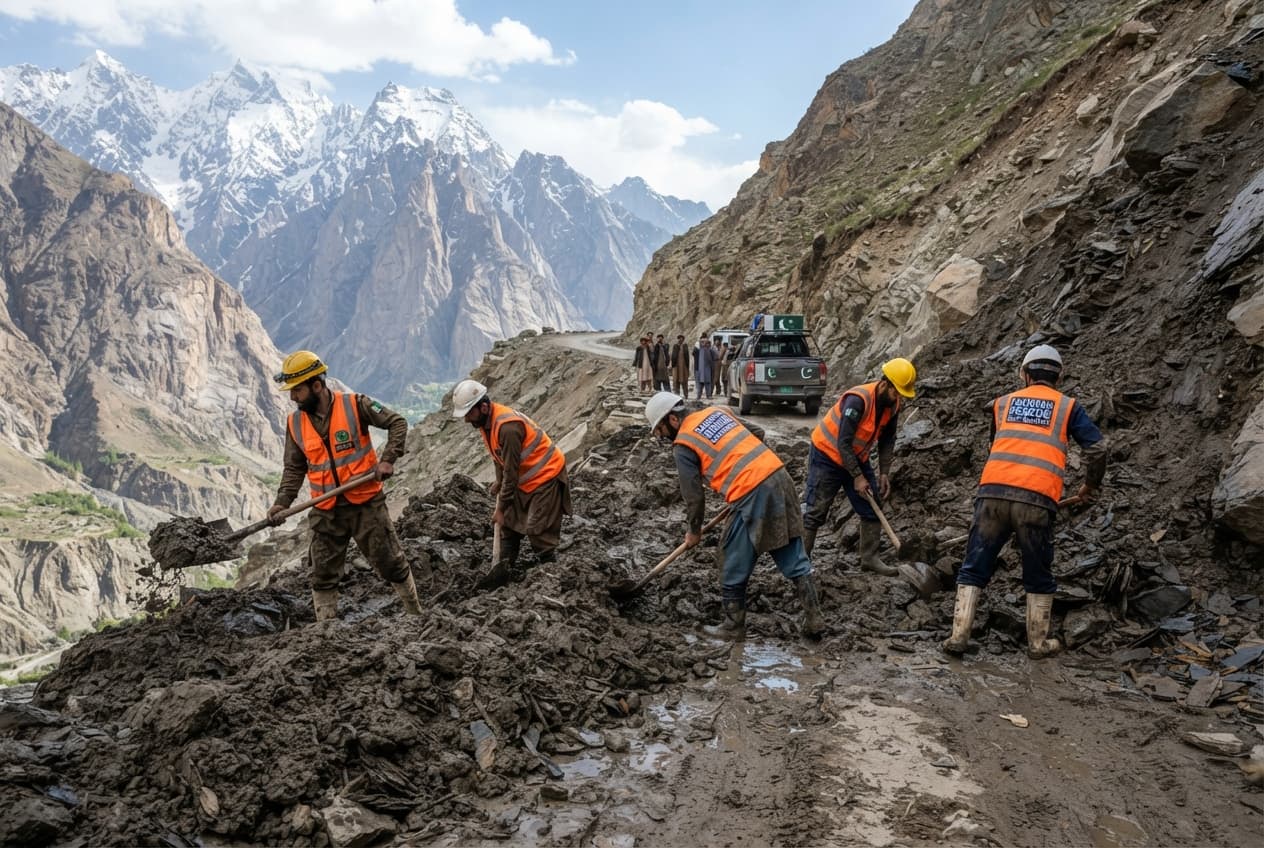
Islamabad, Pakistan—Torrential monsoon downpours triggered a series of massive mountain landslides across Pakistan's mountainous northern districts early Monday morning, burying remote settlements and cutting off critical highway links. Local disaster management units reported that the sudden earth slips swept away multiple residential structures before dawn, trapping families beneath heavy mud and rock debris. Rescue squads deployed tracked vehicles and hand tools to reach isolated valleys where communications remained severed due to downed power lines and damaged transmission towers.
Emergency field hospitals set up in district administrative centers treated dozens of injured survivors presenting with severe trauma and hypothermia from exposure to the unrelenting rain. Provincial authorities confirmed that the death toll had climbed to eleven by midday as search teams pulled bodies from the debris of collapsed masonry houses. Heavy silt deposits blocked major arterial roads connecting mountain passes to the central plains, stalling supply trucks and ambulance convoys trying to reach the disaster zone.
"Continuous downpours have saturated mountain slopes far beyond their stability limits, making every rescue approach a calculated gamble against secondary slides," a regional disaster coordination officer stated at the site.
Meteorological forecasters warned that the active weather system will linger over the northern catchment areas for another forty-eight hours, escalating the risk of flash flooding along swollen river basins. Evacuation orders went out for dozens of downstream hamlets situated near overflowing tributaries and unstable embankment zones. Local administrators requisitioned heavy earth-moving equipment from private construction firms to clear boulders blocking the main northern trade route.
Federal relief packages stalled in transit bottlenecks as civil aviation authorities grounded rescue helicopters due to zero-visibility fog shrouding the higher mountain ridges. Displaced villagers crowded into municipal school buildings converted into temporary relief shelters, facing severe shortages of dry blankets and potable water. Public health teams mobilized mobile clinics to inoculate survivors against waterborne diseases spreading through stagnant pools left by the receding floodwaters.
Engineers inspected bridge foundations along the Karakoram Highway after raging torrents battered concrete piers with floating debris logs. Traffic police enforced total closures across multiple mountain sectors to prevent civilian vehicles from entering active slide zones. Regional authorities braced for further structural failures as saturated hillsides continued to shed massive volumes of wet earth onto lower valley floors.
The federal government convened an emergency cabinet session in the capital to review national disaster response protocols and allocate contingency funds for infrastructure reconstruction. Provincial ministers faced mounting criticism from local communities regarding delayed hazard warnings and inadequate preventative reinforcement along vulnerable mountain slopes. Crews pressed forward with manual digging operations under failing light, racing against predicted evening storms that threaten to nullify progress made on the blocked access routes.
Published by Banx Network. This article is part of the Banx decentralized media programme, powered by the BXE token on the XRP Ledger.