
Key Highlights
- Twelve fatalities reported due to mudslides in northern Pakistan.
- Continuous monsoon rains have caused severe flooding and landslides.
- Rescue operations face challenges from ongoing adverse weather conditions.
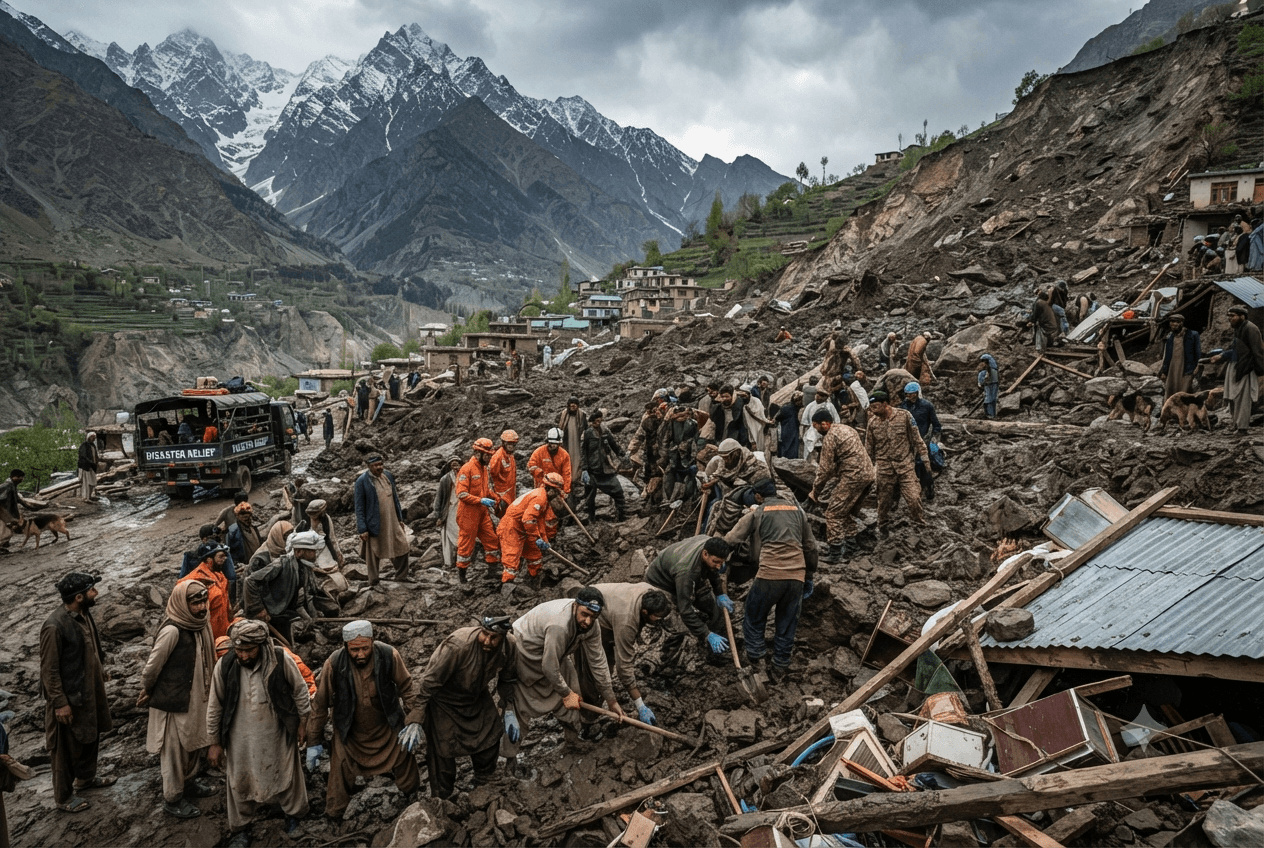
Islamabad, Pakistan—A devastating mudslide struck northern Pakistan just after midnight, burying rural settlements under tons of wet shale and timber. The disaster, triggered by three consecutive days of heavy monsoon rains, resulted in the tragic loss of twelve lives as homes collapsed under the weight of the debris. Local villagers, armed with hand shovels and pickaxes, worked tirelessly in the darkness to dig through the rubble before official rescue teams could arrive.
The relentless downpours had saturated the mountain slopes, pushing geological stability beyond its limits. Flash floods swept through rural roads, uprooting livestock, utility poles, and small commercial structures. Communication links with the affected districts were severed as transmission towers fell into swollen river channels. Emergency helicopters remained grounded at regional airbases due to heavy cloud cover and zero visibility, complicating rescue efforts.
Officials from the National Disaster Management Authority (NDMA) have warned that the ongoing rainfall poses a significant risk of additional landslides. Rescue teams have been attempting to move heavy machinery up the main highway, but secondary mudslides have blocked their access. Medical teams have established makeshift trauma centers at lower elevations to treat patients evacuated by local volunteers, while relief camps are rapidly filling with families displaced from their agricultural homes.
Engineers are working to divert the torrents threatening weakened bridge foundations along the primary northern trade corridor. Commercial transport trucks remain stalled in long queues as highway maintenance crews clear boulders from the roads. Local shopkeepers in nearby towns are salvaging mud-soaked inventory from their flooded storefronts, while power utility technicians are working in the rain to isolate downed distribution lines and prevent electrocutions.
In response to the disaster, provincial administrative offices have authorized emergency funds to support burial operations and provide immediate assistance to affected families. Non-governmental organizations are mobilizing food packs and water purification tablets for distribution in isolated mountain areas. Senior government ministers have convened an emergency meeting to coordinate disaster response efforts across agencies. Public health inspectors are deploying mobile teams to prevent potential outbreaks of cholera and dysentery in stagnant water zones.
Displaced villagers are seeking shelter under plastic tarps stretched across muddy schoolyards, anxiously awaiting food rations. Community elders are coordinating local search efforts to verify the status of families living in remote grazing huts. Meteorological departments are forecasting continued rainfall for the remainder of the week across the upper catchment area, prompting emergency broadcast networks to issue hazard warnings for communities near unstable riverbanks.
By late afternoon, heavy earth-moving equipment finally breached the primary rockslide barrier, opening a narrow single-lane passage. Ambulances carrying critically injured patients began the slow descent toward provincial medical centers under police escort. Structural surveyors have warned that saturated soil foundations pose ongoing risks to hillside settlements in the district. Relief coordinators emphasize that many remote mountain villages remain completely cut off from outside assistance.
Local volunteers continue to search through the mud banks with wooden poles, looking for missing residents reported by neighbors. Utility crews have managed to restore partial generator power to the main district hospital, enabling basic surgical operations. The persistent sound of rainfall echoes across the valley as exhausted rescue workers rotate off their shifts, with authorities bracing for an escalation in seasonal monsoon pressure as weather systems converge from the south.
Published by Banx Network. This article is part of the Banx decentralized media programme, powered by the BXE token on the XRP Ledger.



