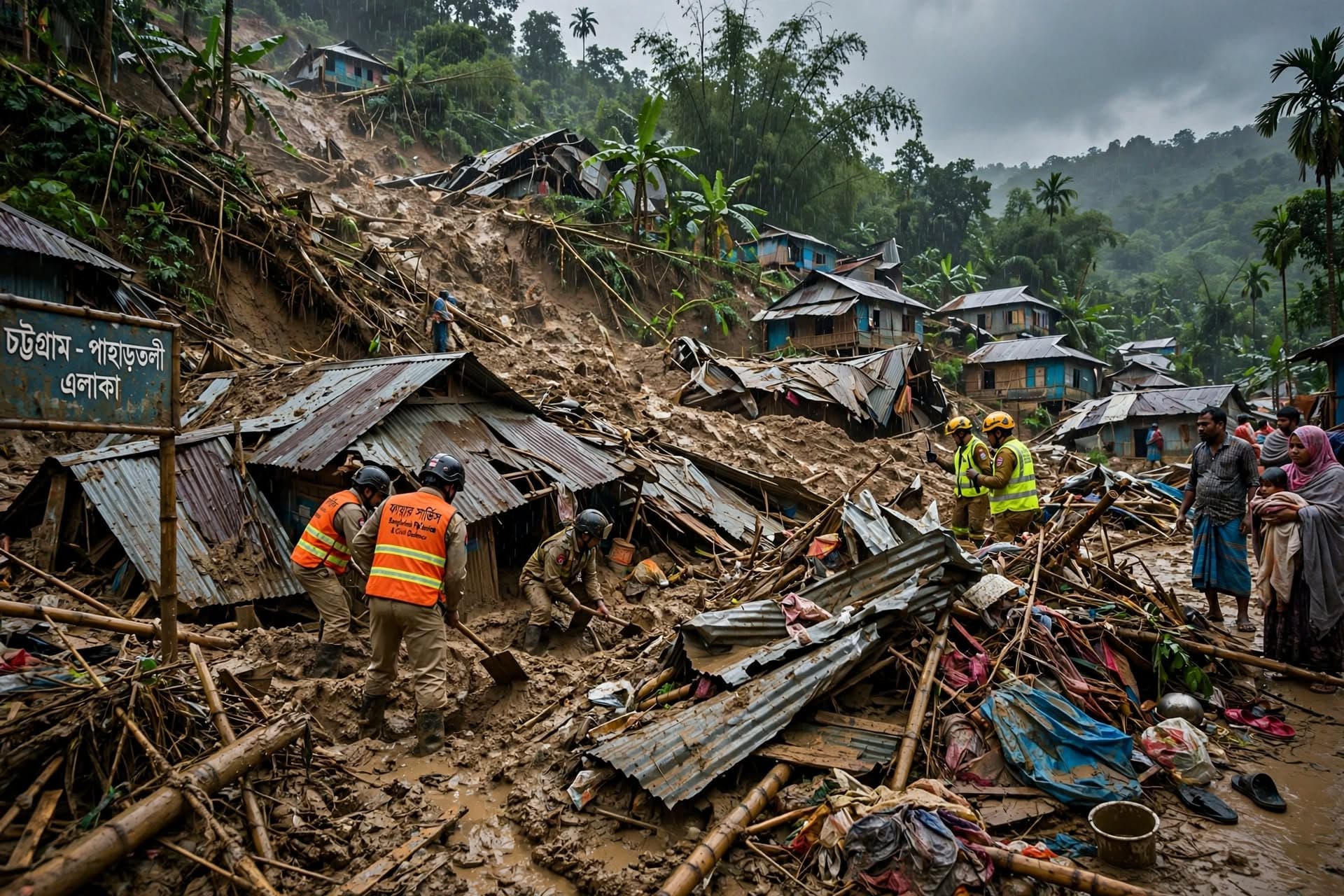
Chittagong, Bangladesh— Water came down the hill at 3 a.m. on October 29, 2026, and it did not stop. Monsoon rains that dumped more than 500 millimeters in three days across southeastern Bangladesh triggered a chain of mudslides that ripped through residential neighborhoods in Chittagong, Rangamati and Bandarban, burying thatched and tin-roof houses where families slept.
The Bangladesh Meteorological Department said light to moderate rain with gusty winds continued into October 29, with heavy pockets over the hill tracts. That matches a pattern from July 2026, when monsoon and upstream runoff left more than one million people affected across seven districts. This time the slides were faster. Hills saturated for days gave way without warning.
In Rangamati, officials said at least six homes were buried in one ward alone. In Chittagong's Bayezid and Khulshi slopes, retaining walls failed. Mud, trees and rocks slid into alleys less than two meters wide. Power lines snapped. The road to Kaptai was blocked in three places. Residents used hands and shovels before fire service teams arrived.
"The mud came like a river, we could not run," said a resident of a hillside settlement in Chittagong, speaking from a shelter. Concern Worldwide, which responded to similar slides that killed more than 135 people in past years, said local teams were again providing shelter and food to displaced families. The government, army, police and civil defense were coordinating rescue.
The friction is familiar. People build on slopes because flat land in Chittagong is expensive. Local officials have warned against cutting hills for housing, but enforcement is weak. Heavy rain turns those cut slopes into chutes. Once one house goes, it takes the next. Dhaka Tribune reporters in previous monsoon events noted telephone and transport links cut for hours.
UNICEF data from the July floods showed 367,341 houses damaged and 1,866 schools damaged. This October slide added to that tally. In Cox's Bazar, monsoon winds earlier in July displaced nearly 16,000 Rohingya in 17 camps. The same weather system that affects the coast now hits the hills.
By the morning of October 30, 2026, the rain eased but the ground stayed unstable. The district administration said four shelters were open in Chittagong city, housing about 800 people. Excavators were clearing the main access road to Rangamati. Families were told not to return to cracked houses on hill edges.
Teams were still listening for voices under the mud in two neighborhoods. The forecast said more thundershowers were possible in the next 24 hours. That kept rescue crews on edge.
Published by Banx Network. This article is part of the Banx decentralized media programme, powered by the BXE token on the XRP Ledger.