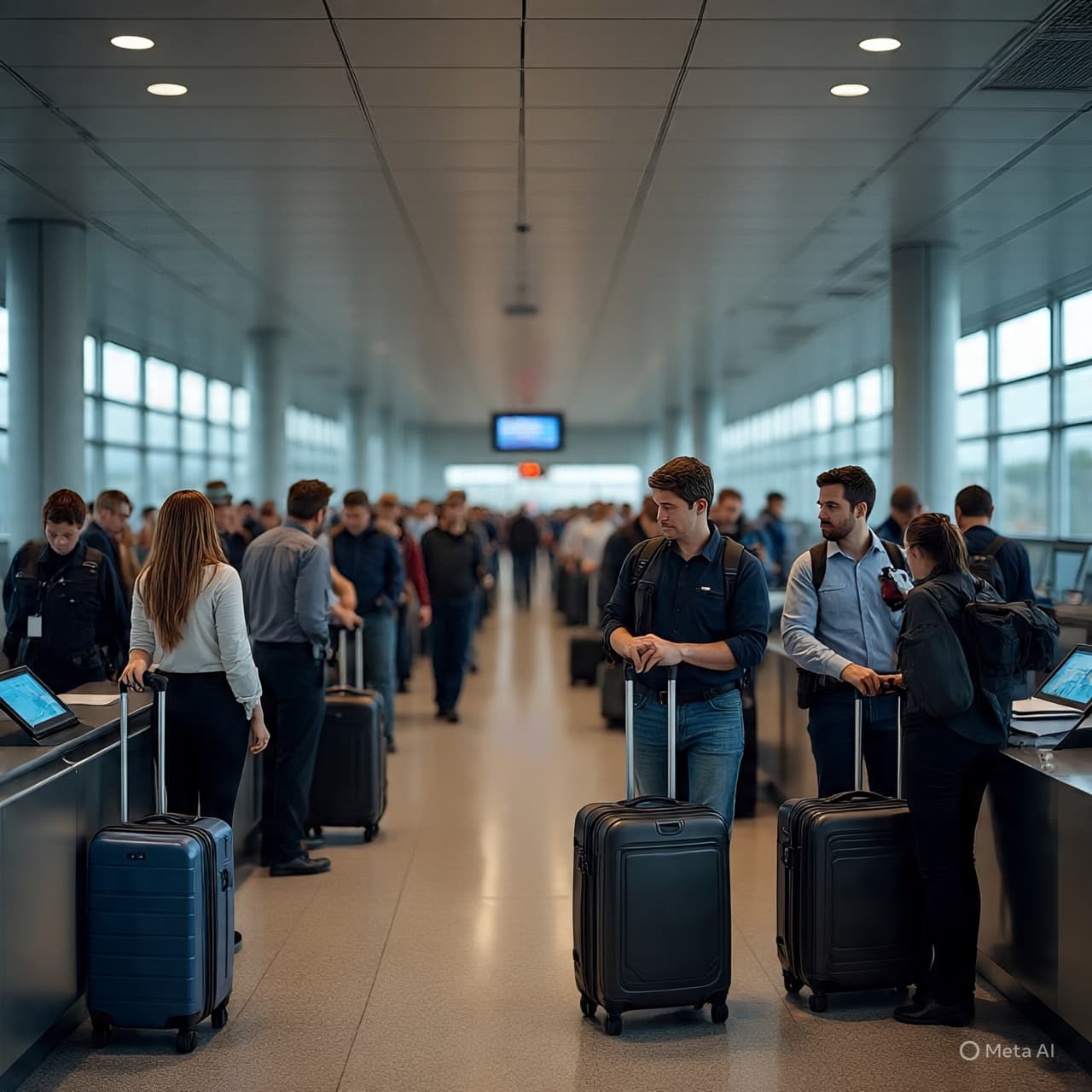
The morning light spills across terminals, gleaming on polished floors and reflecting the restless energy of travelers weaving between gates and coffee stands. Screens flicker with updates, some delayed, some canceled, while families, business commuters, and weary tourists navigate the rhythm of the airport with a mixture of patience and exasperation. Above it all, the hum of announcements and rolling suitcases forms an unintentional symphony of modern life, punctuated by the occasional sigh or hurried step.
In the halls of the U.S. Senate, the cacophony of airports finds its legislative echo. Lawmakers have voted to allocate funding to the Department of Homeland Security, a move intended to stabilize operations at the nation’s busiest hubs and ease the strains that have disrupted flights and rattled travelers across the country. Notably, the allocation explicitly excludes Immigration and Customs Enforcement, a distinction that signals careful calibration between operational logistics and political sensitivities. The measure reflects both urgency and restraint, a balancing act between restoring public confidence and delineating institutional boundaries.
Airport staff, meanwhile, continue to shoulder the human consequences of delays: gate agents navigating irate passengers, security officers managing lines, and baggage handlers racing against the invisible clock of itineraries. Analysts suggest that the funding could facilitate more streamlined security procedures, additional staffing, and technological enhancements designed to prevent bottlenecks and improve passenger flow. Yet, as the Senate debates and appropriates, the lived reality of long waits and disrupted schedules persists, a reminder that policy is only one layer atop the lived experiences of millions moving through the skies.
The vote also carries broader implications for the administration’s priorities. By emphasizing Homeland Security over ICE operations in this instance, senators signal a focus on infrastructure and service delivery rather than enforcement, at least in the immediate term. Travelers may notice smoother lines, shorter delays, and more predictable schedules; policymakers may observe the intricate choreography of oversight, budget allocations, and operational accountability unfolding in real time. The interplay of these forces—human, institutional, and technological—forms a delicate architecture upon which modern mobility rests.
As airports begin to recover, the echoes of this legislative decision linger quietly behind the check-in counters and boarding gates. It is a meditation on coordination, foresight, and the unseen work required to keep the machinery of national and international travel moving. While some frustrations remain, the Senate’s vote represents a step toward restoring rhythm to a system that millions rely upon every day, a reflection of both governance and the human patience that accompanies the hum of daily transit.
AI Image Disclaimer Visuals are AI-generated and serve as conceptual representations.
Sources Reuters CNN The New York Times NBC News Politico
Published by Banx Network. This article is part of the Banx decentralized media programme, powered by the BXE token on the XRP Ledger.