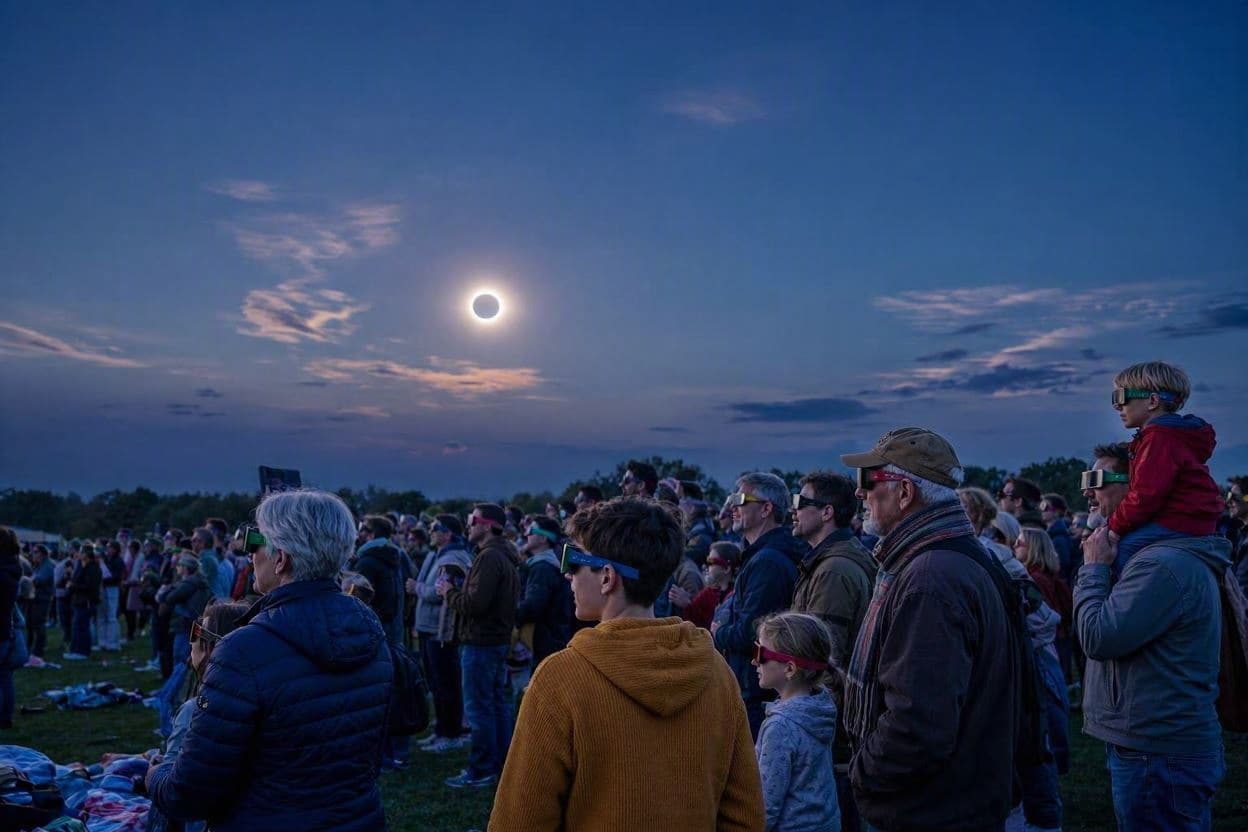
There are moments when the sky itself becomes a stage, drawing millions of eyes upward in shared wonder. Recently, a rare total solar eclipse swept across parts of Europe, transforming day into twilight and offering a breathtaking display of celestial mechanics. This event invites reflection on the universal appeal of astronomy and the joy of experiencing nature’s grandeur. It is a moment where science meets spectacle, and strangers become companions in awe.
From the icy landscapes of Iceland to the sunny coasts of Spain, people donned special glasses and set up cameras to capture the moon’s shadow sweeping across the sun. Preparation meets anticipation. Technology aids wonder.
The eclipse offered a clear view of the solar corona, the sun’s outer atmosphere, glowing like a halo against the darkened sky. For many, it was a once-in-a-lifetime experience, fostering a sense of connection with the cosmos and with each other. Beauty reveals structure. Light hides in shadow.
Scientists also took advantage of the event to conduct research on the sun’s behavior and its impact on Earth’s atmosphere. The data collected will contribute to our understanding of solar physics and space weather. Observation yields knowledge. Science serves curiosity.
Families, friends, and strangers alike shared in the excitement, creating memories that will last a lifetime. The collective applause as sunlight returned echoed the appreciation for the natural world. Shared wonder binds people. Memory preserves joy.
As the moon moved away and normalcy returned, the eclipse served as a reminder of our place in the universe and the beauty that surrounds us. Nature inspires humility. Wonder remains eternal.
A rare total solar eclipse was visible across parts of Europe, attracting millions of viewers and providing valuable scientific data. The event highlighted the enduring fascination with astronomical phenomena. The hope is for continued public engagement with science and nature.
AI Image Disclaimer: Visuals associated with this article are AI-generated to illustrate the themes of astronomy and communal experience.
Sources: Reuters PBS NewsHour European Space Agency
Published by Banx Network. This article is part of the Banx decentralized media programme, powered by the BXE token on the XRP Ledger.