
Key Highlights
- Incident:A single-engine aircraft crash-landed in the Mojave Desert.
- Pilot Condition:The sole occupant sustained severe injuries and was hospitalized.
- Investigation:Federal authorities are investigating the cause of the engine failure.
San Bernardino, United States—Federal aviation investigators are en route to a remote stretch of the Mojave Desert after a single-engine light aircraft suffered an in-flight emergency and performed a hard forced landing. The incident occurred on Monday afternoon, prompting a swift response from local authorities and federal agencies.
The aircraft, identified as a four-seat private passenger plane, was transiting the desert corridor when the pilot radioed air traffic control regarding a sudden loss of oil pressure and subsequent engine failure. The pilot attempted to glide the disabled machine toward an unpaved utility access road, but the situation quickly deteriorated.
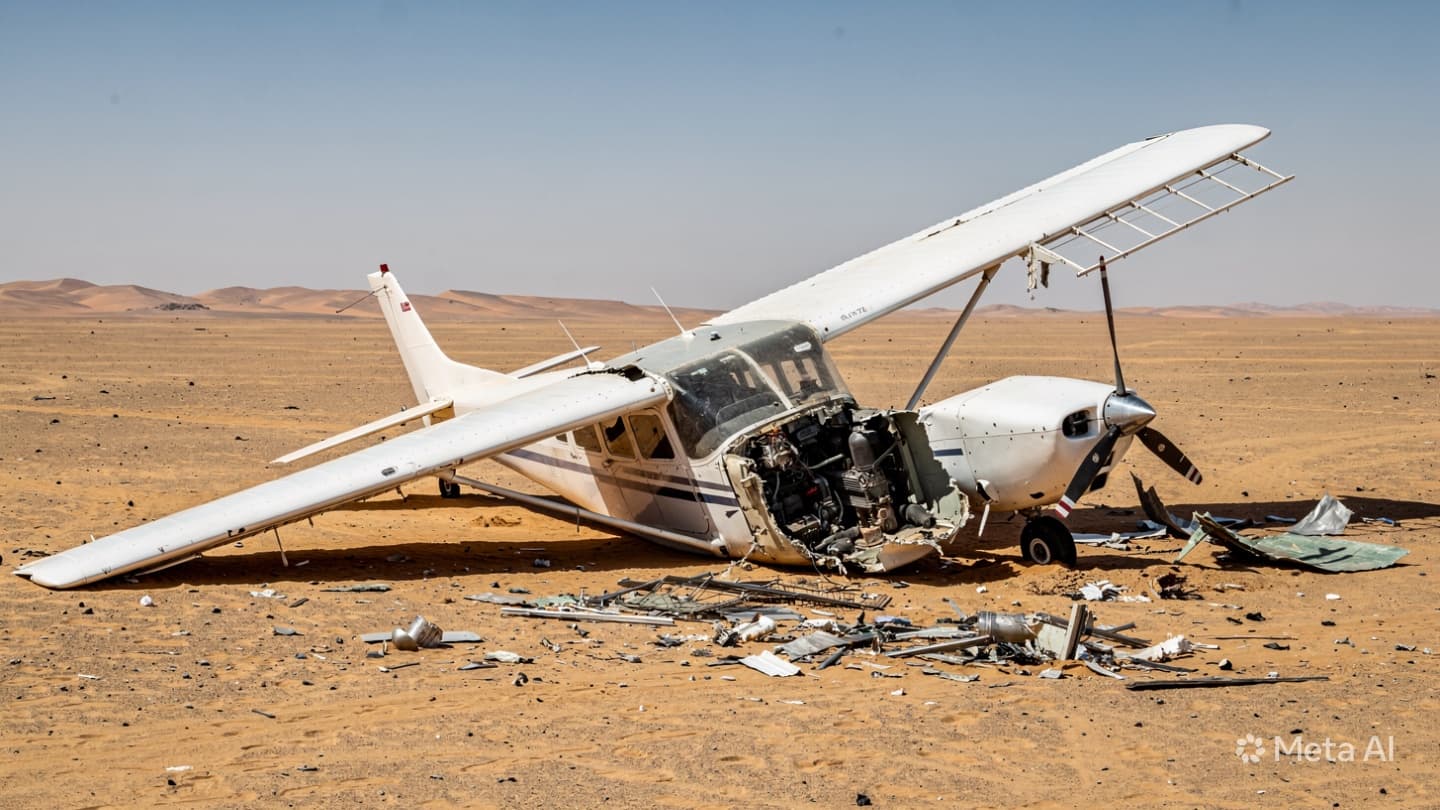
The aircraft impacted the uneven desert floor three miles short of the intended clearance path, striking a dense thicket of scrub brush and flipping forward onto its canopy. The impact crushed the forward engine compartment and sheared off the left wing assembly, leaving the aircraft in a precarious position.
County sheriff deputies and desert rescue units tracking the emergency transponder signal located the wreckage within thirty minutes of the radar loss. First responders extracted the pilot from the inverted cockpit shell using manual tools. The pilot, who was the sole occupant on board, sustained severe upper body trauma and lacerations during the rollover sequence. Paramedics stabilized the victim on-site before a medical transport helicopter arrived to evacuate the pilot to a regional medical facility.
Federal Aviation Administration records indicate the flight originated from a municipal airfield two hours prior to the mechanical failure. Fuel records are being audited to rule out starvation as a contributing cause to the sudden power loss. Investigators are particularly focused on the aircraft's maintenance history and any potential mechanical issues that could have led to the engine failure.
Environmental protection teams monitored a small leak of aviation fuel from the ruptured right-wing tank, which spilled roughly fifteen gallons into the sandy soil before being plugged with chemical sealant. The remote location has prevented heavy equipment from accessing the site immediately, complicating recovery efforts.
"The pilot executed the forced landing under extremely limited options due to the rugged nature of the alluvial washes in this sector," a sheriff department spokesperson stated during an evening update. This highlights the challenges faced by pilots operating in such difficult terrain, where emergency landings can be particularly hazardous.
The surrounding desert terrain has been cordoned off as a restricted federal investigation zone to protect the debris field from scavengers. National Transportation Safety Board personnel are scheduled to take over the primary site documentation early Tuesday morning, ensuring a thorough investigation into the circumstances surrounding the crash.
Flatbed transport trucks equipped with desert tires are being assembled at a staging area twenty miles away to salvage the remaining fuselage components for metallurgical analysis. The aircraft remains upside down in the sand as investigators wait for field photography clearance, which is crucial for documenting the scene before recovery operations can begin.
As the investigation unfolds, authorities will continue to provide updates on the pilot's condition and the findings from the crash site. The incident serves as a reminder of the inherent risks associated with aviation, particularly in remote and challenging environments.
Published by Banx Network. This article is part of the Banx decentralized media programme, powered by the BXE token on the XRP Ledger.



