
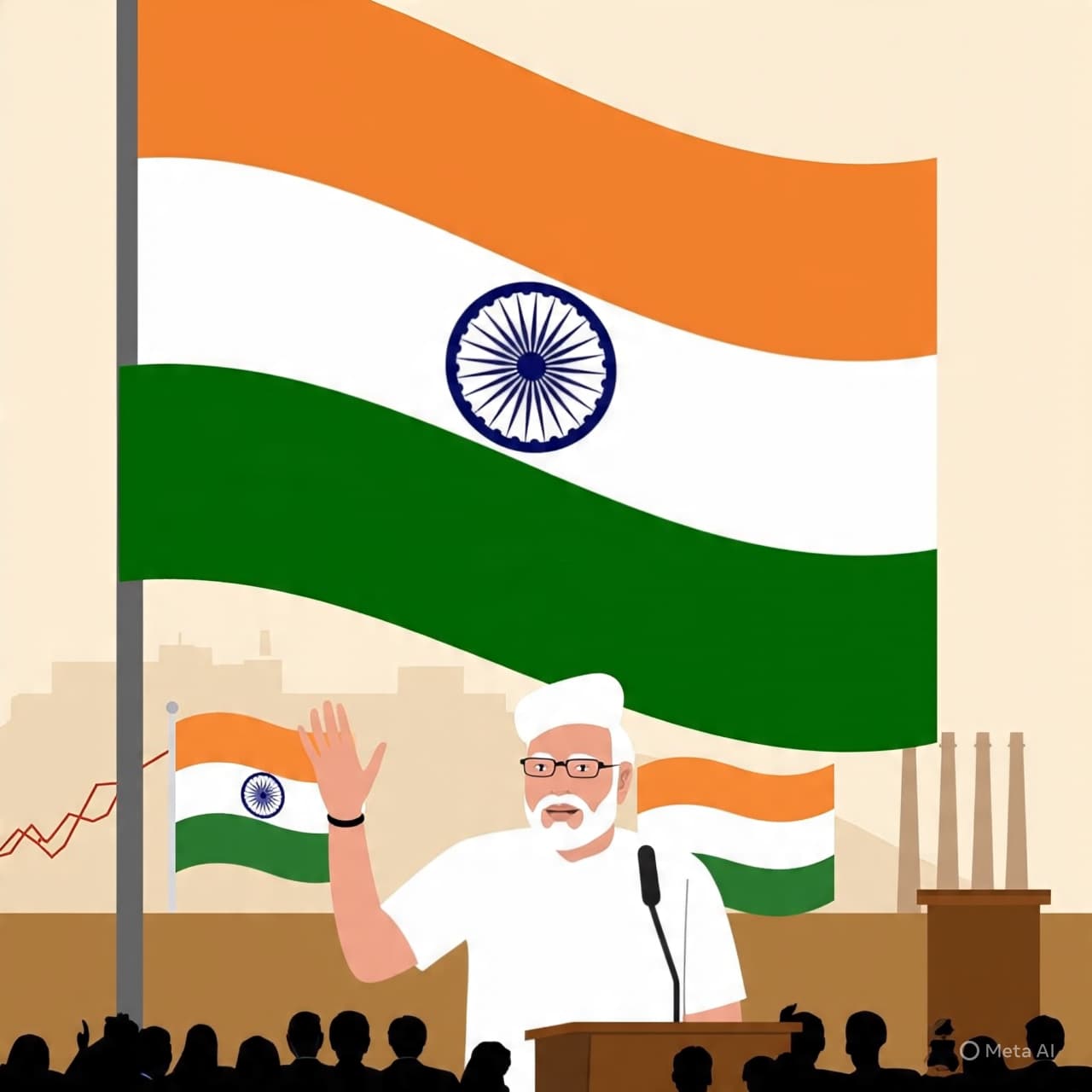
Key Highlights
- Modi's budget aims to enhance India's economic sovereignty amid global pressures.
- Significant investments are earmarked for defense and technology sectors.
- Critics warn that the budget may isolate India from global trade dynamics.
In the world of geopolitics, where national security is often tied to economic resilience, India’s Prime Minister Narendra Modi has crafted a budget aimed not only at bolstering the country's growth but also at protecting it from external threats—specifically, those posed by international powers like the United States. While India and the U.S. share a complex relationship built on cooperation and competition, recent political tensions, particularly under former President Donald Trump, have left India facing economic uncertainties.
With trade wars and tariff threats swirling, Modi’s government has unveiled a budget that signals a robust defense of India's economic sovereignty. This new budget, while steeped in the language of development and welfare, is also a declaration that India will not be swayed by foreign pressures, particularly those coming from Washington. It is a political and economic statement: India is ready to chart its own path, shielded from external vulnerabilities. Yet, in this delicate dance of diplomacy and self-preservation, the question arises: Can Modi's strategy shield India in the long term, or will the global economic tide inevitably sweep the country into the broader conflicts of international trade and politics?
As global politics continues to evolve, few nations have navigated the shifting tides with as much complexity as India. Under Prime Minister Modi, India has risen as an economic powerhouse, but not without facing its share of challenges. The U.S., particularly under President Donald Trump, has been a formidable player in shaping these challenges. From threats of trade tariffs to demands for greater market access, India has felt the weight of a U.S. administration eager to leverage its economic might.
The latest budget proposal by Modi’s government is seen as a strategic response to these external pressures. Rather than relying solely on the global trade system, Modi's budget aims to strengthen India's self-reliance through domestic production, infrastructure development, and economic diversification. Key sectors such as agriculture, technology, and manufacturing have been earmarked for increased investment, signaling a shift away from dependence on foreign markets and a push for local innovation.
In particular, Modi’s government has allocated significant funds for sectors like defense, which not only serves the purpose of national security but also positions India as a rising global power capable of defending its economic interests. The budget includes provisions to strengthen India’s strategic industries, such as renewable energy and technology, areas where the country has both challenges and potential to thrive independently of U.S. or other Western influences.
Yet, the budget is not without its critics. While the economic plan promises to shield India from external shocks, some experts argue that it risks isolating the country from global trade dynamics, particularly with the U.S., which remains one of India’s largest trade partners. The question remains whether this policy of self-reliance, also known as "Atmanirbhar Bharat," will place India in a stronger position or leave it vulnerable in a globalized economy where trade alliances and foreign investments remain crucial for sustained growth.
Moreover, Modi’s approach has raised concerns among some domestic groups who fear that economic nationalism may curtail global partnerships and slow India’s integration into the broader global economy. As India faces the twin challenges of domestic inequality and global economic pressures, its leaders must navigate these complex waters carefully.
The success of this budget will depend on whether India can balance its desire for economic independence with the necessity of maintaining healthy international relationships. While the budget may shield India from Trump-era threats in the short term, only time will tell if this isolationist approach can withstand the broader pressures of an interconnected global economy.
Prime Minister Modi's new budget signals a decisive step toward India's economic sovereignty, aiming to shield the country from external threats, including those posed by U.S. policies under Donald Trump. While it sets a path for self-reliance, the long-term effectiveness of this strategy remains to be seen, especially as India faces the complex realities of an interconnected global economy. As the nation embraces a vision of self-sufficiency, the challenge will be to ensure that it does not inadvertently isolate itself from the global community.
Published by Banx Network. This article is part of the Banx decentralized media programme, powered by the BXE token on the XRP Ledger.



