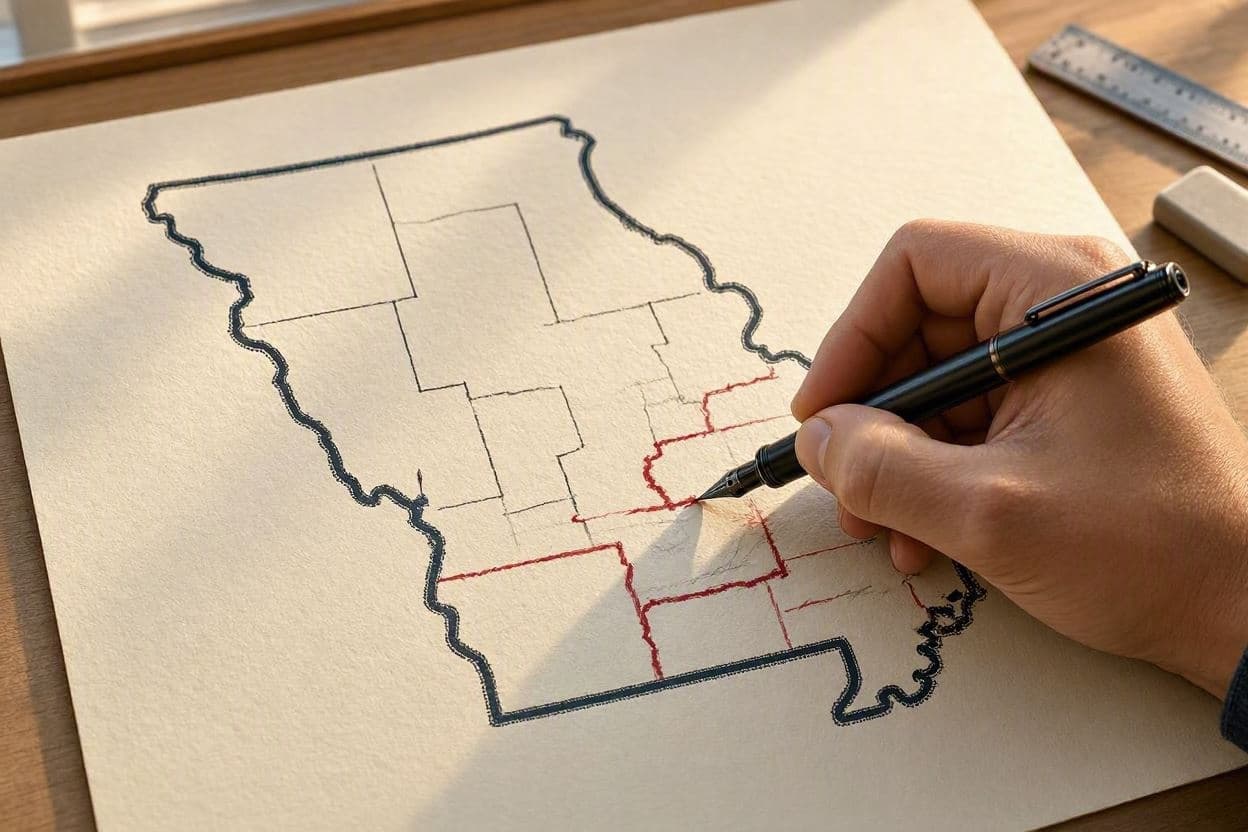
In the intricate dance of American democracy, the drawing of electoral maps is often where power is most visibly contested. In Missouri, this contest has reached a fever pitch as Republican leaders turn to the federal courts in a bid to revive a congressional map that critics argue unfairly favors their party. The move comes in the wake of a state Supreme Court decision ordering a public referendum on the issue, creating a legal tug-of-war that highlights the deep divisions over how representation is structured in the state.
The controversy centers on a redistricting plan passed by the Republican-led legislature in 2025, which opponents claim dilutes the voting power of Democrats and urban communities. When citizens gathered signatures to place the map on the ballot for a public vote, the state’s highest court ruled in favor of the referendum, affirming the right of Missourians to have a say in their own representation. This decision was seen as a victory for grassroots democracy, but it also triggered an immediate backlash from those who had crafted the original lines.
Republican officials argue that the federal courts should intervene to block the referendum, citing concerns about election integrity and the timing of the vote so close to the midterms. They contend that changing the rules now would create confusion and instability for voters and candidates alike. By seeking a federal injunction, they hope to preserve the current map for the upcoming election, arguing that it reflects the political reality of the state more accurately than the previous configuration.
Critics, however, view this legal maneuver as an attempt to bypass the will of the people. They argue that the map was drawn behind closed doors, with little input from the public, and that the referendum process is the appropriate channel for such a significant decision. For them, the fight is not just about partisan advantage but about the fundamental principle that voters should have the final say on how their districts are shaped.
The case underscores the broader national debate over gerrymandering and electoral fairness. As states across the country grapple with similar issues, Missouri has become a focal point for testing the limits of legislative power versus popular sovereignty. The outcome of this legal battle could set a precedent for how other states handle disputes over redistricting and citizen-led initiatives.
Legal experts note that the interplay between state and federal jurisdiction adds complexity to the situation. While the state Supreme Court has spoken clearly on the matter, federal judges may interpret constitutional questions differently, particularly regarding the Elections Clause and the rights of voters. This jurisdictional tension creates uncertainty, leaving both sides anxious about the final resolution.
For the residents of Missouri, the stakes are high. The shape of their congressional districts will influence policy outcomes for the next decade, affecting everything from healthcare to infrastructure. The uncertainty surrounding the map makes it difficult for candidates to campaign effectively and for voters to understand their political landscape. It is a disruption that ripples through the entire democratic process.
As the courts deliberate, the public watches with bated breath. The decision will not only determine the map for 2026 but also signal the strength of democratic institutions in the face of partisan pressure. Whether through the ballot box or the courtroom, the voice of the people remains central to the ongoing struggle for fair representation.
AI Image Disclaimer: The visual representations included here are AI-generated illustrations designed to depict legal and political concepts, not actual photographs of the courtroom or specific politicians.
Sources: Democracy Docket PBS NewsHour Reuters
Published by Banx Network. This article is part of the Banx decentralized media programme, powered by the BXE token on the XRP Ledger.