

Key Highlights
- Iran's underground missile cities remain operational despite U.S.-Israeli airstrikes.
- The 'Pickaxe Mountain' facility is central to Iran's missile strategy and nuclear ambitions.
- Ongoing negotiations between Iran and the U.S. are stalled over missile capabilities and enrichment.
TEHRAN, IRAN — High in the rugged granite peaks of the Zagros Mountains, the phrase "missiles never sleep" has transformed from a propaganda slogan into a chilling strategic reality. Despite nearly two months of "Operation Midnight Hammer"—the most intense U.S.-Israeli aerial campaign in decades—Tehran’s underground "missile cities" remain the ultimate insurance policy, shielding an arsenal that continues to dictate the terms of a stalled global peace.
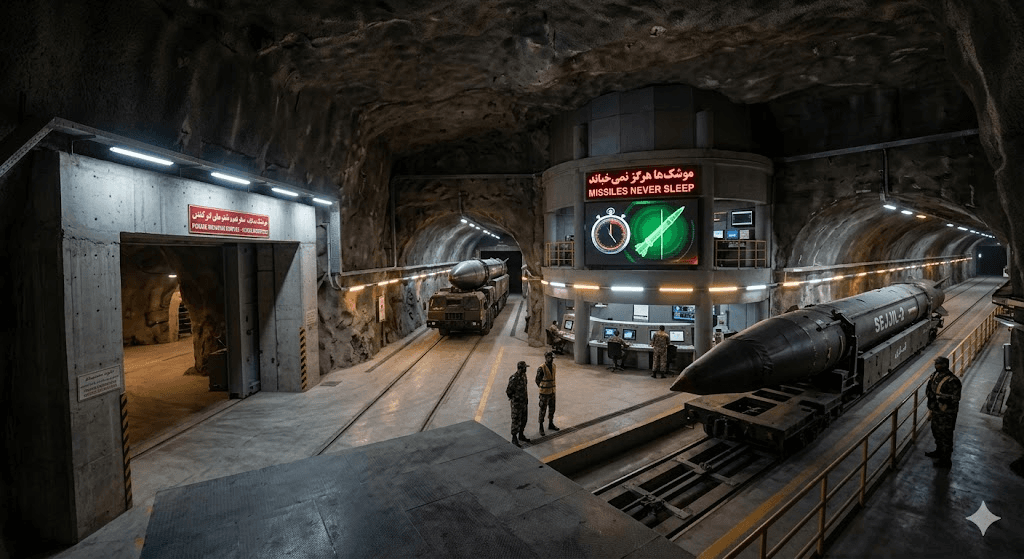
While satellite imagery confirms that Western airstrikes have crippled over 30 above-ground launch bases and production facilities like Parchin and Khojir, the heart of Iran’s deterrent remains untouched. Buried up to 500 meters beneath solid rock, these subterranean complexes are designed to be "immune" even to the GBU-57 Massive Ordnance Penetrator (MOP).
The most formidable of these, the "Pickaxe Mountain" facility near Natanz, has become the center of a high-stakes intelligence battle. Analysts believe this site houses not only the next generation of ballistic missiles but also the "nuclear dust"—missing highly enriched uranium that the Trump administration has demanded be surrendered as a precondition for lifting the current naval blockade.
The "missiles never sleep" doctrine is more than a boast; it is a logistical feat. Intelligence reports suggest that sites like Yazd utilize automated rail systems to move missiles between assembly areas and secret, camouflaged launch points. This mobility ensures that even as the U.S. Navy maintains its chokehold on the Strait of Hormuz, Iran retains the ability to launch precision salvos at a moment’s notice.
During the failed Islamabad talks on April 11, Iranian negotiators reportedly used the survival of these sites as a "red line."
Negotiations remain deadlocked over a fundamental divide: Tehran asserts their underground "missile cities" are sovereign, non-negotiable defensive assets, while the U.S. demands "zero enrichment" and the verifiable decommissioning of all deep-mountain bunkers. This clash over subterranean infrastructure has become the primary obstacle to any diplomatic breakthrough.
The cost of this "war of salvos" is increasingly lopsided. While the U.S. spends millions on each interceptor and stealth sortie, Iran’s underground production lines continue to churn out low-cost kamikaze drones and short-range missiles. This "asymmetry of attrition" is designed to outlast the political will of Washington as the May 1 War Powers deadline approaches.
"We have struck the doors, but the house is still standing," noted one regional security consultant. "As long as Tehran can launch from the mountains, they believe they can win the war of nerves at the negotiating table."
With President Trump warning that the U.S. military will remain "until a real agreement is complied with," and Iran responding by tightening its own grip on the Strait, the Middle East remains in a state of suspended animation. The underground fortresses have turned a lightning campaign into a grueling siege—one where the most powerful weapons are the ones that remain hidden.
Published by Banx Network. This article is part of the Banx decentralized media programme, powered by the BXE token on the XRP Ledger.




