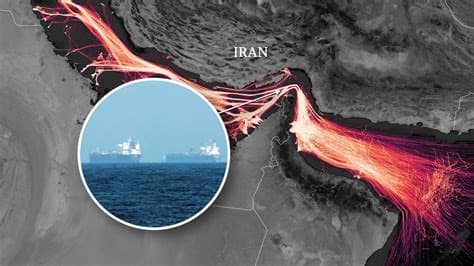
There is a particular rhythm to the conflict that has settled over the Arabian Peninsula—a cycle of assertion and denial, of strikes claimed and intercepts announced, of smoke rising near places that hold the world's attention. On Saturday, that rhythm continued as Yemen's Houthi rebels announced they had targeted an Aramco facility in Riyadh, the Saudi capital, using ballistic missiles and drones. The claim, issued by Houthi military spokesman Yahya Sarea on social media, described the operation as a "qualitative military operation" that achieved its objective with "precise and direct hits," causing fires at the targeted locations .
The Houthis stated that they had carried out two operations: one targeting sensitive sites in Riyadh, and a second targeting Aramco facilities in Yanbu, on the Red Sea coast . The announcement came amid a sharp escalation in hostilities between the Iran-backed rebels and the Saudi-led coalition, with the Houthis saying the attacks were a response to Saudi Arabia's leadership of the military coalition against them. "We will continue to impose the formula of blockade for blockade and escalation for escalation," Sarea said .
According to the AFP news agency, flames were seen near Riyadh's international airport, and a burnt-out fuel tank bearing the Aramco logo was visible. Reuters reported a large plume of smoke near the airport after booms were heard. Saudi Arabia had issued overnight alerts warning of potential danger around the capital—the first such alerts since exchanges with the Houthis began to escalate in July .
The Saudi-led coalition, however, offered a different account. It announced that it had intercepted and destroyed a ballistic missile fired by the Houthis at Riyadh . This divergence—claim and counter-claim, the Houthis asserting success while the coalition reports interception—is a familiar feature of the conflict, where the fog of war is thickened by competing narratives and limited independent verification. Neither Saudi authorities nor Aramco had issued a statement on the Houthi claim at the time of reporting .
The targeting of Aramco facilities carries particular weight. Saudi Aramco is the world's largest oil company, and attacks on its infrastructure have previously disrupted global energy markets. In 2019, a strike on Aramco's Abqaiq facility temporarily halved Saudi oil output. The current attack, though smaller in scale, fits a pattern in which the Houthis have sought to apply pressure on Saudi Arabia by targeting its economic lifelines . Bloomberg reported that Aramco had told at least two oil refining customers in Europe that they would receive no crude allocation under long-term agreements, suggesting a potential impact on supply .
The Houthis, who are close allies of Iran, have been participating in retaliatory strikes against U.S. allies in the region since the beginning of U.S. attacks on Iran, according to the ORF . The situation remains fluid, with no independent confirmation of the extent of damage. What is clear is that the exchange represents a further escalation in a conflict that has already drawn in regional and international powers, and that the smoke rising near Riyadh—whether from a struck fuel tank or an intercepted missile—is a visible sign of tensions that continue to build.
AI Image Disclaimer: All images in this article are AI-generated and are intended for illustrative purposes only.
Sources: EFE, NHK World-Japan, ORF, Xinhua, Bloomberg
Published by Banx Network. This article is part of the Banx decentralized media programme, powered by the BXE token on the XRP Ledger.