In the complex web of American federalism, the relationship between state and federal authority is often tested by moments of crisis. Recently, this tension has surfaced in a legal battle between Minnesota and Texas, as Minnesota Attorney General Keith Ellison filed a lawsuit against Texas Governor Greg Abbott. The suit seeks to compel the extradition of an Immigration and Customs Enforcement (ICE) agent accused of shooting and wounding a man in Minneapolis. This case highlights the delicate balance between law enforcement accountability and inter-state cooperation.
The incident in question involves Christian Castro, an ICE officer who allegedly shot a Venezuelan man during an encounter in Minnesota. After the shooting, Castro returned to Texas, where he resides. Minnesota authorities have charged him with assault and other related offenses, but Governor Abbott has reportedly refused to sign the extradition papers. This refusal has prompted Minnesota to take the unusual step of suing another state’s governor, arguing that the Constitution’s Extradition Clause mandates compliance.
For the victim and his family, the delay is a source of profound frustration. They seek justice through the legal system, believing that no individual, regardless of their federal employment, should be above the law. The lawsuit is seen as a necessary tool to ensure that the judicial process can proceed without political interference. It underscores the principle that state laws apply equally to all within their borders.
Governor Abbott’s office has not publicly detailed its reasons for withholding extradition, but the move aligns with a broader political stance supporting federal immigration enforcement. Critics argue that this politicizes a straightforward legal procedure, turning a criminal case into a partisan battleground. Supporters, however, view it as a defense of federal agents acting in the line of duty, though the charges suggest actions beyond standard protocol.
Legal experts note that interstate extradition disputes are rare but significant. They test the limits of gubernatorial discretion and the enforceability of constitutional mandates. If successful, Minnesota’s lawsuit could set a precedent for how states handle similar cases involving federal employees. It reinforces the idea that state sovereignty includes the right to prosecute crimes committed within its jurisdiction.
The Department of Justice has remained largely silent on the specific extradition issue, focusing instead on the broader context of immigration enforcement. However, the case draws attention to the complexities of overlapping jurisdictions. When federal agents operate in states, they are generally subject to local laws, a principle that is now being rigorously tested in court.
Public reaction in both states has been mixed. In Minnesota, there is strong support for holding the agent accountable, while in Texas, some view the lawsuit as an attack on federal authority. This divide reflects the national polarization surrounding immigration policy. Yet, at its core, the case is about legal procedure and the rule of law.
As the lawsuit proceeds, the eyes of the nation are on the courts. The outcome will determine whether Castro faces trial in Minnesota or remains in Texas. For now, the legal machinery grinds on, seeking a resolution that upholds both justice and constitutional order. In the end, the case serves as a reminder that in a democracy, no one is beyond the reach of the law.
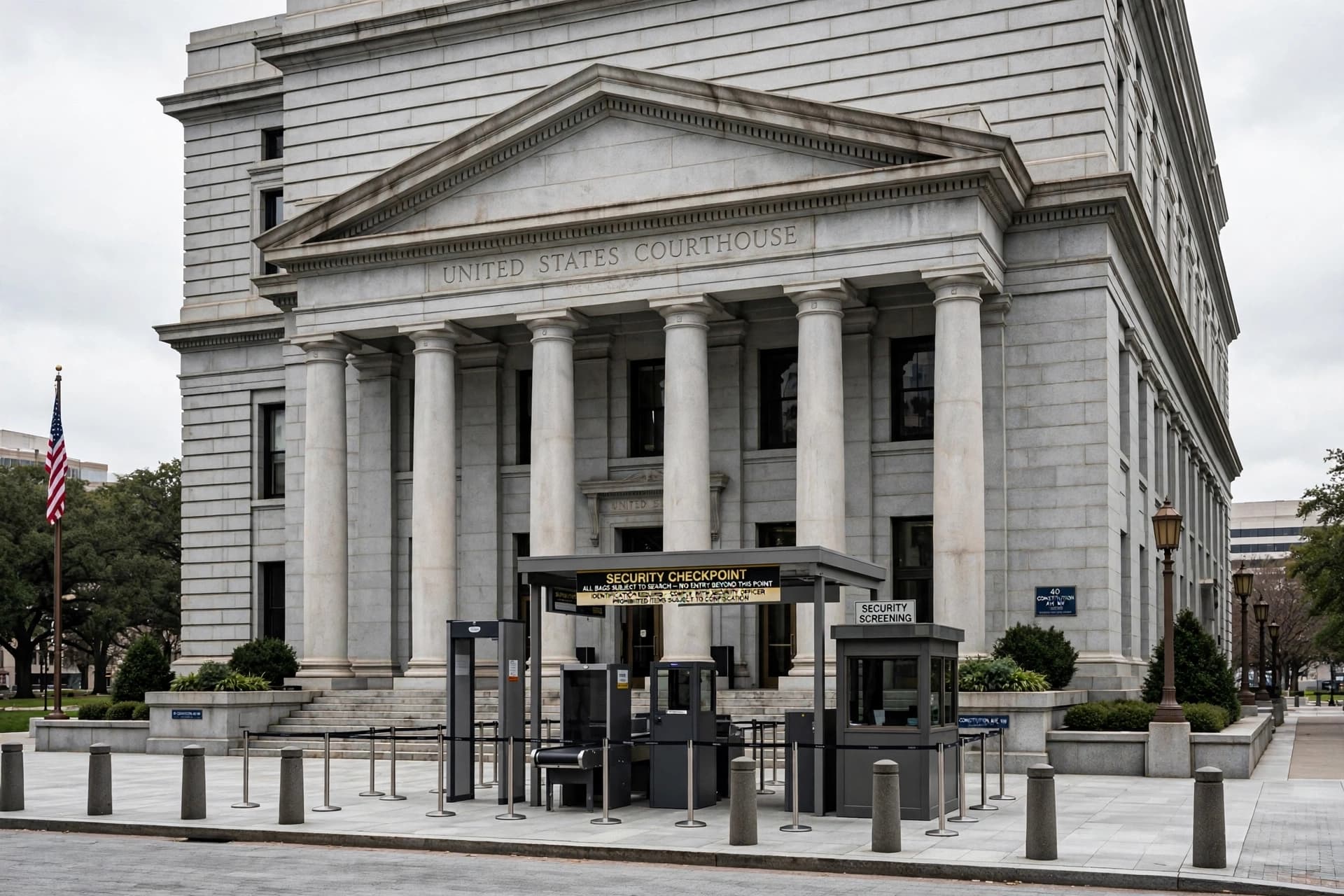
AI Image Disclaimer: The visual elements in this article are AI-generated illustrations depicting courthouse facades and abstract representations of legal documents, designed to reflect the themes of justice and interstate conflict without showing real individuals or proprietary legal files.
Sources: NPR, The Washington Post, Al Jazeera, The Texas Tribune
Published by Banx Network. This article is part of the Banx decentralized media programme, powered by the BXE token on the XRP Ledger.