
Key Highlights
- Incident:Six miners died in a tunnel collapse at an illegal gold mine in Colombia.
- Rescue Efforts:Rescuers faced unstable conditions while recovering the bodies.
- Investigation:Authorities are probing the ownership of the mine, previously flagged for safety violations.
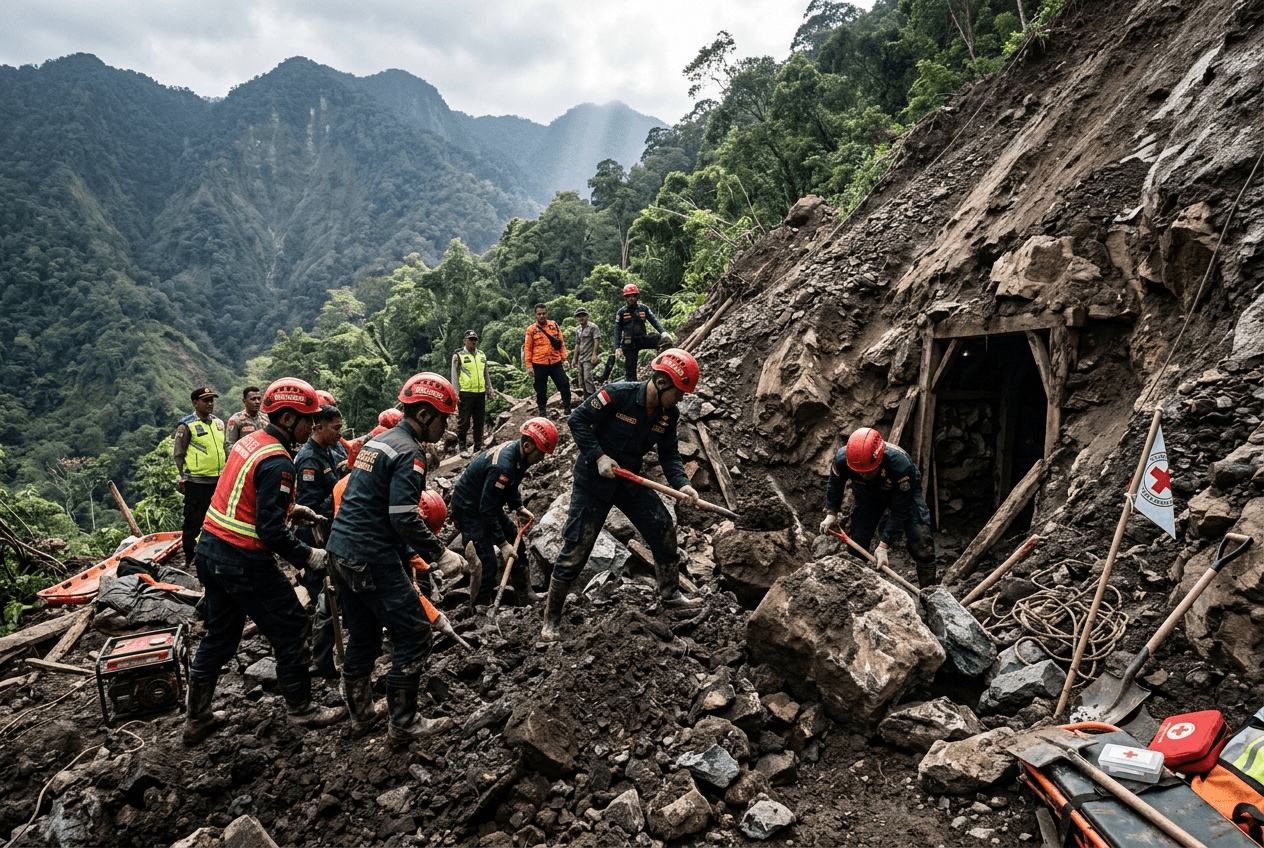
Bogotá, Colombia—Six men tragically lost their lives early today when an illegal gold mine collapsed in the mountainous region of Colombia. The tunnel, which had been excavated without any engineering oversight, experienced a catastrophic structural failure, burying the workers under layers of loose earth. Rescue teams worked tirelessly for hours to reach the miners, but the unstable conditions posed significant risks to their safety.
The collapse underscores the perils associated with the informal mining sector prevalent in Colombia. These makeshift tunnels are often supported by little more than timber and the miners' instincts. When the walls of the tunnel gave way, the main passage was sealed off instantly, leaving those trapped inside with no chance of escape.
By mid-morning, local authorities arrived at the scene to find family members and fellow miners desperately attempting to dig through the rubble. The soil's instability forced rescue teams to halt their efforts multiple times to prevent further collapses, requiring careful calculations with each movement to avoid endangering the rescuers.
By late afternoon, government officials confirmed that all six bodies had been recovered. The victims, all young men from the local community, relied on the mine for their livelihoods. Disturbingly, the site had previously been flagged for closure due to ongoing safety violations, raising questions about the oversight of such operations.
An investigation has been launched to determine the ownership of the mining operation. Prosecutors are seeking to identify those responsible for managing the site, although individuals involved in illegal mining often remain anonymous. The absence of permits means there are no formal blueprints or safety protocols to guide operations, contributing to the hazardous conditions.
Environmental degradation surrounding the mine is evident from aerial views, with muddy runoff contaminating nearby slopes. The collapse has left a visible scar on the landscape, with deep cracks spreading through the area. Geologists have warned that the ground remains extremely fragile, posing further risks to the community.
Authorities have no plans to stabilize the mine; instead, they intend to fill the shaft to prevent unauthorized access. This decision has met resistance from some locals who view these illicit mines as their only economic option. The cycle of poverty continues to drive individuals into these dangerous pits, despite the inherent risks involved.
Search teams have officially concluded their operations at the site, which is now cordoned off by local police. However, enforcing these boundaries remains a persistent challenge. Meanwhile, the families of the deceased are left waiting for the transfer of their loved ones' remains to the local morgue, grappling with the tragic loss of life in a perilous industry.
Published by Banx Network. This article is part of the Banx decentralized media programme, powered by the BXE token on the XRP Ledger.



