
Key Highlights
- Incident:A gas explosion occurred in a coal mine in Shanxi Province, China.
- Casualties:Several miners have been trapped and confirmed dead.
- Response:Rescue teams are actively working to recover victims and assess safety protocols.
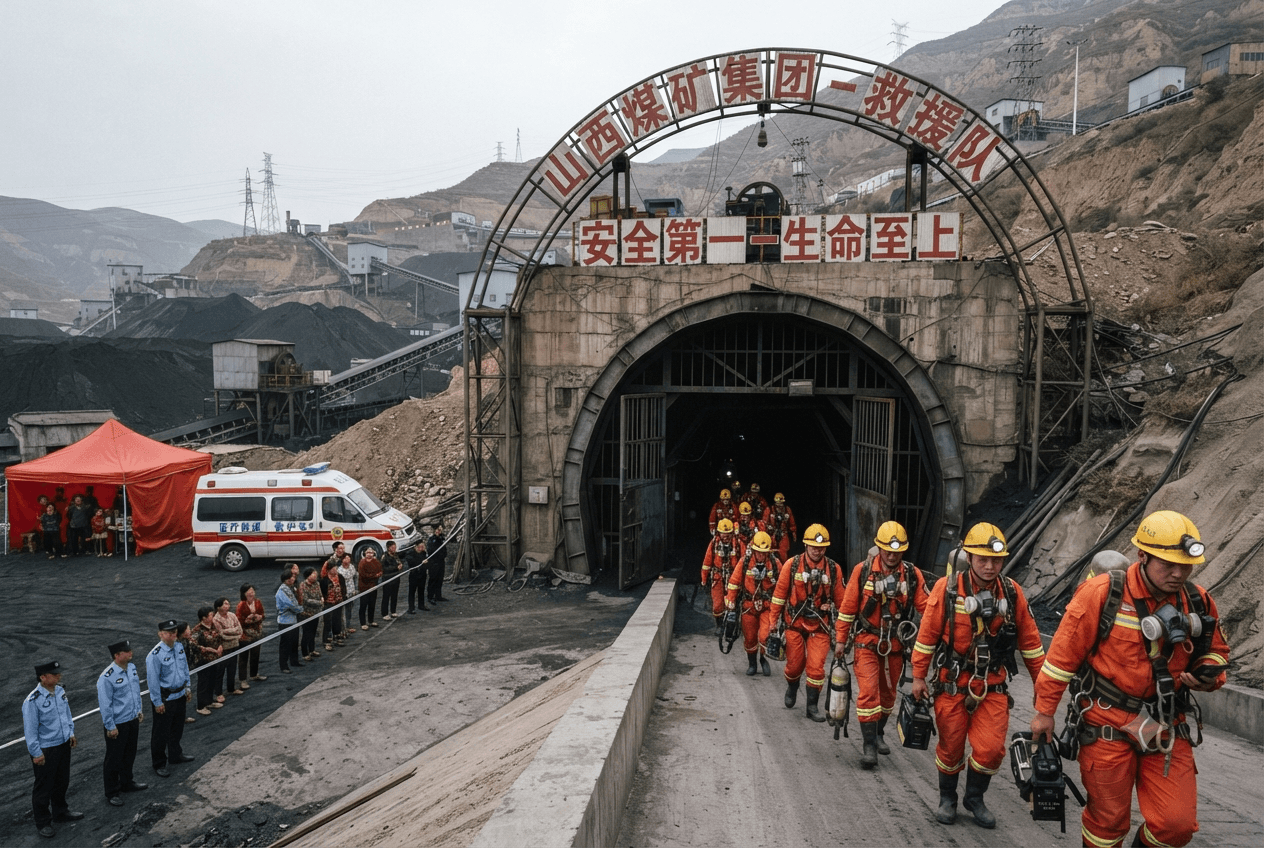
Taiyuan, China—A devastating gas explosion rocked a coal mine in Shanxi Province, leading to a tragic loss of life and prompting immediate rescue operations. Thick gray smoke billowed from the mine as emergency teams rushed to the scene, donning oxygen respirators before descending into the depths of the mine. The explosion not only caused significant damage to the mine's infrastructure but also left rescue teams struggling to establish communication with trapped miners.
As rescue efforts commenced, state emergency work teams quickly set up a command post outside the mine's entrance. Ambulances lined the dirt road, ready to transport the injured and deceased. Families of the trapped miners gathered nearby, their anguish palpable as they awaited news. Mine executives, however, remained tight-lipped, avoiding questions from the press while federal investigators began to secure crucial data from the mine's control room.
A senior safety inspector reported a concerning spike in methane levels just moments before the explosion, raising questions about the mine's adherence to safety protocols. Preliminary investigations revealed that warning alarms had activated hours prior to the incident, yet mandatory evacuations were not executed. This has led union representatives to call for an immediate halt to all mining operations in the region until a thorough investigation can be conducted.
Rescue teams faced numerous challenges as they navigated through blocked tunnels, encountering pockets of toxic gases that complicated their efforts. Paramedics worked tirelessly to recover bodies, wrapping them in heavy canvas before transporting them to awaiting vehicles. The rescue operation was further hampered by the need to shore up unstable tunnel sections, as the risk of secondary cave-ins loomed large.
In response to the disaster, provincial officials dispatched industrial safety experts to assess the situation and determine if the mine's management had neglected essential safety measures. As the night fell, the atmosphere at the mine site grew increasingly tense, with families maintaining a vigil near the entrance, wrapped in blankets against the cold.
Federal regulators announced a comprehensive audit of ventilation compliance across all mid-sized extraction facilities in the northern region, aiming to prevent future tragedies. Rescue teams continued their efforts deep underground, marking unstable areas with reflective tape to protect incoming personnel. Meanwhile, the local government established a crisis task force to manage compensation claims and funeral arrangements for the victims.
As engineers worked to extinguish lingering fires within the mine by pumping liquid nitrogen into sealed sections, the grim reality of the situation became evident. The entrance to the mine remained sealed off to unauthorized personnel, as the recovery effort continued under hazardous conditions. The tragedy has not only highlighted the dangers of coal mining in China but also raised urgent questions about safety regulations and enforcement in the industry.
Published by Banx Network. This article is part of the Banx decentralized media programme, powered by the BXE token on the XRP Ledger.



