

Key Highlights
- Incident:Severe turbulence on Air India flight AI-377 from Phuket to Delhi.
- Injuries:Several passengers injured, with four requiring medical attention.
- Response:Flight crew declared a medical emergency and landed safely in Delhi.
NEW DELHI — Chaos erupted aboard an Air India flight from Phuket to Delhi when the aircraft was struck by severe mid-air turbulence shortly before its scheduled arrival, leaving several passengers injured and causing widespread panic in the cabin.
Flight AI-377 was approaching its descent into Indira Gandhi International Airport when it encountered unexpected clear-air turbulence. Witnesses reported that the aircraft experienced violent altitude fluctuations, throwing unbuckled passengers, crew members, and loose cabin items into the air.
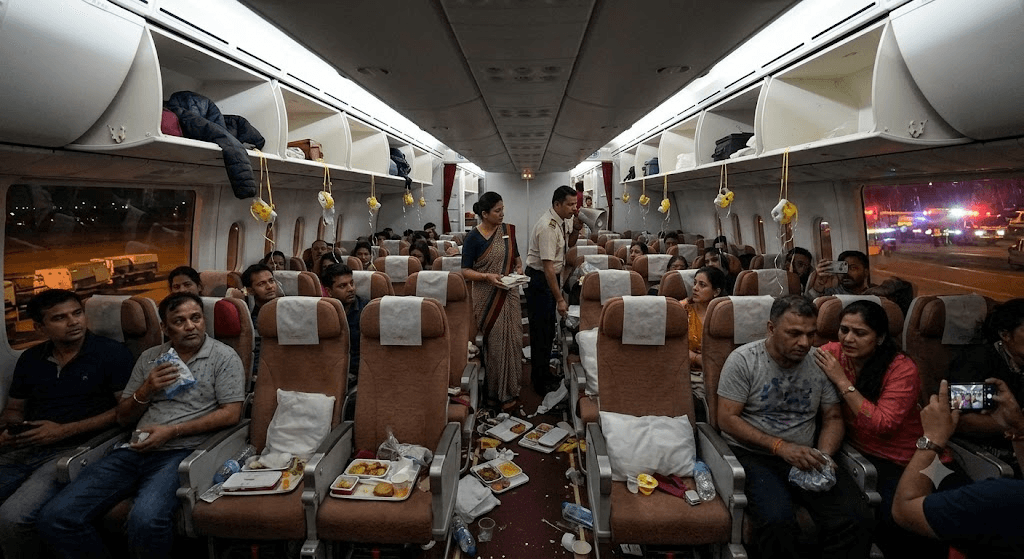
Visuals shared by passengers after landing showed overhead bins sprung open, food trays strewn across the aisles, and oxygen masks deployed during the height of the shaking. The flight crew declared a medical emergency and requested priority landing from Air Traffic Control (ATC). The aircraft landed safely in Delhi, where emergency medical teams, ambulances, and airport safety personnel were already lined up on the tarmac to receive the flight.
Upon landing, paramedics immediately boarded the aircraft to administer first aid to injured passengers, with at least four individuals transferred to a nearby medical facility for further evaluation of minor sprains and contusions. Airline officials commended the flight crew for their swift, professional response during the event, praising them for maintaining control of the aircraft and strictly adhering to standard safety protocols.
"The plane dropped suddenly without any warning, and anyone not wearing a seatbelt was lifted right out of their seat," one passenger recalled after exiting the terminal. "The crew handled the emergency landing remarkably well despite the chaos inside."
Aviation experts note that clear-air turbulence (CAT) remains one of the most unpredictable threats to commercial aviation, as it occurs without visual cues like clouds and often bypasses radar detection. In response to the incident, airline representatives strongly reminded passengers to keep their seatbelts fastened at all times while seated, even when the seatbelt sign is turned off, as sudden atmospheric shifts can occur without forewarning.
Air India issued an official statement confirming the incident, reiterating its commitment to passenger safety and assuring full support for those affected. The airline emphasized that safety protocols were followed effectively, and they are conducting a thorough review of the incident to prevent future occurrences.
The incident has sparked discussions among aviation safety experts regarding the need for enhanced passenger education on the risks of turbulence, particularly clear-air turbulence, which can occur unexpectedly and without warning. As air travel continues to grow, ensuring passenger awareness and adherence to safety measures remains a top priority for airlines worldwide.
Published by Banx Network. This article is part of the Banx decentralized media programme, powered by the BXE token on the XRP Ledger.




