Microsoft is opening a new chapter in its quantum-computing work by giving the U.S. Defense Advanced Research Projects Agency, or DARPA, direct access to a quantum system at a new Maryland facility. The arrangement places experimental quantum technology closer to researchers working on advanced computing applications. (channelnewsasia.com)
The Maryland facility is designed to support research into quantum computing and related technologies. Unlike conventional computers, quantum systems use quantum states to process information, creating possibilities for solving certain categories of problems in ways that differ fundamentally from traditional computing.
DARPA’s involvement reflects the U.S. government’s continuing interest in quantum technology. The agency has funded research programs designed to determine whether quantum computers can reach practical levels of performance and whether the technology can eventually provide useful capabilities beyond laboratory experiments.
Microsoft has pursued its own approach to quantum computing, including research into topological quantum systems. The company has been working to develop hardware that could eventually make quantum machines more stable and scalable.
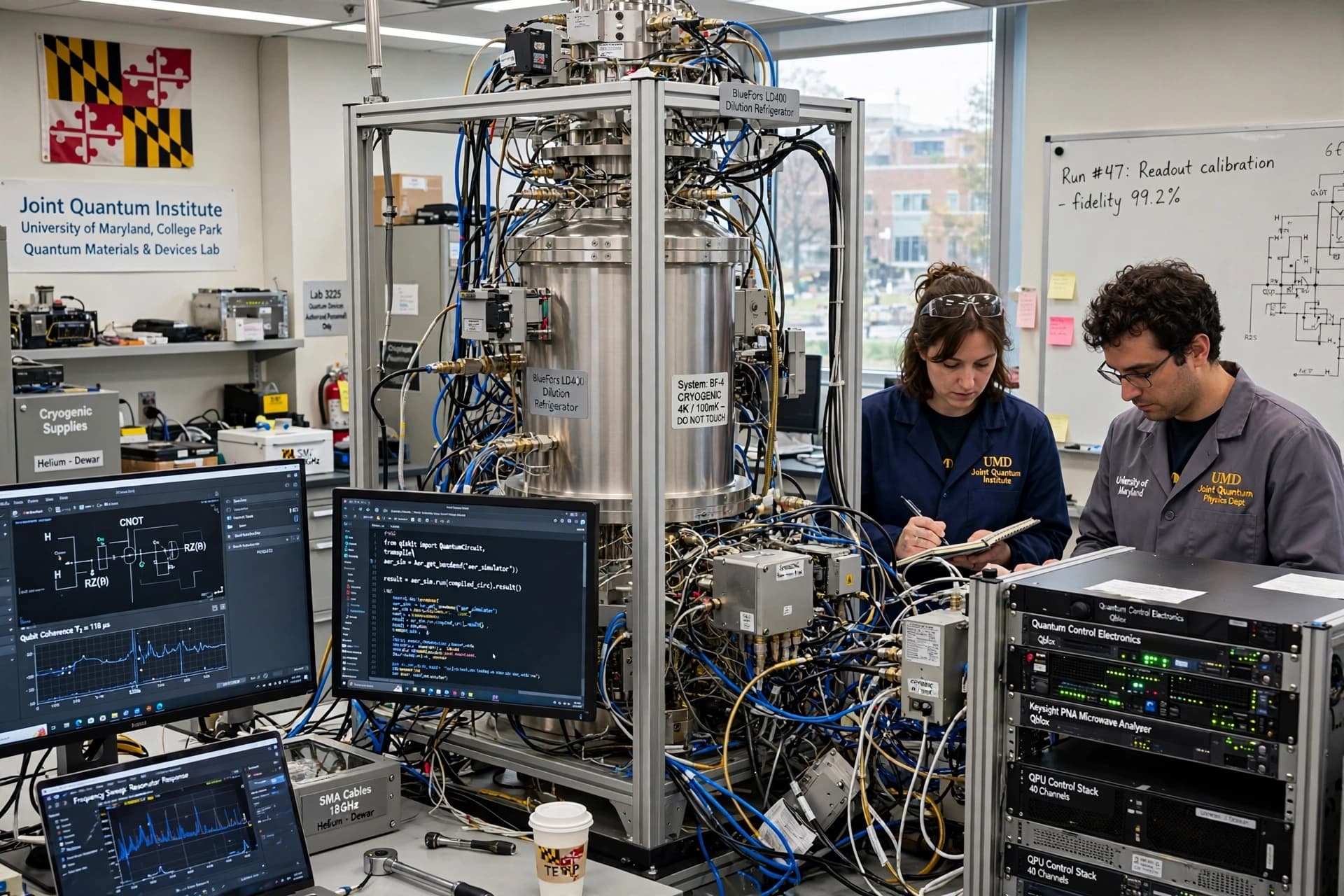
Giving researchers hands-on access is an important part of that process. Quantum systems can behave differently from conventional computers and often require specialized environments, cooling systems and carefully controlled operating conditions.
The new Maryland site provides a physical location where researchers can work directly with the technology rather than interacting only through remote demonstrations. That can be useful for testing hardware, software and algorithms under controlled conditions.
Quantum computing remains an emerging field. Researchers are still working on improving the number and reliability of usable qubits, reducing errors and developing software capable of taking advantage of quantum architectures.
The technology could eventually have applications in areas such as materials science, chemistry, optimization and cryptography, although many of those possibilities remain subjects of ongoing research rather than established commercial applications.
The collaboration between Microsoft and DARPA therefore sits within a much longer technological timeline. Building a useful quantum computer requires progress across hardware, algorithms, error correction and engineering, with each stage depending on advances in several scientific disciplines.
For Microsoft, the Maryland facility provides another physical foundation for its quantum research. For DARPA, direct access offers an opportunity to examine the technology more closely as the agency continues evaluating what quantum computing can realistically achieve. The next steps will be measured not only in theoretical breakthroughs, but in whether experimental systems can gradually become reliable tools for real-world computation.
Image Disclaimer: The illustrations are AI-generated representations of quantum computing research and do not depict classified DARPA projects or the actual interior of Microsoft’s Maryland facility.
Sources: CNA Microsoft DARPA
Published by Banx Network. This article is part of the Banx decentralized media programme, powered by the BXE token on the XRP Ledger.