Under a sun that often sets quietly across the Pacific-coast town of Coahuayana, the morning of December 6, 2025, began with little to betray the storm to come. The sea breeze and gentle rhythm of daily life seemed unchanged. But then a truck — ordinary at a glance — pulled up at the gates of the community police station. In its belly, hidden beneath the metal and mundane cargo, there was not fruit or groceries, but devastation. In one single breath, hope and safety dissolved into smoke and fear.
At around 11:40 a.m., the vehicle exploded. The blast rocked the center of the town, shattering facades, scattering debris, and raining shock on the quiet streets. By the time rescue teams arrived, six people were already dead — among them the driver, an accomplice, and at least three members of the local community police force — and several others wounded.
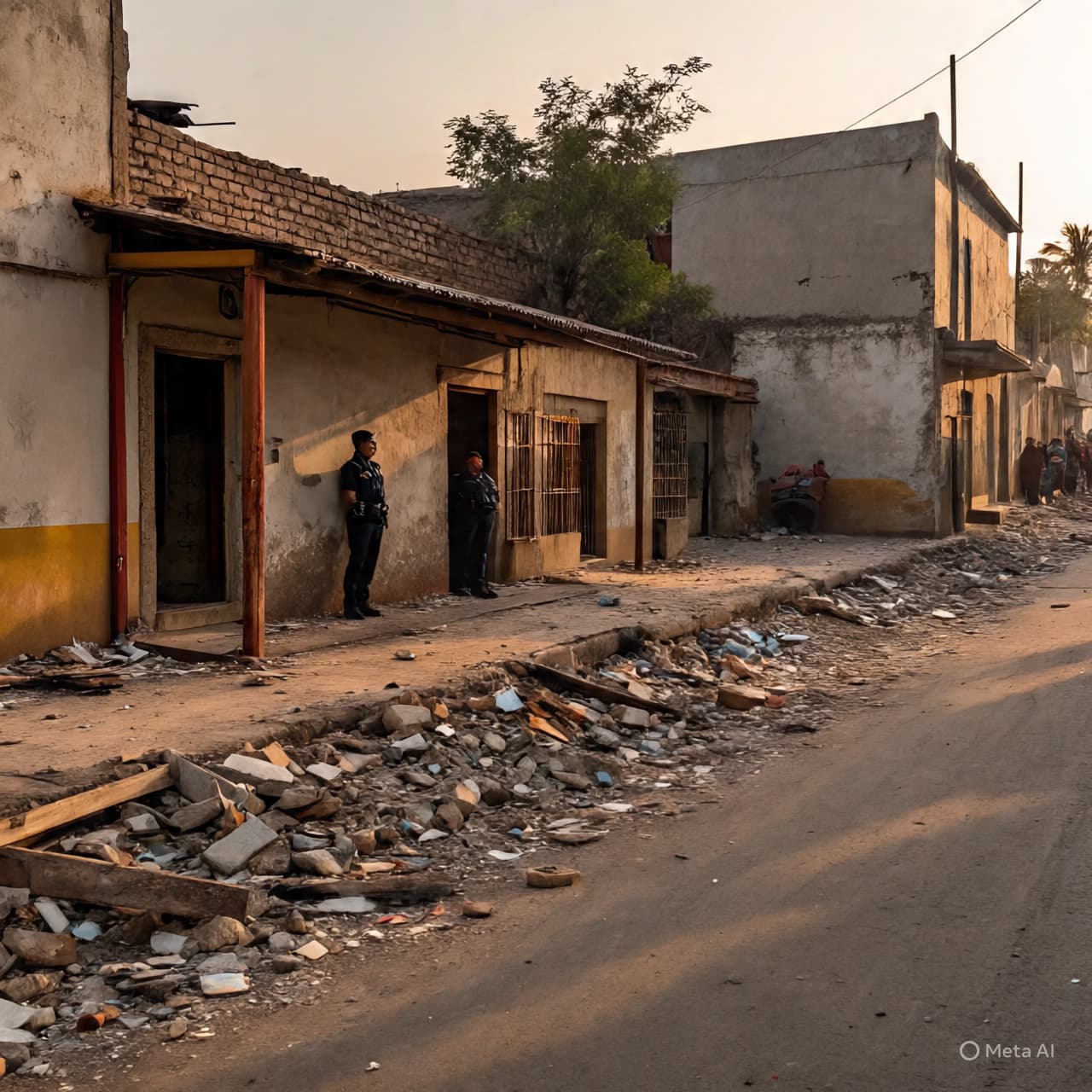
What was intended as protection — the modest building of the community police — became a target. Nearby homes, businesses, even the municipal offices bore scar and craters. The hum of everyday life was replaced by sirens and grief. Witnesses described the explosion as so powerful that human remains and wreckage were strewn across a wide area.
Authorities swiftly launched an investigation. The state prosecutor’s office, joined by federal agencies, declared this a crime tied to organized violence. Forensics teams, National Guard units, and the navy moved in, seeking clues among the rubble — fragments of metal, traces of explosives, a path back to those who planned the atrocity.
Though no group has officially claimed responsibility, many in Michoacán fear Jalisco New Generation Cartel (CJNG) — one of the region’s most powerful cartels — could be behind the attack. Local community police and CJNG-linked groups have been locked in a bitter struggle over control of drug trafficking routes and territory in recent years.
This car-bomb incident is not an isolated flash of violence. It is part of a growing wave of cartel tactics that use explosives — bombs concealed in vehicles or dropped from drones — to terrify communities, destabilize local security forces, and expand control by force. In recent months alone, security agencies in the state report intercepting hundreds of explosive devices, many bound for rural towns like Coahuayana.
For the people of Coahuayana, the blast leaves more than ruined buildings and scorched streets. It leaves fear, mourning, and a sense that even community-organized protection might not be enough. Among the dead are not just officers — but neighbors, friends, community members whose everyday lives were meant to build safety, not sorrow.
As federal forces mobilize and investigations begin, the risk remains — that this may be only a prologue to more violence, and that ordinary towns might again find themselves in the crossfire. Beyond the smoke and rubble, there lies a challenge: Can security and justice return before despair takes deeper root?
AI Image Disclaimer Illustrations were produced with AI and serve as conceptual depictions, not real photographs.
Sources Mexico News Daily; Al Jazeera; Moneycontrol; The Washington Post; Associated Press.
Published by Banx Network. This article is part of the Banx decentralized media programme, powered by the BXE token on the XRP Ledger.