There is a particular fatigue that settles in when every screen, every radio wave, every quiet moment becomes a stage for persuasion. In Michigan, a state where a Senate race could decide the balance of power in Washington, that fatigue has become something closer to exhaustion. Gwyneth Love, twenty-four, put it plainly: "It honestly is very insane when you see so many ads telling you who to vote for and you can't really believe what they tell you" . Her friend Amelia Cunningham added that the barrage has reached a point where "you're almost uncomfortable watching them" . These are not the words of the politically disengaged. They are the words of voters who have been asked to absorb more messaging than any electorate in American history.
The numbers behind that feeling are staggering. Spending on political ads ahead of the midterms is projected to reach $11.6 billion, the highest in U.S. history, according to the advertising intelligence firm AdImpact . Michigan's Senate contest alone has already become the most expensive race in the state's history, a tight battle between Republican Mike Rogers and Democrat Abdul El-Sayed that could determine which party controls Congress . The money flows because strategists believe it works, at least at the margins. But the voters on the receiving end are beginning to wonder whether the volume has drowned out the signal.
Jerome Watkins, sixty-seven, voted early and expected the ads to stop. They did not. "I voted yesterday and I'm still getting them," he said with a laugh outside a Detroit grocery store. "I thought that would stop them" . His laugh carried something other than amusement. It was the sound of a man who had done his civic duty and found that the noise did not care. The ads continued, indifferent to the fact that his mind was made up.
What is striking in conversations with Michigan voters is how little the ads seem to be about the things that actually keep people up at night. Love and Cunningham both cited affordability and gas prices as their motivating issues . Watkins named the economy. Stacy Riley, a nurse practitioner, said public health drove her support for El-Sayed . The candidates, meanwhile, have traded sharp attack ads—Rogers going after his opponent's past remarks, El-Sayed condemning Rogers's corporate ties . The gap between what voters say they care about and what the airwaves insist they should care about has grown wide enough to feel like a kind of disconnect.
There is also a quieter casualty of the onslaught: the willingness to speak openly about politics at all. NPR's reporting from Ann Arbor found a reluctance to discuss political views that one correspondent described as "worse than I've ever seen it," driven in part by fear of how others might react . At a Detroit Lions tailgate, one voter said people are "afraid because of the violence involved" . The ads do not create that fear, but they do not ease it. They contribute to an atmosphere in which politics feels less like a conversation and more like a confrontation.
Some voters have found small acts of resistance. One woman told NPR she voted early just to get it over with, a gesture that treats the ballot not as a privilege but as an escape hatch . Others simply stop paying attention. Matt Grossmann, director of the Institute for Public Policy and Social Research at Michigan State University, noted that ad spending has diminishing returns: "After you've spent this much, it's unclear how many additional voters you're going to be able to convince with an additional ad" . The billions are being spent, in other words, on a population that has largely stopped listening.
The midterms will end, as they always do. The ads will stop, the mailers will cease, and Michigan will return to the ordinary rhythms of a state that has other things on its mind. But the feeling that something has gone wrong—that the machinery of persuasion has grown louder than the concerns it claims to address—will not dissipate with the final returns. It will linger, a residue of a season in which the voters asked for a conversation and received a barrage instead.
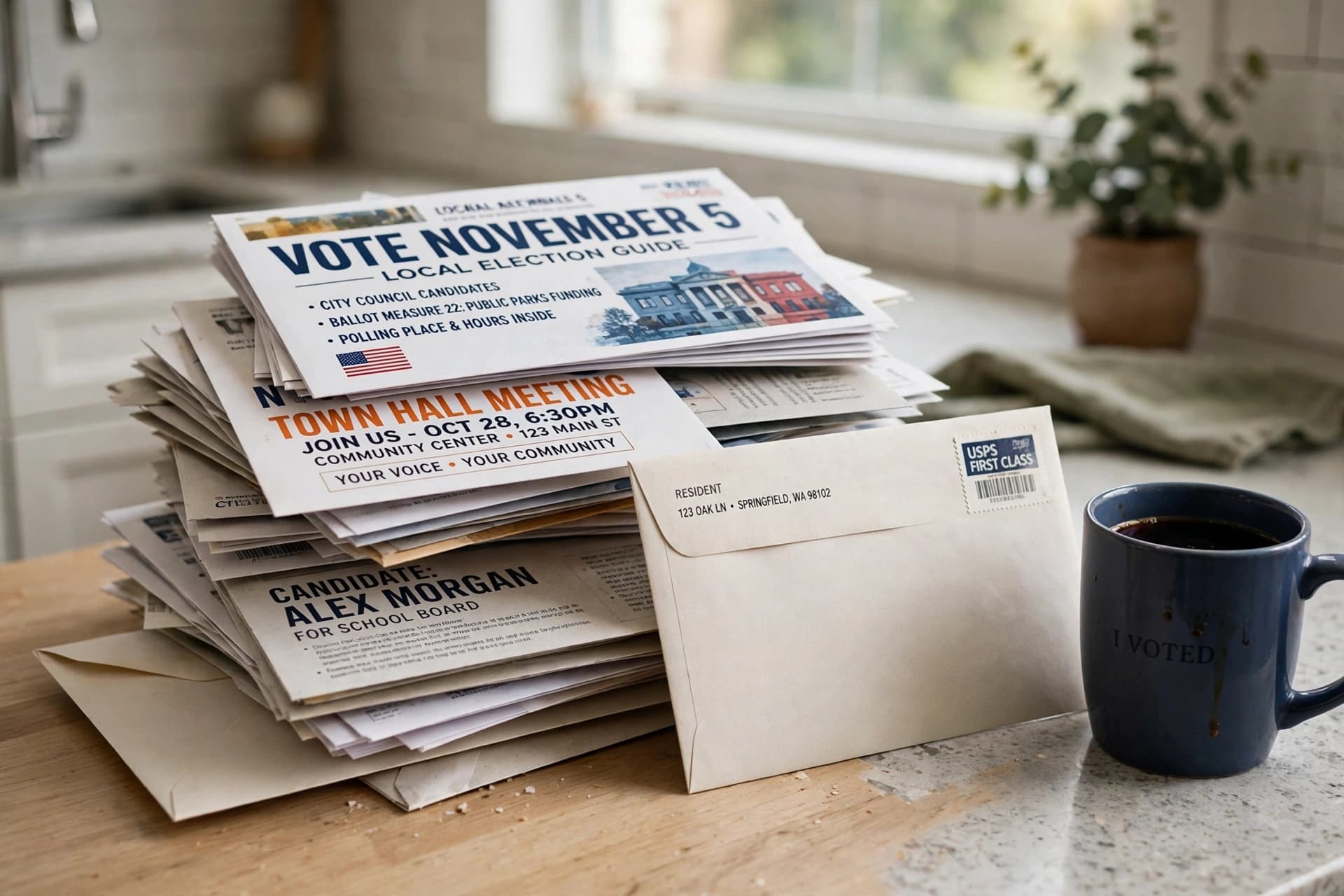
Image Disclaimer: The image accompanying this article was generated by AI and is not a photograph of actual voters or campaign materials.
Sources: The Canadian Press, NPR, WILX, AdImpact
Published by Banx Network. This article is part of the Banx decentralized media programme, powered by the BXE token on the XRP Ledger.