In the fog‑shrouded no‑man’s land of eastern Ukraine, where the front lines have ebbed and flowed for years and isolated soldiers can be pinned down by enemy fire, a remarkable story of survival and innovation has emerged. For 33 days, a wounded Ukrainian soldier named Maksym lay trapped between opposing forces, unable to move and with limited supplies, as ground‑based evacuation efforts repeatedly failed. Then, in a mission that merged courage with cutting‑edge technology, a robot on wheels arrived to carry him to safety — a rescue that highlights how battlefield robotics are redefining survival on the modern front line.
Maksym’s ordeal began near Toretsk in the Donetsk region, where intense fighting and the pervasive threat of unmanned hostile drones made conventional medical evacuations all but impossible. For weeks, Russian drone strikes and minefields blocked every attempt to reach him, even as fellow soldiers supplied him with food and water from afar. Traditional armored vehicles or helicopters were too vulnerable in the so‑called “gray zone” — territory under neither side’s firm control — prompting Ukrainian commanders to turn to unmanned systems instead.
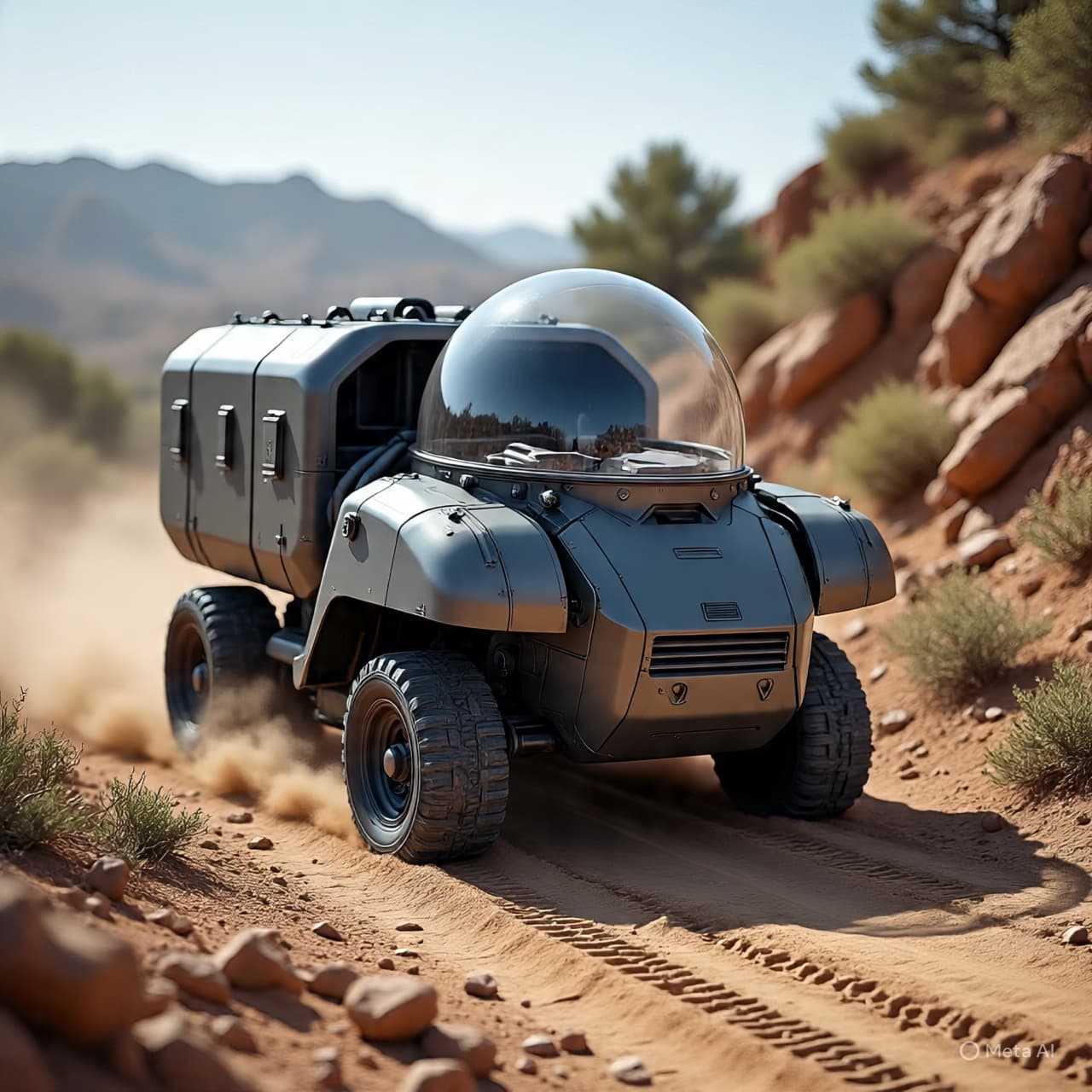
The solution came in the form of an armored ground robot, remotely piloted across dangerous terrain. Built with rugged wheels and a compact armored capsule atop, the robot was designed to traverse shell‑scarred ground while minimizing risk to human rescuers. When it finally reached Maksym, the soldier climbed into the capsule despite a mix of exhaustion, injury and the constant threat of enemy fire. As the robot made the long three‑hour trek back toward Ukrainian‑held positions, it encountered explosions and hostile drones — but its armored design and remote operation kept both machine and man protected.
This type of unmanned ground vehicle is becoming increasingly vital in Ukraine’s conflict, where traditional medical evacuation routes have been obliterated by the proliferation of combat drones and extended kill zones. Ukrainian military units have integrated similar systems into frontline logistics, using robots to deliver supplies, reinforce isolated positions and retrieve wounded personnel in ways that would be suicidal for human teams.
For Maksym, the experience was surreal. “You’re in this little driverless armored shell, going who knows where,” he told CNN, describing how, despite his fear and uncertainty, the robot offered his only realistic chance at survival after weeks of being stuck with a tourniquet on his leg. His rescue stands not only as a personal triumph over dire circumstances but also as a testament to how battlefield robotics are reshaping the calculus of rescue — where machines assume the most dangerous missions so soldiers don’t have to.
As Ukraine continues to innovate under fire, these unmanned systems symbolize a broader shift in how wars are fought and how lives are saved: robots are no longer futuristic curiosities, but essential tools that complement human courage with technical precision, bringing hope to those trapped where few dared to venture.
AI Image Disclaimer “Illustrations were produced with AI tools and serve as conceptual depictions, not real photographs.”
Sources CNN CBS News The Telegraph United24 Media Ukrainska Pravda
Published by Banx Network. This article is part of the Banx decentralized media programme, powered by the BXE token on the XRP Ledger.