Mercury, the smallest planet in our solar system and the closest to the Sun, has long been viewed as a barren, scorched world. Its surface, pockmarked by craters and baked by solar radiation, seemed to offer little surprise. However, a new study challenges this conventional wisdom, revealing that Mercury’s surface is far more complex and chemically diverse than previously imagined. This discovery invites us to rethink the geological history of our nearest planetary neighbor.
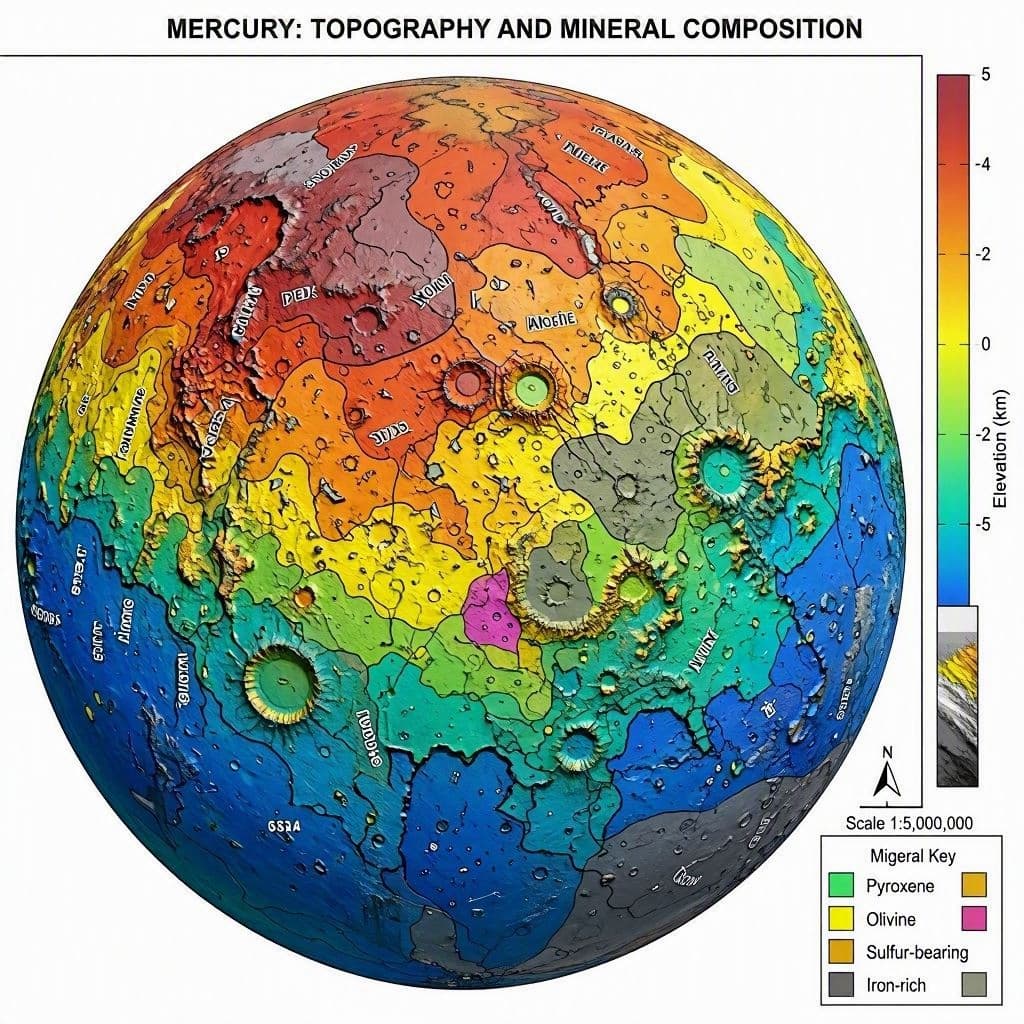
Using data from NASA’s MESSENGER mission, researchers have analyzed the spectral signatures of Mercury’s terrain. They found unexpected variations in mineral composition, particularly in the northern plains. These areas contain higher levels of volatile elements, such as sulfur and potassium, which should have been vaporized by the intense heat of the early Sun. Their presence suggests that Mercury’s formation and evolution were more nuanced than simple models predicted.
The study highlights distinct geological units that differ in age and composition. Some regions appear to be covered in smooth plains formed by ancient volcanic flows, while others show signs of explosive volcanism. This diversity indicates that Mercury was geologically active for a longer period than assumed, with magma rising to the surface and reshaping the landscape over millions of years.
One of the most surprising findings is the presence of hollows, shallow depressions that seem to be forming today. These features are thought to be created by the sublimation of volatile materials, where solid turns directly into gas. This ongoing process suggests that Mercury is not a dead world but one that is still slowly changing, driven by internal heat and solar interaction.
The implications for planetary science are significant. If Mercury retained volatiles despite its proximity to the Sun, it challenges theories about how planets form in high-temperature environments. It suggests that the building blocks of the inner solar system were more varied and resilient than previously thought. This insight helps refine models of planetary accretion and differentiation.
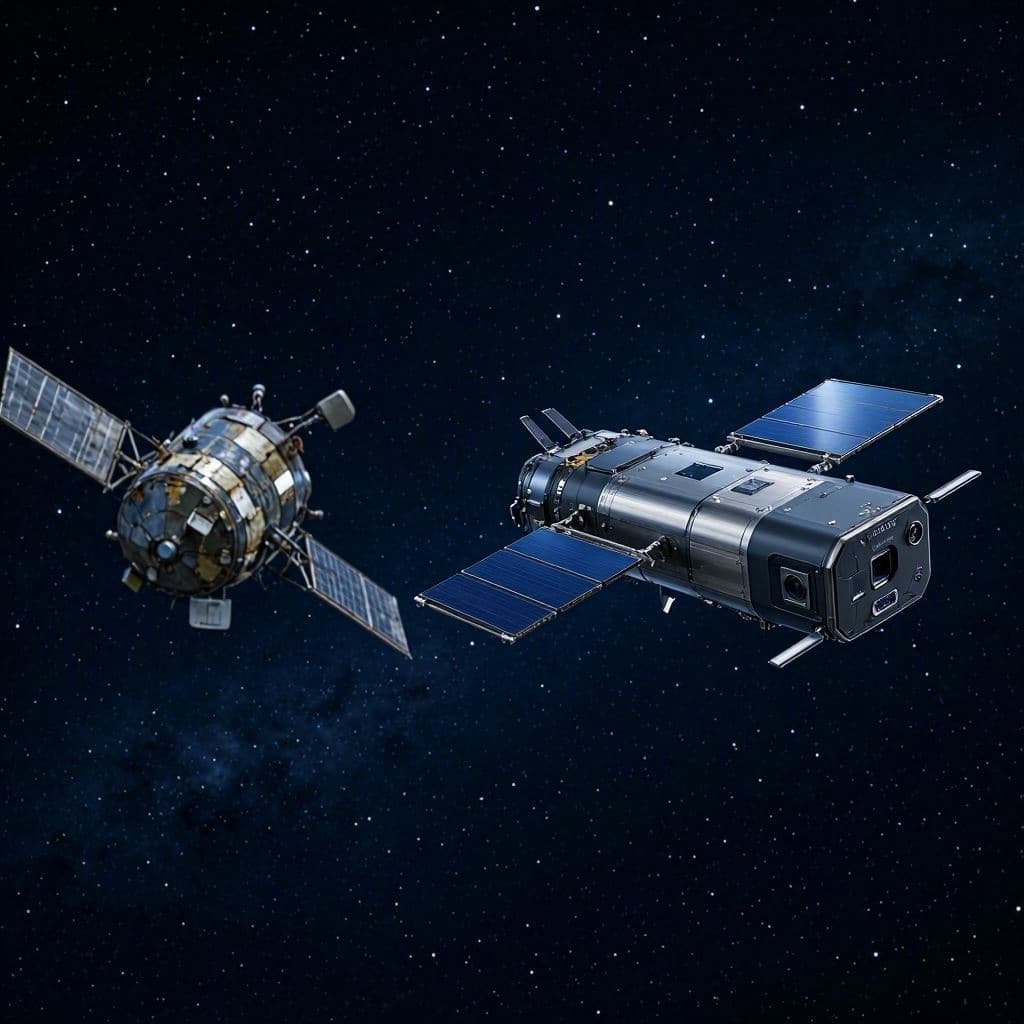
Furthermore, the study underscores the importance of remote sensing in exploring inaccessible worlds. Without the detailed data provided by MESSENGER, these subtle chemical differences would have remained hidden. It demonstrates how technology can reveal the hidden stories of celestial bodies, turning distant points of light into complex geological entities.
As future missions plan to explore Mercury, such as the European Space Agency’s BepiColombo, these findings will guide their objectives. Scientists will look for more evidence of volatile retention and recent geological activity. The planet, once dismissed as simple, now stands as a key piece in the puzzle of solar system history.
The new study on Mercury’s surface reveals a unexpected chemical diversity and geological activity. These findings reshape our understanding of the planet’s history, highlighting the complexity of worlds closest to the Sun.
AI Image Disclaimer: Images used to depict this planetary science discovery are AI-generated for illustrative purposes.
Sources: NASA Goddard Space Flight Center Journal of Geophysical Research Space.com
Published by Banx Network. This article is part of the Banx decentralized media programme, powered by the BXE token on the XRP Ledger.