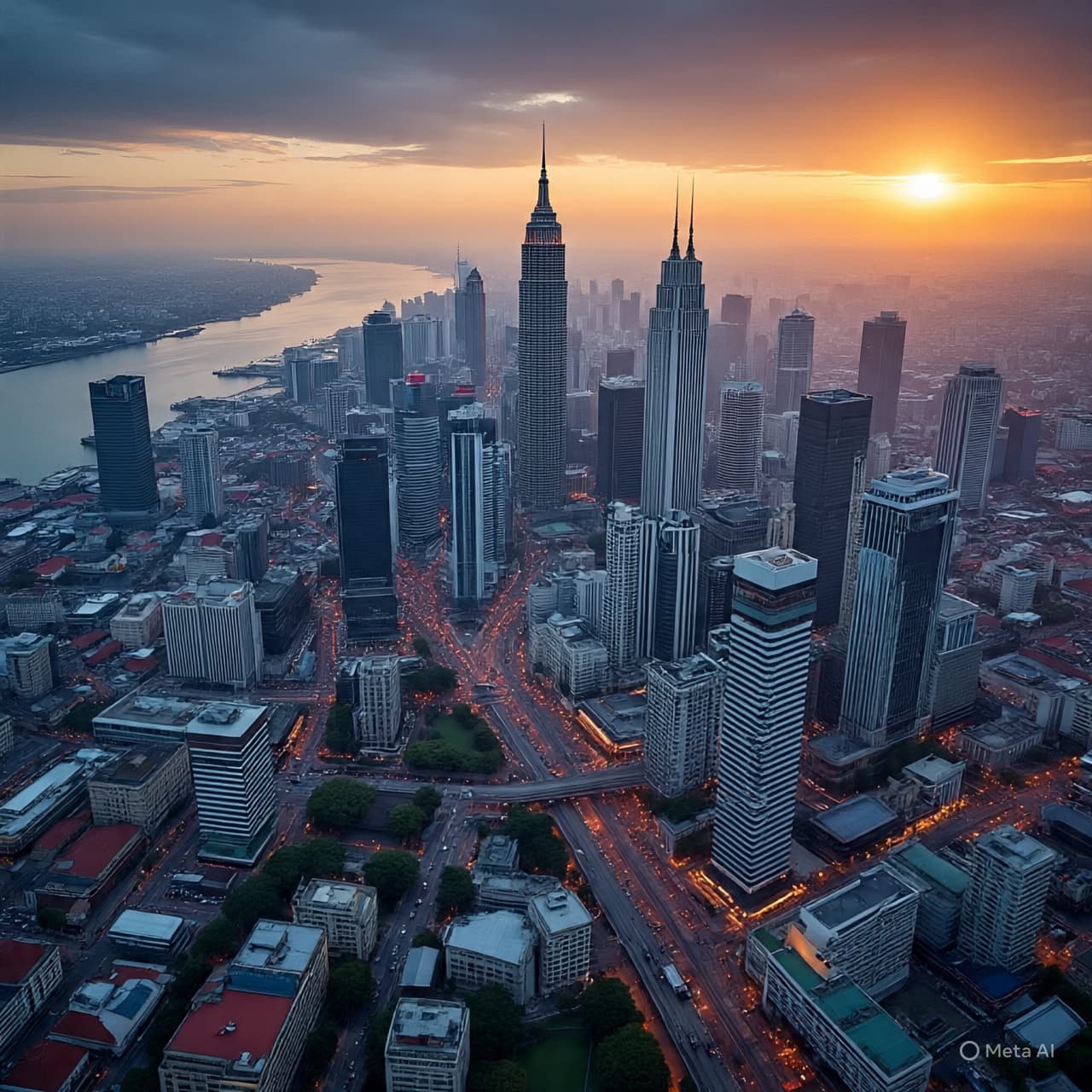
In the rhythms of humanity — the comings and goings, the births, the migrations — there lies a quiet transformation. Old titles slip, and new ones emerge. In 2025, the world’s urban map has been turned gently but irrevocably. The city once hailed as the largest on Earth gives way — not with a clash, but a turning of the tide. Welcome to Jakarta’s moment.
The United Nations (UN) has released its latest “World Urbanization Prospects 2025” report. According to its updated methodology — applying a consistent definition of “urban area” globally — Jakarta now ranks as the planet’s most populous city, with nearly 42 million inhabitants. That shifts the crown from Tokyo, which now counts about 33–33.4 million residents under the same classification — a number far surpassed by Jakarta’s swelling populace.
This change reflects more than demographic arithmetic. It is a story of urban transformation: migration, regional growth, expanding suburbs, and shifting economic centers. Jakarta — long a magnet for Indonesians seeking opportunity — has grown not just vertically in skyscrapers, but horizontally across its metropolitan sprawl, absorbing vast swaths of human life under a single urban umbrella.
In the new rankings, second place goes to Dhaka, Bangladesh, with roughly 36–37 million people, making Asia overwhelmingly dominant among the world’s largest cities. Meanwhile, Tokyo — which held top-city status for decades — now slips to third, emblematic of slower growth and changing demographics in Japan.
For Jakarta, this milestone is both a triumph and a sobering reality. To be the world’s most populous city means grappling with the growing pains of density: infrastructure, housing, transport, environment — the weight of millions living, working, moving, growing in a single urban tapestry. The new UN data doesn’t just show numbers; it signals challenges and opportunities for urban planners, for society, and for the people whose lives weave through its streets.
Yet this change is also a mirror to global trends: a world steadily urbanizing, where cities — not nations — become the homes of more and more people. As of 2025, nearly half of the world’s 8.2 billion people live in cities. It is a reshaping of how humanity gathers, connects, and builds its future — and Jakarta stands now at the very center of that transformation.
In the shifting hues of sky and skyline, from crowded alleys to sweeping avenues, Jakarta whispers a new truth: sometimes the size of a city is not just in its buildings, but in the lives woven within. And in 2025, more lives live in Jakarta than anywhere else on Earth. AI IMAGE DISCLAIMER Visuals are created with AI tools and are not real photographs.
SOURCES United Nations Department of Economic and Social Affairs Al Jazeera Anadolu Agency Time News Sky News.
Published by Banx Network. This article is part of the Banx decentralized media programme, powered by the BXE token on the XRP Ledger.