In the annals of medieval warfare, siege engines like the trebuchet were feared for their power to hurl massive stones over castle walls. Yet, while historical records abound with tales of battles and sieges, direct evidence of individual casualties from these machines is rare. Recently, archaeologists have identified what is believed to be the only known trebuchet casualty in history: a skeleton unearthed in Scotland with injuries consistent with a high-velocity projectile impact.
The remains, discovered during excavations at Stirling Castle, date back to the early 14th century, a period of intense conflict between England and Scotland. The skeleton, designated as Skeleton 150, exhibits over 160 fractures, a pattern that paleopathologists describe as catastrophic. The severity and distribution of the breaks suggest a single, massive blow from a heavy object, likely a stone launched by a trebuchet during the siege of 1304.
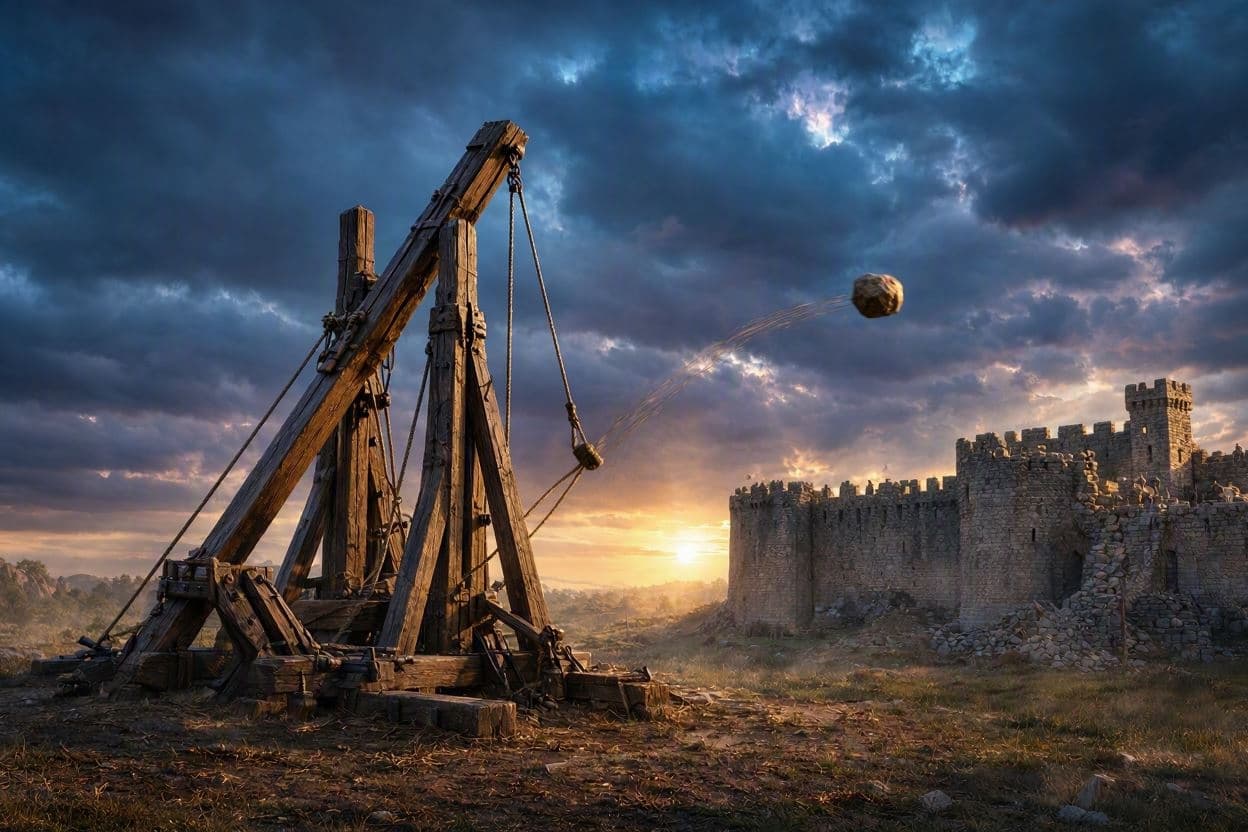
Historical accounts mention King Edward I’s use of a massive trebuchet nicknamed "War Wolf" during the siege. This machine was capable of launching projectiles weighing hundreds of pounds with devastating force. The discovery of Skeleton 150 provides physical corroboration of these historical narratives, offering a tangible connection to the violence of the era. It transforms abstract historical accounts into a personal story of loss.
Forensic analysis reveals that the individual was likely a soldier or defender of the castle. The trauma would have been instantaneous and fatal, leaving no chance for survival. This finding helps researchers understand the lethal efficiency of medieval siege technology and the risks faced by those on the front lines. It is a stark reminder of the human cost of war, even centuries ago.
The identification of this casualty is significant because most skeletal remains from battlefields show signs of multiple injuries from swords, arrows, or falls. The singular, massive trauma seen in Skeleton 150 is unique. It allows scientists to study the biomechanics of trebuchet impacts, providing insights into the physics of medieval warfare that written records alone cannot offer.
For the archaeological community, this discovery is a milestone. It highlights the value of interdisciplinary research, combining history, archaeology, and forensic science to piece together the past. Each bone tells a story, and in this case, the story is one of extraordinary force and historical significance. It bridges the gap between myth and reality, grounding legendary weapons in physical evidence.
Public interest in the find has been substantial, drawing attention to the often-overlooked details of medieval life and death. Museums and educational institutions are using the story to engage audiences with history in a more visceral way. It reminds us that behind every historical event are individuals whose lives were shaped by the technologies and conflicts of their time.
As research continues, Skeleton 150 stands as a unique testament to the power of the trebuchet. It is a silent witness to a distant war, offering a poignant connection to the past. In studying this single set of remains, we gain a deeper appreciation for the complexities of history and the enduring legacy of those who lived and died in the shadow of castle walls.
AI Image Disclaimer: Visuals in this article are AI-generated illustrations of medieval siege scenes and skeletal structures, designed to visualize the historical context without depicting graphic violence or real human remains.
Sources: Ars Technica, Smithsonian Magazine, Live Science, History Today
Published by Banx Network. This article is part of the Banx decentralized media programme, powered by the BXE token on the XRP Ledger.