In the quiet dust of southeastern Turkey, history is being rewritten not by empires, but by stone. At Karahan Tepe, a site that predates Stonehenge and the pyramids, archaeologists have uncovered a sculpture that challenges our understanding of early human symbolism. An eleven-thousand-year-old statue depicting a human figure riding a leopard has emerged from the earth, offering a rare glimpse into the spiritual and social complexities of humanity’s first settled communities.
Karahan Tepe is part of the Taş Tepeler (Stone Hills) project, a network of Neolithic sites that includes the famous Göbekli Tepe. These settlements date back to the Pre-Pottery Neolithic period, a time when hunter-gatherers were beginning to transition into agrarian societies. The discovery of such intricate art suggests that these early communities possessed a sophisticated symbolic language and a rich mythological world long before the advent of written record.
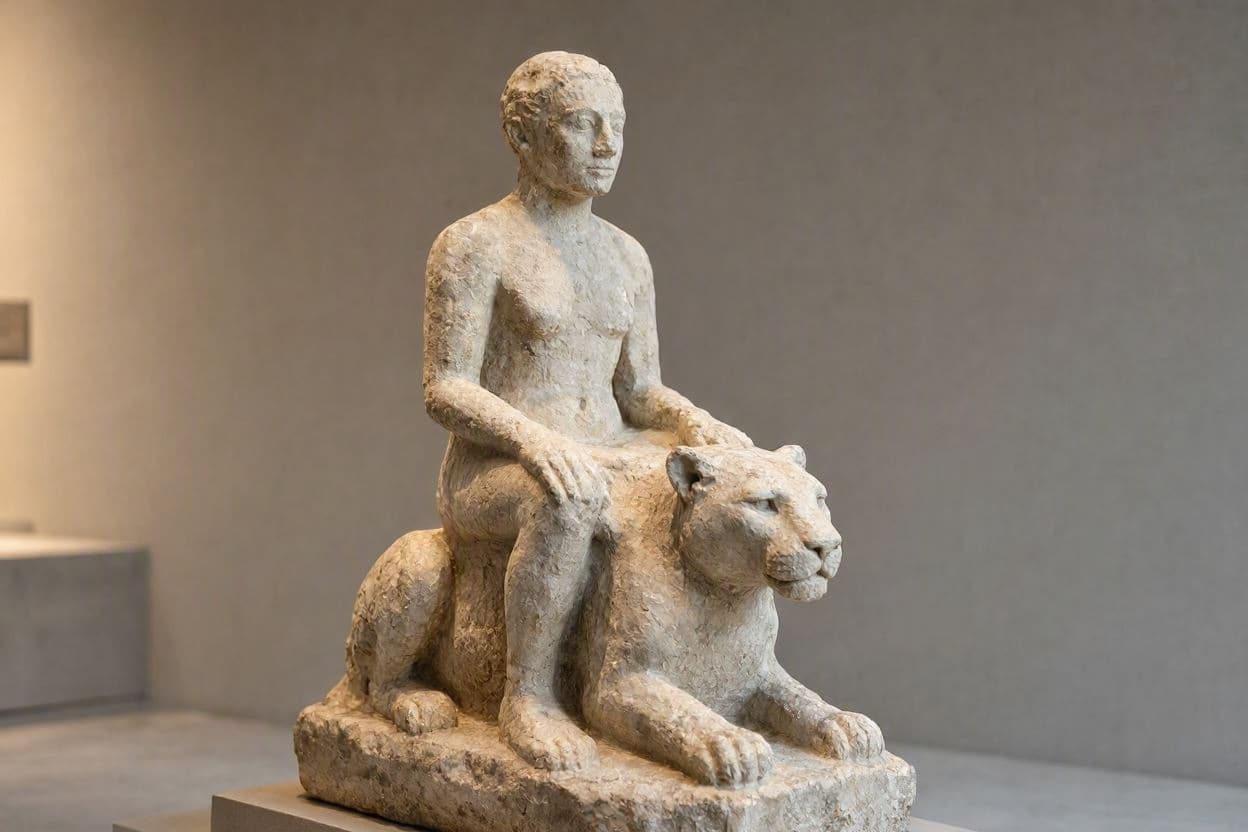
The statue itself is small but striking. Carved from local limestone, it depicts a humanoid figure seated atop a large feline, likely a leopard or panther. The craftsmanship indicates a high level of skill and attention to detail, with distinct features carved to represent both the rider and the animal. This imagery is unprecedented for the period, suggesting a narrative or ritualistic significance that goes beyond simple decoration.
Leopards were likely revered animals in this culture, symbolizing power, danger, or spiritual guidance. The act of riding such a creature may represent mastery over nature, a shamanistic journey, or a mythological hero. Unlike later civilizations that domesticated animals for labor, this depiction hints at a more mystical relationship between humans and the wild predators that shared their landscape.
The context of the find is equally important. The statue was discovered in a communal area, possibly a temple or gathering space, alongside other T-shaped pillars and carvings. This placement suggests that the object played a role in public rituals or collective memory, reinforcing social bonds through shared belief systems. It underscores the idea that religion and community identity were central drivers in the formation of early settlements.
This discovery adds depth to the growing body of evidence from Karahan Tepe, which has already yielded numerous animal sculptures and abstract symbols. Each new find peels back another layer of the Neolithic mindset, revealing a people who were not merely surviving, but contemplating their place in the cosmos. The leopard rider stands as a testament to their imagination and artistic expression.
For archaeologists, the statue provides a tangible link to the beliefs of our ancestors. It challenges the notion that early humans were solely focused on subsistence, showing instead that they invested time and energy in creating art that conveyed complex ideas. This shift in perspective enriches our understanding of the cognitive evolution of Homo sapiens.
Excavations at Karahan Tepe continue under the direction of Turkish authorities, with more artifacts expected to surface in the coming seasons. The leopard rider statue will be preserved and studied further, offering scholars a unique window into the dawn of civilization.
AI Image Disclaimer: Please note that the visual accompaniments for this article are AI-generated illustrations created to reflect the thematic elements of Neolithic archaeology and ancient symbolism.
Sources: Ministry of Culture and Tourism (Turkey) Heritage Daily Arkeonews BBC News Scientific American
Published by Banx Network. This article is part of the Banx decentralized media programme, powered by the BXE token on the XRP Ledger.