CEBU CITY, Philippines — A deadly landfill collapse hit the Prime Waste Solutions facility in Barangay Binaliw on the afternoon of Thursday, January 8, 2026, unleashing a massive garbage landslide that buried workers, damaged facilities, and brought operations at the site to a halt.
What Happened
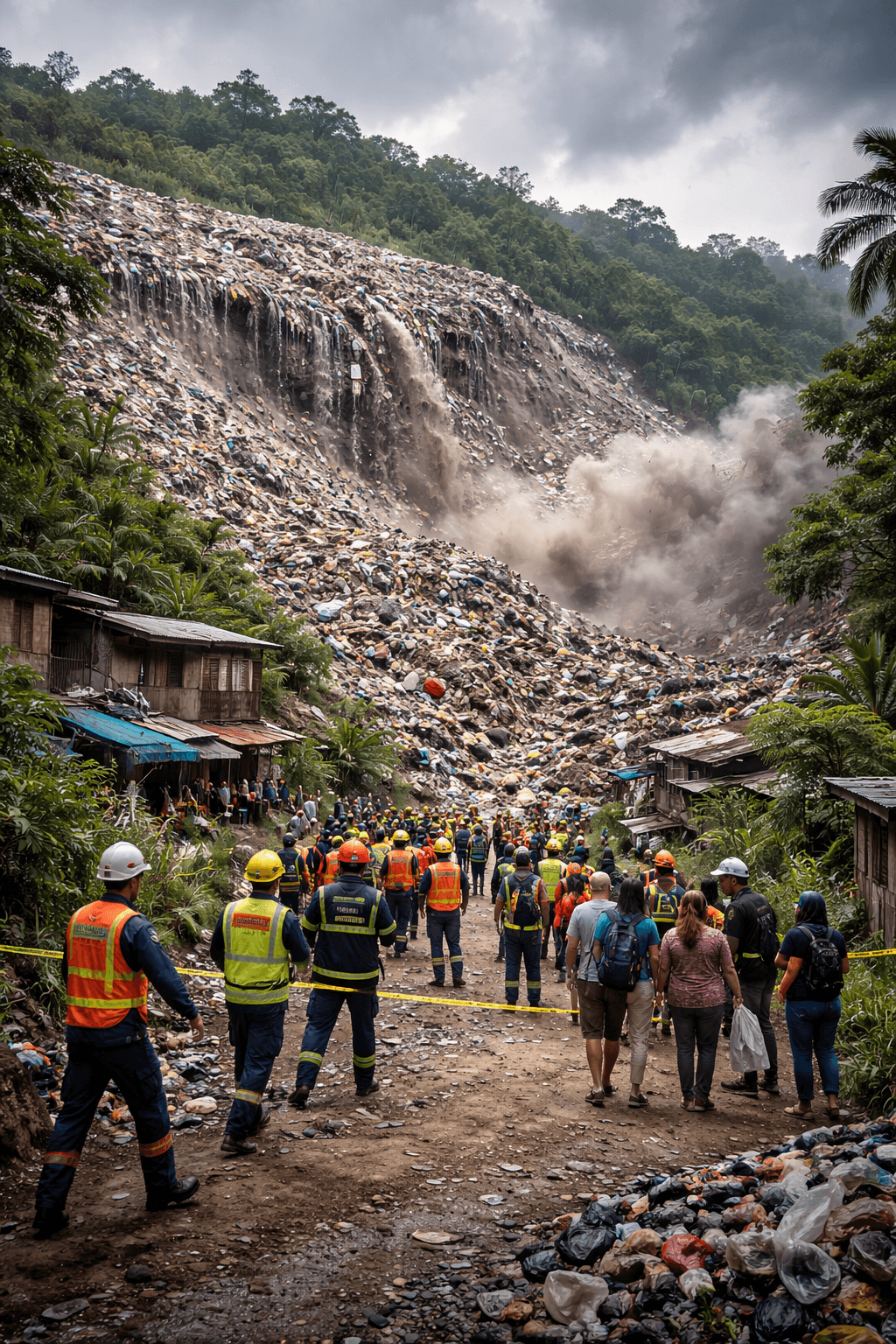
Between 4:00 and 4:17 p.m., a towering mound of waste—estimated to be as high as four stories—suddenly collapsed, sending tons of garbage rushing downhill in a powerful avalanche. The slide struck the materials recovery facility and nearby structures, where dozens of workers were on duty at the time.
Witnesses reported hearing a loud crash moments before the waste came crashing down, giving workers little to no time to escape.
Human Toll
Rescue teams continue to search the debris as the death toll and missing count evolve:
• At least four people have been confirmed dead
• 36 to 38 workers remain missing, based on initial reports
• 12 to 13 workers were rescued alive and are currently receiving treatment in local hospitals
Families of the missing have gathered near the site, anxiously waiting as search crews sift through unstable piles of garbage.
Search and Rescue Efforts
Emergency responders are working around the clock despite dangerous conditions. A 50-ton crane has been deployed to help clear debris and reach possible survivors, though operations remain slow and cautious.
Authorities say rescue efforts are complicated by unstable ground conditions and the risk of methane gas buildup, limiting the use of heavy machinery in some areas.
Impact on the City
The collapse has forced the indefinite shutdown of the Binaliw landfill, disrupting waste disposal across Cebu City, Mandaue City, and Lapu-Lapu City. Garbage collection in affected areas has been temporarily suspended.
Local officials are now scrambling to identify alternative disposal sites and temporary transfer stations, including possible use of areas within South Road Properties (SRP) or nearby municipalities, subject to environmental approval.
Possible Causes Under Investigation
City officials, including Mayor Nestor Archival, say early findings suggest the collapse may have been triggered by a combination of environmental and structural factors. These include:
• Prolonged heavy rains, which may have saturated soil and waste layers
• A 6.7-magnitude earthquake in September 2025, followed by Typhoon Tino and weeks of rainfall, possibly weakening the landfill’s stability
• Concerns over poor landfill management practices, such as improper drainage and uncontrolled waste piling
A Grim Reminder
The tragedy has renewed concerns over landfill safety in the Philippines. Similar disasters in the past—most notably the 2000 Quezon City landfill collapse that killed over 200 people—have long prompted calls for stricter waste management regulations.
As investigations continue, authorities face mounting pressure to ensure accountability and prevent another catastrophe.
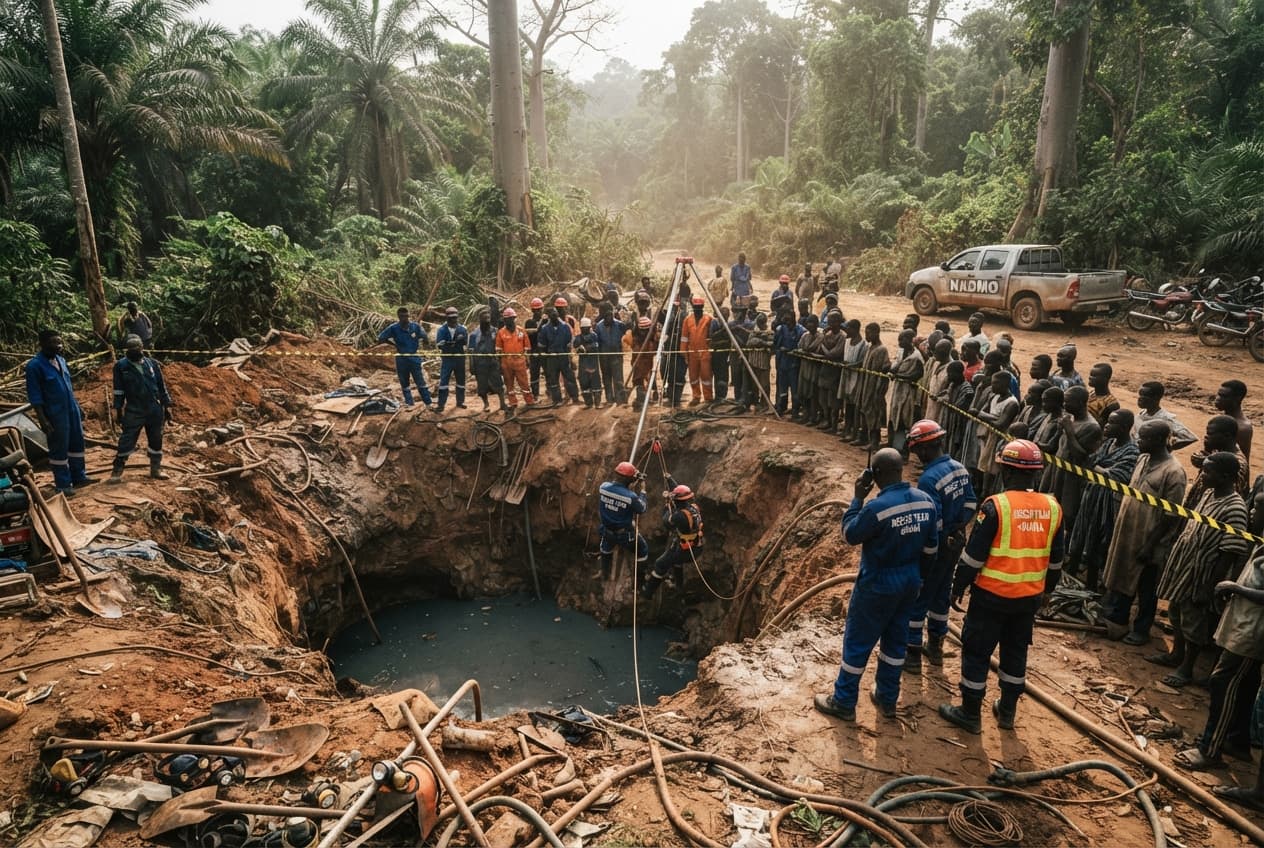
AI Image Disclaimer: Visuals created with AI tools for illustrative purposes only; they do not represent real-life photographs.
Published by Banx Network. This article is part of the Banx decentralized media programme, powered by the BXE token on the XRP Ledger.