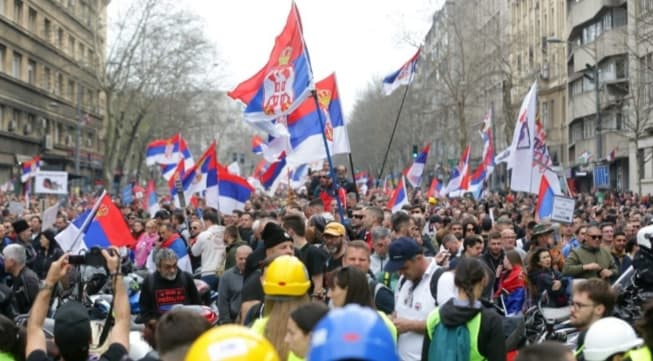
Throughout 2025, Serbia has been the scene of widespread protests characterized by mass rallies, marches, and roadblocks that have transformed the urban landscape. Citizens from various walks of life have taken to the streets to voice their concerns over government policies, economic difficulties, and social issues, reflecting a growing dissatisfaction that has been brewing for years.
The demonstrations began gaining traction earlier this year, fueled by public frustration over rising living costs, lack of job opportunities, and perceived government corruption. Protesters have gathered in major cities including Belgrade, Novi Sad, and Niš, showcasing a diverse coalition of groups united by a common desire for change.
Participants in the rallies have engaged in a variety of tactics to amplify their message, including organizing marches through city centers and setting up roadblocks on major thoroughfares. These actions have not only disrupted daily life but have also attracted widespread media attention, drawing both national and international observers to the situation.
Union leaders, student organizations, and various civil society groups have played pivotal roles in mobilizing support and coordinating efforts. Signs and banners demanding accountability and policy reforms have become commonplace, creating a vivid display of unity among protesters.
The government has responded by increasing police presence and enforcing certain restrictions on public gatherings, raising concerns about the right to peaceful assembly. While officials have called for dialogue, the protesters remain resolute, demanding concrete actions that address their grievances.
As the situation evolved, discussions about potential negotiations and reforms have emerged, though skepticism remains among the populace. The ongoing protests in Serbia signify a crucial moment in the country's democratic journey, as citizens assert their voices in the face of economic and political challenges.
The unfolding situation is being watched closely, both domestically and internationally, as Serbia navigates these turbulent waters in pursuit of a more equitable and transparent governance system.
Published by Banx Network. This article is part of the Banx decentralized media programme, powered by the BXE token on the XRP Ledger.