The red planet has always occupied a special place in the human imagination. From ancient observations of its glowing presence in the night sky to modern spacecraft exploring its dusty landscapes, Mars has remained a symbol of possibility and curiosity. Yet behind the excitement of searching for life beyond Earth lies a careful scientific discipline that moves slowly, like a rover carefully crossing unfamiliar terrain. For many researchers, the question is not whether life on Mars is impossible, but whether the evidence is strong enough to support such a historic claim.
Scientists around the world continue to investigate Mars because it once held conditions that may have been suitable for life. Ancient rivers, lakebeds, minerals formed in water, and signs of past environments have all been discovered through missions operated by NASA and other space agencies. These findings have strengthened the belief that Mars was once a more active and potentially habitable world than the cold desert planet seen today.
However, most planetary scientists remain cautious about announcing the discovery of life because extraordinary claims require extraordinary evidence. A possible chemical signal, unusual rock pattern, or organic molecule may have several explanations that do not involve biology. Researchers must carefully examine whether a finding truly points to past or present life or whether it can be explained through natural geological processes.
This scientific caution does not mean researchers are unwilling to discover life beyond Earth. In many ways, skepticism is part of the search itself. Scientists understand that a premature announcement could create confusion and make future discoveries harder to evaluate. Careful verification helps ensure that when humanity finally finds evidence of life elsewhere, the discovery will stand on a strong foundation.
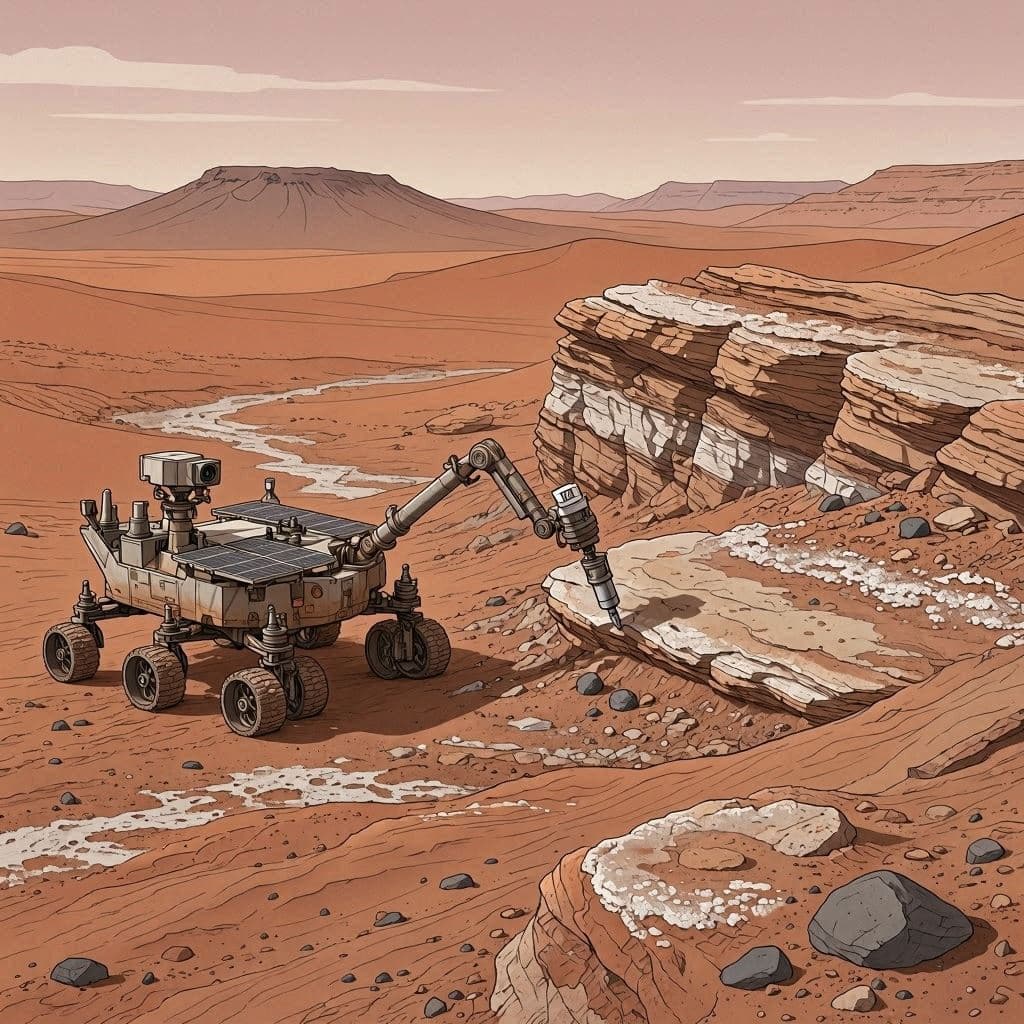
Mars missions have already provided valuable clues. NASA’s Curiosity rover has identified organic compounds in Martian rocks, while the Perseverance rover has been collecting samples from Jezero Crater, an area believed to have once contained a lake and river system. These investigations are designed not only to search for signs of life but also to understand the planet’s environmental history.
Another reason scientists remain reserved is that life detection beyond Earth is extremely complex. On Earth, life leaves many recognizable fingerprints, but scientists do not know exactly what alien life might look like or what chemical traces it would leave behind. This uncertainty requires researchers to consider many possibilities before reaching conclusions.
The search for Martian life also carries a deeper meaning. Discovering even simple microbial life beyond Earth would change humanity’s understanding of its place in the universe. It would suggest that life may not be a rare event limited to one small planet, but perhaps a natural outcome of cosmic conditions found in many places.
For now, scientists continue exploring Mars with patience and curiosity. Their caution is not a rejection of discovery, but a commitment to making sure that any answer about life beyond Earth is built on evidence rather than hope alone. The red planet remains an open book, and researchers are carefully turning each page.
AI Image Disclaimer: The accompanying images are AI-generated artistic interpretations inspired by Mars exploration and scientific research. They are intended for visual illustration and may not represent actual mission imagery.
Sources (Verified):
NASA Nature Scientific American Associated Press (AP) MIT News European Space Agency (ESA)
Published by Banx Network. This article is part of the Banx decentralized media programme, powered by the BXE token on the XRP Ledger.