Mars has long occupied a unique place between science and imagination. Its reddish surface, visible even from Earth’s night sky, has inspired generations of questions about whether life might once have existed beyond our planet. Now, scientists working with NASA’s Curiosity rover say they have identified complex organic compounds in Martian material, adding another important layer to that ongoing search.
Researchers explained that organic compounds are molecules containing carbon, an essential building block for life as it is known on Earth. While such compounds do not automatically indicate biological activity, their presence helps scientists better understand the planet’s chemical history and environmental evolution.
The compounds were detected through analysis conducted by Curiosity’s onboard laboratory instruments while exploring Gale Crater, a region believed to have once contained lakes and flowing water billions of years ago. Previous missions had already identified simpler organic molecules, but the latest findings appear significantly more chemically complex.
Scientists emphasized that non-biological processes can also produce organic compounds. Geological reactions, meteorite impacts, and chemical interactions within ancient environments may all contribute to the formation of such materials. For that reason, researchers continue approaching the findings with scientific caution rather than dramatic conclusions.
Even so, the discovery strengthens evidence that Mars once possessed conditions potentially favorable for microbial life. Water, carbon chemistry, and stable environmental periods are considered important ingredients in assessing planetary habitability. Together, these factors continue making Mars one of the most compelling targets in planetary science.
Curiosity, which landed on Mars in 2012, remains one of NASA’s most successful long-term exploration missions. Over the years, the rover has traveled across rocky terrain while drilling into ancient sediments and analyzing atmospheric conditions. Its findings have steadily transformed scientific understanding of Mars from a static desert into a planet with a far more dynamic history.
The latest research also demonstrates the growing sophistication of robotic science missions. Instruments capable of conducting highly detailed chemical analysis millions of miles away reflect decades of engineering advancement and international scientific collaboration.
Public fascination with the possibility of life beyond Earth continues to shape interest in Mars exploration. While scientists remain careful not to overstate discoveries, each new finding contributes to humanity’s broader effort to understand whether life may emerge elsewhere under the right environmental conditions.
For now, Mars still guards many of its secrets beneath layers of dust and stone. Yet with every sample analyzed and every molecule identified, the planet gradually reveals a story more complex—and perhaps more familiar—than once imagined.
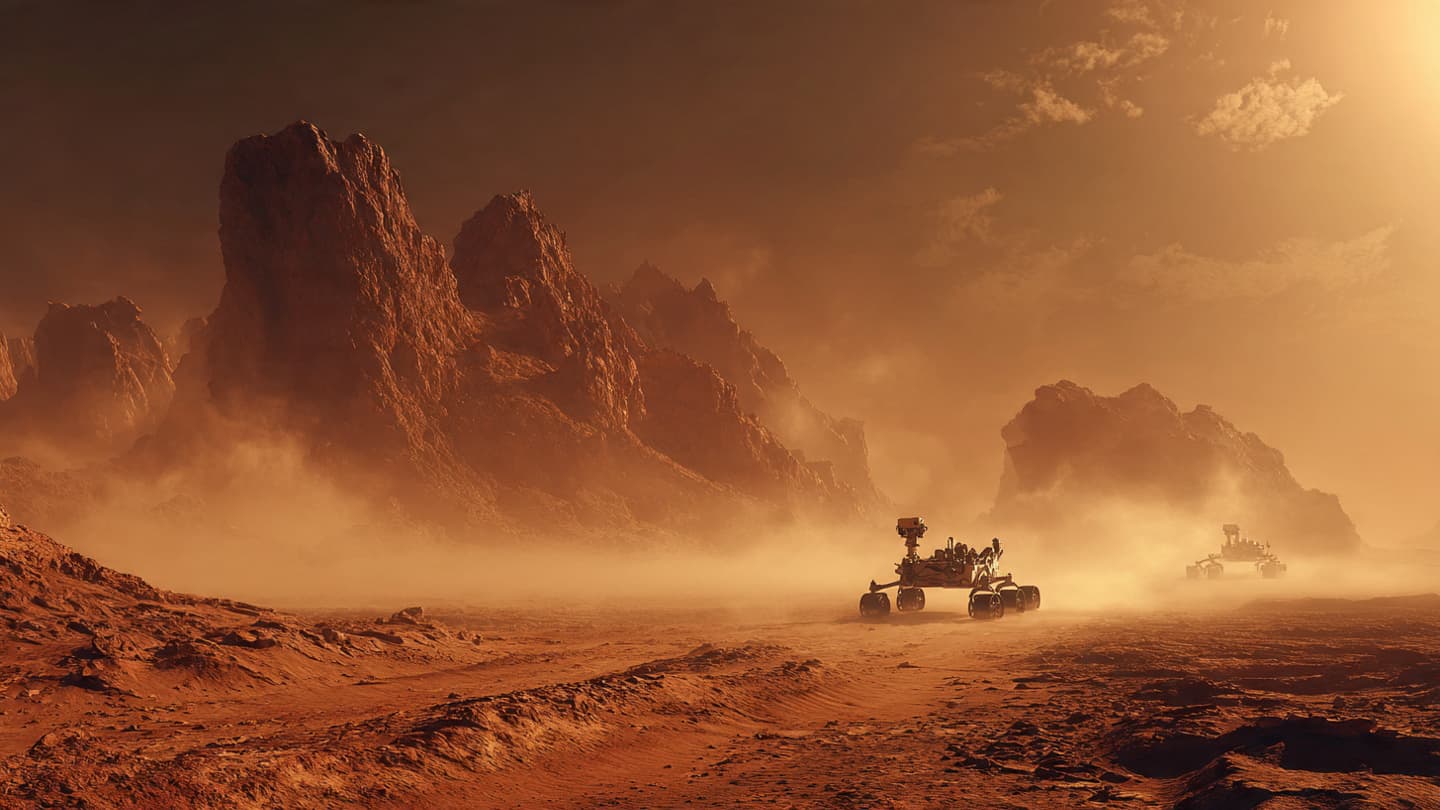
AI Image Disclaimer: Some illustrations associated with this article were generated using AI-assisted imagery to visualize Mars exploration scenes.
Sources: Phys.org, NASA, Nature, Science Magazine, Space.com
Published by Banx Network. This article is part of the Banx decentralized media programme, powered by the BXE token on the XRP Ledger.