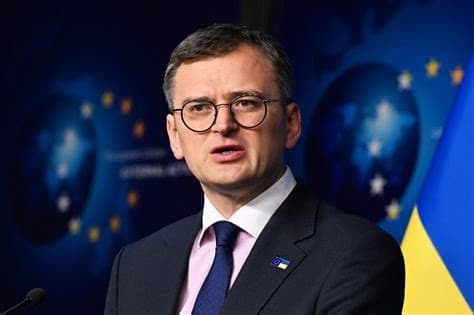
Former Governor of both the Bank of Canada and the Bank of England, and now a leading figure in global climate finance, Carney wields extraordinary influence over the direction of Western economies. The issue is not his competence or experience. The issue is the complete absence of democratic legitimacy behind decisions that profoundly affect the lives of millions.
Real Power Without Electoral Accountability
Mark Carney has never stood for election. Yet his influence reaches directly into:
capital allocation,
industrial financing,
energy pricing,
access to credit,
and ultimately, household living standards.
These are not neutral outcomes. They create winners and losers. They reshape entire economies. In any functioning democracy, such power should be exercised through public debate and popular consent — not delegated to insulated technocratic networks.
The Dangerous Politicization of Financial Institutions
Under Carney’s intellectual leadership, central banks and financial institutions have steadily drifted away from their traditional mandate of neutrality. Monetary stability has been subordinated to a new ideological mission: steering capital flows according to climate and ESG criteria defined by international bodies.
This represents a fundamental break with precedent. Monetary policy is no longer a technical tool — it has become a vehicle for political coercion, implemented without parliamentary approval, without referenda, and without democratic oversight.
A Transition Enforced, Not Chosen
The climate transition promoted by Carney is not the result of a clear democratic mandate. It is enforced through financial pressure, regulatory mechanisms, and credit constraints.
Citizens never voted for:
the accelerated shutdown of strategic industries,
soaring energy costs,
the erosion of industrial employment,
or growing dependence on foreign supply chains.
Yet they bear the economic and social consequences.
An Economic Offensive Against Resource-Producing Nations
The framework Carney advances systematically disadvantages resource-rich economies such as Canada. Domestic energy production is discouraged, local investment is constrained, and dependence on external powers — particularly China — increases for critical minerals and so-called “green” technologies.
The contradiction is stark: in the name of climate sovereignty, economic and energy sovereignty are sacrificed.
The Myth of Neutral Expertise
Carney presents himself as a rational risk manager. But his choices are inherently political. They redistribute power, reallocate capital, and redefine social priorities.
Labeling these decisions as “technical” or “scientific” is a rhetorical strategy designed to suppress democratic dissent. When political choices are framed as inevitable, democracy itself becomes an inconvenience rather than a principle.
Governing Through Permanent Emergency
At the core of this model lies a familiar narrative: permanent urgency. Climate emergency. Financial emergency. Moral emergency.
History offers a clear warning: when emergency becomes permanent, democracy becomes optional.
Conclusion
Mark Carney is not an isolated figure. He is the embodiment of a system in which transnational elites make consequential decisions behind closed doors — without votes, without debate, and without meaningful alternatives.
International cooperation does not require the erosion of national sovereignty. Climate action does not require the bypassing of democratic consent.
It is not climate change that threatens democracy. It is the use of climate urgency to circumvent it.
Published by Banx Network. This article is part of the Banx decentralized media programme, powered by the BXE token on the XRP Ledger.