
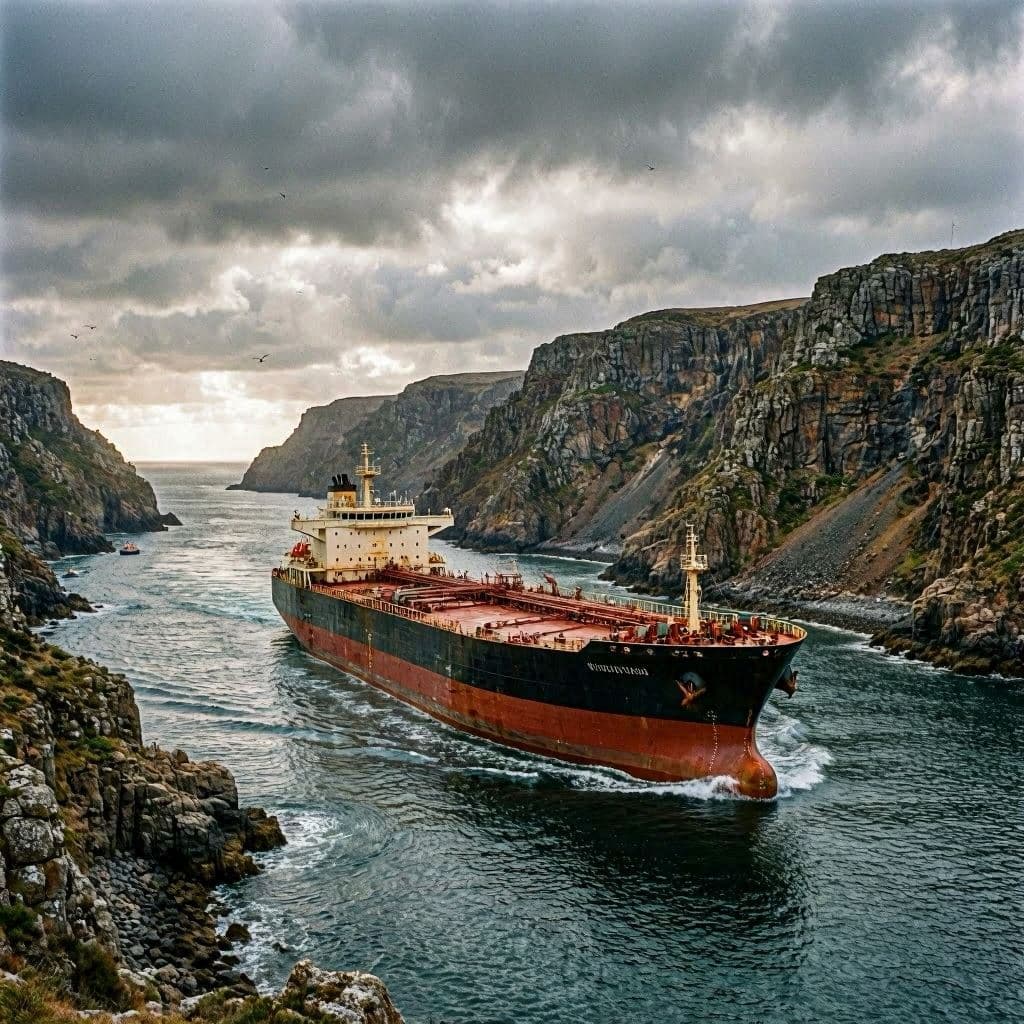
Key Highlights
- Iran issues a warning to oil tankers to adhere to approved navigation routes in the Strait of Hormuz.
- The Strait is a critical chokepoint for global oil supply, with potential economic impacts from disruptions.
- International naval forces remain vigilant to ensure freedom of navigation amid rising tensions.
Iran's recent directive regarding navigation in the Strait of Hormuz has raised alarms in the international shipping community. The Iranian military has mandated that oil tankers must strictly follow designated routes, warning that failure to comply could result in a 'forceful response.' This announcement underscores the strategic importance of the Strait of Hormuz, a vital maritime corridor through which approximately 20% of the world's oil supply passes daily.
The warning was issued by Iran's joint military command, which emphasized that adherence to established navigation lanes is essential for safe passage. The Strait of Hormuz, known for its narrow passages, presents unique challenges for maritime navigation. Iranian authorities argue that enforcing these routes is necessary to maintain order and security in waters they claim as their own. However, the aggressive tone of the warning suggests a readiness to take significant action against any vessels that do not comply.
The implications of this directive extend beyond regional waters, as any disruption in the Strait of Hormuz could lead to immediate spikes in global oil prices. Shipping companies and insurance firms are closely monitoring the situation, weighing the risks of potential interception or harassment by Iranian forces. The phrase 'forceful response' remains ambiguous, leaving room for various interpretations, from verbal warnings to more severe military actions, thus creating a climate of caution among maritime operators.
International responses have been cautious yet vigilant. Major naval powers, including the United States and its allies, continue to patrol the waters to uphold freedom of navigation. These military presences aim to deter any unilateral actions by Iran that could escalate into broader conflicts. The concentration of military forces in such a confined area raises the stakes for miscalculations, making effective diplomatic communication and adherence to international maritime law more critical than ever.
Historically, the Strait of Hormuz has been a flashpoint during periods of heightened tensions between Iran and Western nations. Previous incidents, including the seizure of vessels and accusations of smuggling, have led to standoffs that required careful diplomatic negotiations to resolve. The current warning from Iran echoes these past confrontations, reinforcing the strait's role as a strategic leverage point for Tehran in regional negotiations.
Despite the heightened rhetoric, maritime traffic through the Strait of Hormuz has continued, albeit with increased vigilance. Tanker operators are advised to maintain constant communication with coastal authorities and adhere strictly to the Traffic Separation Scheme, designed to organize vessel movements. This compliance is viewed as the best defense against misunderstandings, allowing commerce to proceed even amid political tensions. The resilience of global supply chains hinges on this delicate balance of compliance and deterrence.
Looking forward, the situation demands ongoing attention from the international community. Diplomatic channels remain open, with efforts focused on de-escalation and ensuring the preservation of open sea lanes. The economic stakes are too high for prolonged disruptions, providing a strong incentive for all parties to exercise restraint. The hope is that dialogue will prevail over confrontation, ensuring that the Strait of Hormuz remains a conduit for trade rather than a battleground.
Iran's warning to oil tankers highlights the ongoing volatility in the Strait of Hormuz. While navigation continues under strict guidelines, the threat of a forceful response underscores the precarious nature of maritime security in the region. Global stakeholders remain watchful, prioritizing stability and the uninterrupted flow of energy resources.
Published by Banx Network. This article is part of the Banx decentralized media programme, powered by the BXE token on the XRP Ledger.



