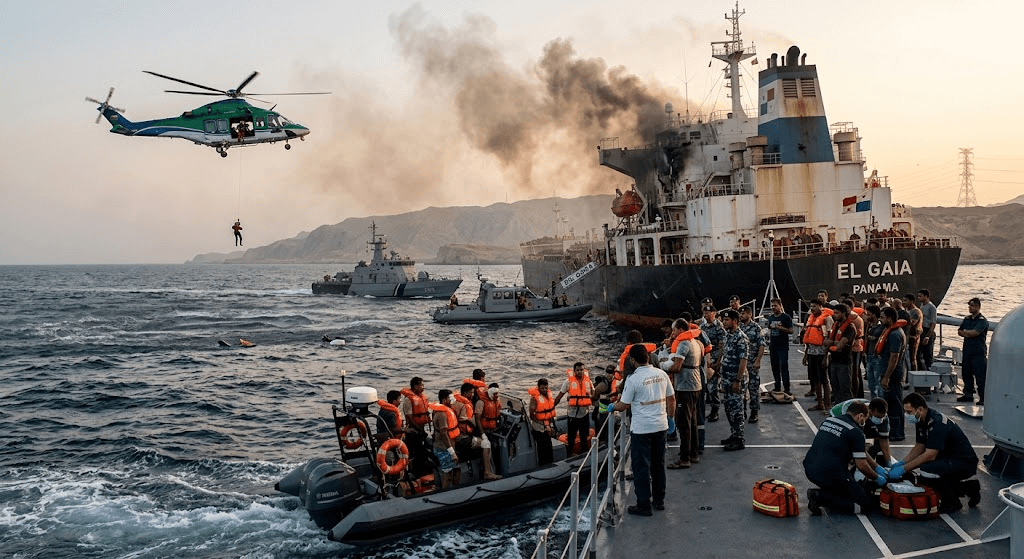
MUSCAT, Oman — Thirteen Indian seafarers were safely evacuated after their commercial vessel came under a sudden projectile strike off the coast of Oman, triggering search-and-rescue operations for one missing crew member and sparking international condemnation over rising threats to vital global shipping corridors.
The incident involved the MT El Gaia, a Panama-flagged oil tanker carrying a 14-member all-Indian crew transiting international waters near the Gulf region. The attack delivered severe structural damage to the vessel, sending distress calls across regional maritime networks and forcing crew members to execute emergency protocols in hazardous sea conditions.
Omani maritime security forces, in close coordination with Indian diplomatic channels, launched a rapid response operation to stabilize the scene and extract the personnel. Emergency response units successfully pulled 13 crew members from the damaged tanker and transferred them ashore for medical screening and trauma treatment.
Search teams supported by regional naval assets continue to sweep surrounding waters for the single remaining missing seafarer. Indian diplomatic officials confirmed that rescued crew members are receiving complete medical care and logistics support to ensure their safe repatriation.
"Our mission is maintaining continuous liaison with Omani authorities as intense search efforts proceed to locate our remaining national," stated an official diplomatic representative during an operational update. "All rescued seafarers have been accounted for and secured ashore."
Naval forensic experts and maritime security analysts have initiated a comprehensive assessment of the MT El Gaia to identify the weapon type, blast trajectory, and exact point of origin. Preliminary findings indicate the tanker sustained a direct hit from unscrewed aerial munitions or low-altitude anti-ship projectiles. Investigators are currently reviewing satellite telemetric data and radar logs to track the trajectory of the strike.
The targeted assault on the commercial vessel has drawn sharp condemnation from global powers, emphasizing that attacks on civilian maritime infrastructure and non-combatant seafarers are unacceptable under international law. In response, regional maritime authorities and global shipping consortia announced plans to tighten convoy escorts, enforce real-time vessel tracking, and establish enhanced emergency response protocols across high-risk transit corridors.
Published by Banx Network. This article is part of the Banx decentralized media programme, powered by the BXE token on the XRP Ledger.