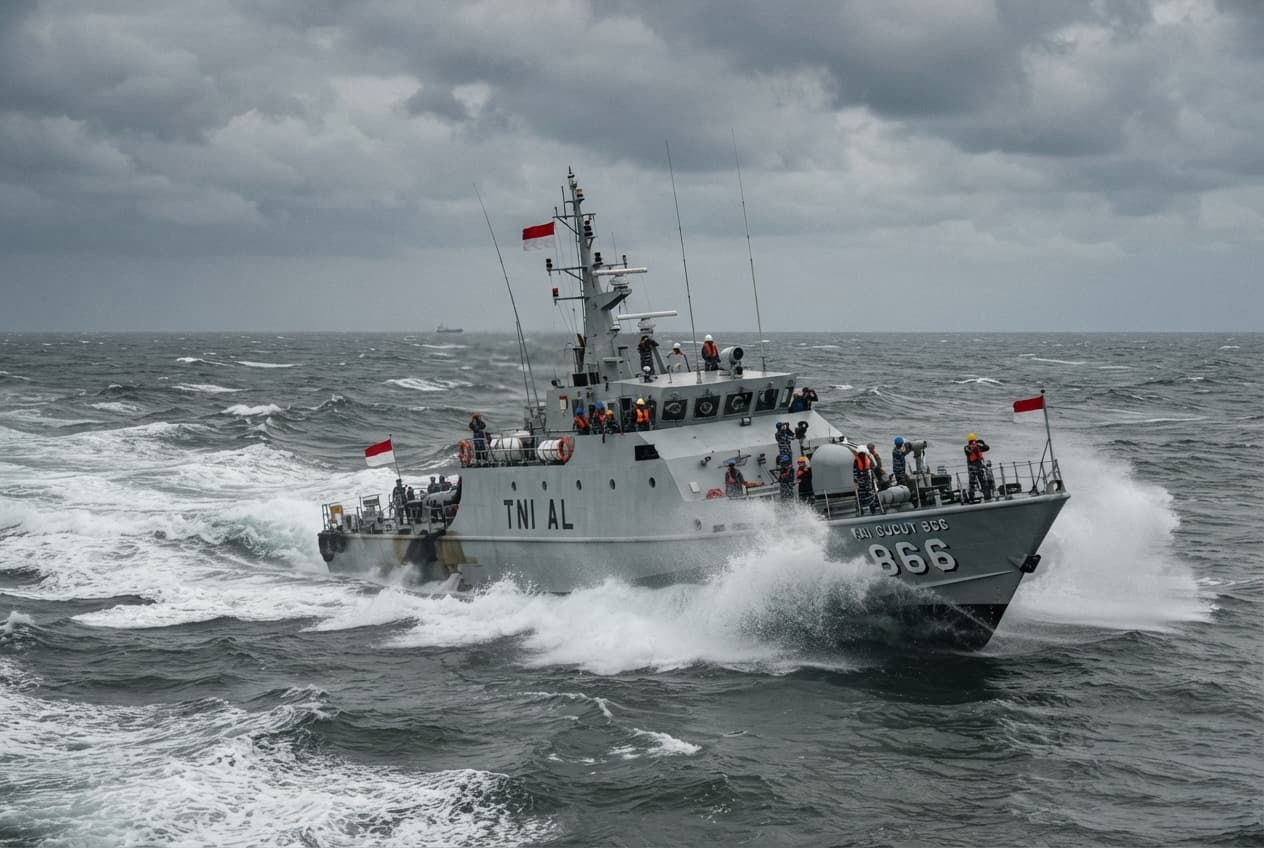
Jakarta, Indonesia—Emergency rescue crews launched an intensive, multi-agency search operation across the Java Sea early Tuesday morning after the passenger ferry KM Virgo capsized in turbulent waters roughly forty nautical miles off the northern coast. The sudden maritime disaster triggered an immediate mobilization of naval patrol boats, Coast Guard cutters, and civilian fishing vessels, all converging on the coordinates of the distress signal transmitted shortly before dawn.
Initial reports from maritime traffic authorities indicate that the vessel encountered severe swells and gale-force wind squalls while navigating the busy shipping lane between major regional ports. Survivors pulled from the water by nearby commercial freighters described a chaotic sequence of events as high waves struck the port side, causing cargo to shift violently and tipping the hull past its center of gravity within a matter of minutes.
Port administration officials confirmed that the ferry was carrying dozens of registered passengers alongside cargo and motor vehicles, though manifest reconciliation remains ongoing as distraught family members gather at the harbor master's office. "Our immediate priority is locating survivors in challenging sea conditions before nightfall complicates the search grid," stated National Search and Rescue Agency spokesperson Andi Pratama during a morning briefing in Jakarta.
Naval dive teams prepared deployment staging areas along coastal naval bases, awaiting stabilization of wind speeds before attempting underwater hull inspections of the partially submerged wreck. Commercial vessels transiting the Java Sea were instructed to maintain a wide perimeter around the search zone and report any floating debris or life rafts drifting away from the primary disaster site.
Transportation ministry investigators arrived at the primary maritime control center to secure voyage data recorder logs, radio transmission transcripts, and weather advisory records issued prior to departure. Questions mounted quickly regarding whether port authorities had enforced sailing restrictions for smaller passenger ferries as meteorological warnings for high waves remained active across the entire western archipelago.
Local hospitals in coastal districts placed emergency rooms on standby, clearing trauma bays and mobilizing psychological support teams to receive survivors transported ashore by high-speed rescue craft. Family members waiting behind police barricades at the pier expressed growing anguish as hours ticked by without verified updates regarding missing passengers and crew members still unaccounted for.
The tragedy highlights persistent safety vulnerabilities across inter-island maritime transit routes, where enforcement of passenger capacity limits and adherence to severe weather warnings face frequent operational compromises. Maritime experts noted that aging vessel fleets operating in volatile equatorial waters require stricter oversight to prevent recurring catastrophes during seasonal monsoon transitions.
As daylight began to fade over the choppy waters of the Java Sea, rescue helicopters swept low across the whitecaps with high-intensity searchlights scanning every crest for signs of life. The overturned hull of the KM Virgo drifted slowly with the prevailing ocean currents, a stark and sobering symbol of another disaster striking the nation's vital maritime lifelines.
Published by Banx Network. This article is part of the Banx decentralized media programme, powered by the BXE token on the XRP Ledger.