Key Highlights
- March 2026:Crypto market faces volatility amid geopolitical tensions.
- Major coins like Bitcoin and Ethereum show resilience compared to altcoins.
- Smart rotation strategies recommended for better investment outcomes.
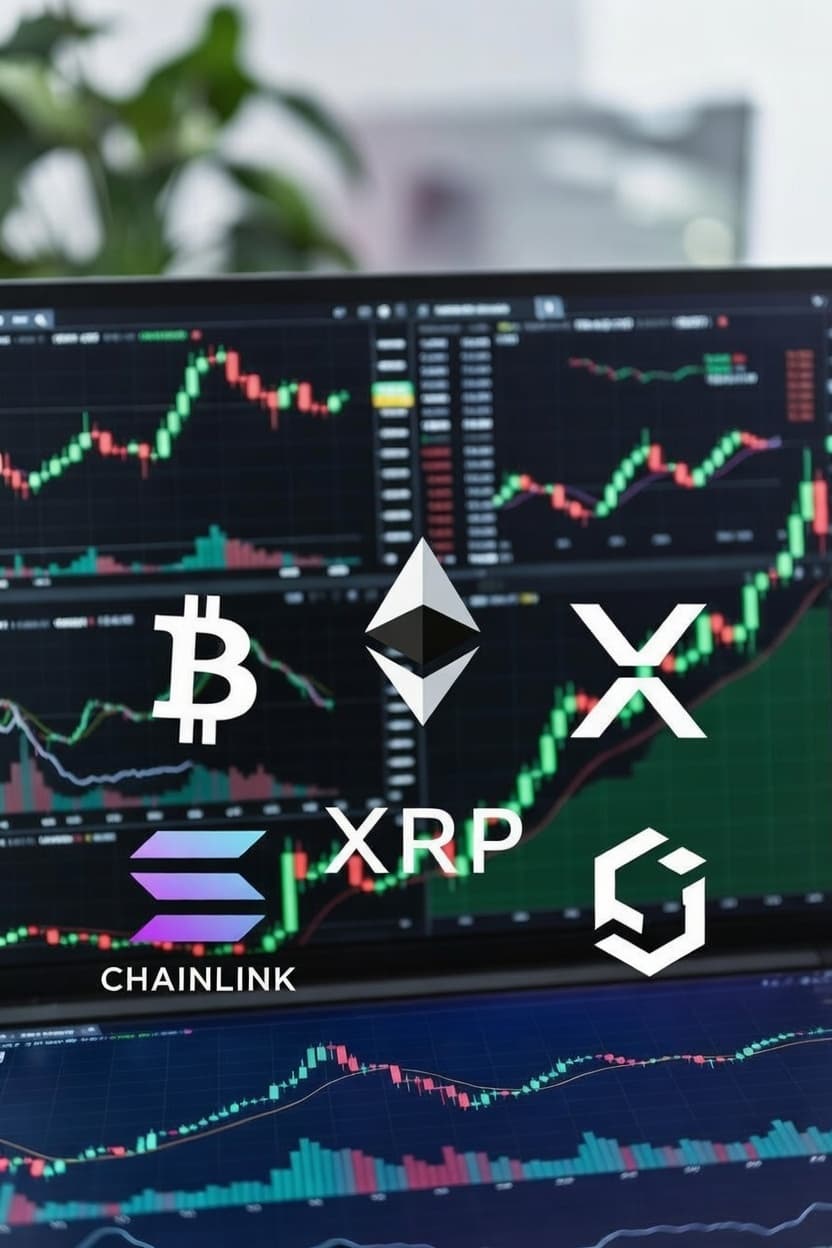
As March begins, the cryptocurrency landscape is once again buzzing with discussions on the latest 'top 5 coins to watch this month.' Prominent names such as Bitcoin (BTC), Ethereum (ETH), XRP, Solana (SOL), and Chainlink (LINK) frequently dominate these lists. In February 2026, these assets maintained significant daily trading volumes, even as the broader market experienced a sharp correction influenced by macroeconomic factors and political developments.
The recent market correction was not merely a result of a bursting crypto bubble but was largely driven by renewed geopolitical tensions and tariff threats from President Donald Trump’s administration. This environment led to a pronounced sell-off in altcoins, particularly those with lower market capitalizations, prompting many investors to shift their focus back to more liquid and established assets. Consequently, portfolios anchored in BTC and ETH demonstrated greater resilience compared to those heavily invested in smaller, less liquid tokens.
Focusing on Solana and Chainlink reveals a more complex narrative. Solana faced a challenging February, trading between $77 and $85, marking a nearly 39 percent decline from January. However, the network continued to excel in developer activity, decentralized exchange (DEX) volumes, and user growth throughout the 2024-2025 cycle. As March unfolds, Solana is poised for potential recovery with upcoming catalysts such as the Alpenglow upgrade, which could attract professional market makers. Chainlink, on the other hand, remains a critical component of decentralized finance (DeFi), providing essential oracle feeds that facilitate pricing and risk management across various chains.
A critical aspect often overlooked in visually appealing 'top 5' graphics is the significant disparity in risk and return profiles between major cryptocurrencies and the rest of the market. Large-cap assets like BTC and ETH are increasingly influenced by macroeconomic factors, exchange-traded fund (ETF) flows, and long-term investors. In contrast, smaller tokens are more susceptible to short-term narratives and liquidity challenges. Despite sentiment indicators indicating 'Extreme Fear' in late February and early March, on-chain data and trading volumes for major cryptocurrencies remained robust, highlighting a disconnect between investor sentiment and actual market behavior.
These insights have important implications for portfolio construction. Historically, a 'blind basket' approach to altcoins, based solely on random lists or influencer recommendations, has resulted in high volatility and poor risk-adjusted returns, particularly during market corrections. A more selective strategy—using watchlists as idea generators while focusing on projects with solid fundamentals—has proven to be more effective. This could involve allocating 60-80 percent of one's crypto exposure to core assets like BTC and ETH, with the remaining 20-40 percent reserved for actively managed, higher-risk investments in sectors such as artificial intelligence, DeFi infrastructure, gaming, or carefully selected meme coins.
In 2026, a flow-aware rotation strategy is essential. When Bitcoin ETFs transition from net outflows to inflows while major cryptocurrencies maintain high trading volumes, it indicates that 'smart money' is reallocating risk primarily to the most liquid segments of the market. For readers of BanxMedia, the key lies in tracking where liquidity is moving—utilizing ETF dashboards, centralized exchange (CEX) volume data, and on-chain metrics—rather than simply following the most frequently mentioned tickers on social media.
A practical smart-rotation framework for March 2026 and beyond could involve maintaining a solid foundation in BTC and ETH, treating Solana and Chainlink as tactical components if there is a clear understanding of infrastructure and DeFi growth, and designating a smaller portion of capital for experimental narratives. Within this 'satellite' allocation, investors should be prepared to pivot away from themes that lose traction, even if they remain popular on social media, and redirect funds to areas demonstrating improved liquidity and engagement. This approach allows investors to utilize watchlists as tools for informed decision-making, guided by data rather than hype.
Published by Banx Network. This article is part of the Banx decentralized media programme, powered by the BXE token on the XRP Ledger.