Former Governor of the Bank of Canada, ex-head of the Bank of England, and a central figure in global financial circles, Carney never speaks casually. When he publicly dismisses the notion of Canada being politically absorbed by the United States, he is not merely responding to a media provocation. Rather, he is sounding the alarm about a quiet but very real erosion of national autonomy.
An Absurd Idea… Yet a Revealing One
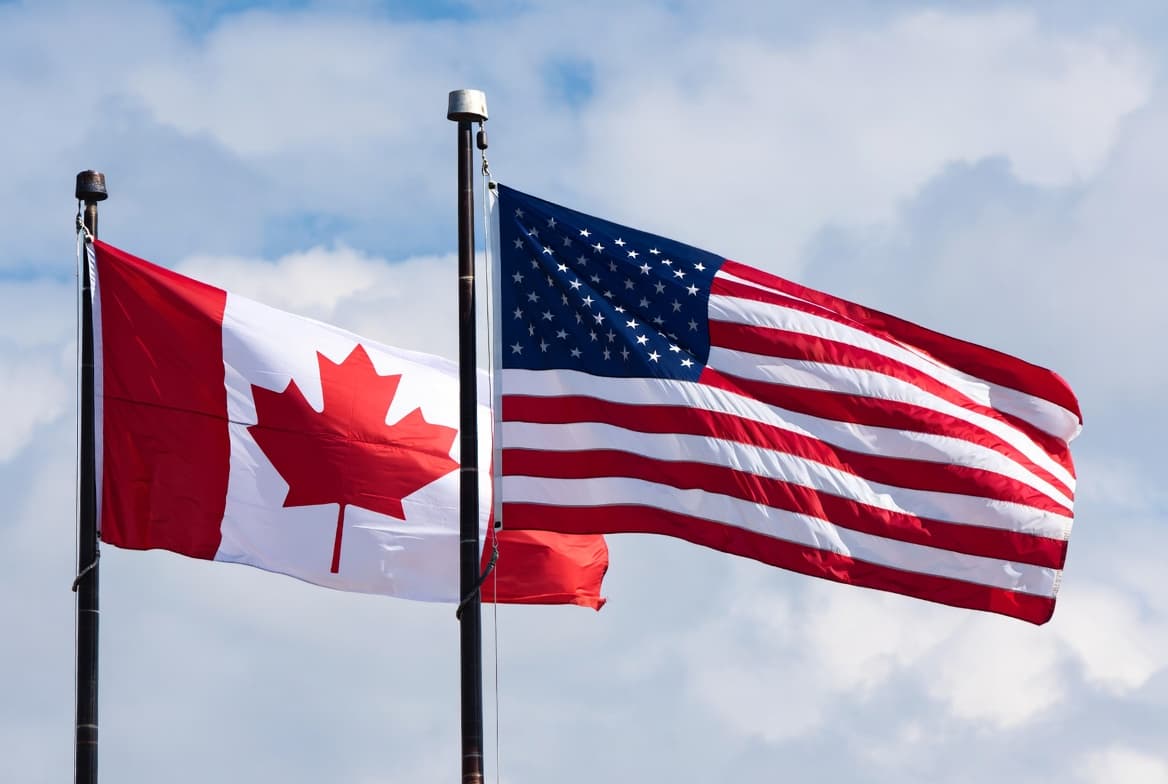
From a legal and constitutional standpoint, the idea of Canada becoming the 51st U.S. state is clearly unrealistic. Canada’s institutions, constitutional monarchy, bilingual framework, legal system, and political culture make such a scenario virtually impossible.
But for Marc Carney, that is not where the real danger lies.
The true risk is a de facto annexation, not through treaties or referendums, but through:
the dominance of U.S. financial markets,
massive trade dependence (over 70% of Canadian exports),
the influence of American banking and technology giants,
and Canada’s near-automatic alignment with Washington’s foreign policy.
In this sense, the “51st state” narrative functions as a useful caricature, exposing how far a country can lose its room for maneuver while remaining formally sovereign.
A Fragile Economic Sovereignty
Carney places particular emphasis on the economic front. In recent years, Canada has seen:
its supply chains become almost entirely integrated with the U.S.,
its monetary policy constrained by Federal Reserve decisions,
its natural resources (energy, critical minerals) increasingly treated as strategic assets for the American economy before serving its own industrial needs.
According to Carney, this dependence creates a dangerous imbalance: a country can remain politically independent while becoming economically subordinate. It is precisely this gradual shift that he finds most troubling.
He therefore calls for a clear strategic response:
diversification of trade partnerships (Europe, Asia, emerging markets),
stronger national control over strategic sectors,
massive investment in innovation and green finance,
and protection of critical infrastructure from foreign interests.
An Implicit Critique of the Political Class
Without directly attacking the current government, Marc Carney delivers a clear message to Canada’s political leadership: the absence of a long-term vision amounts to a gradual surrender of sovereignty.
He criticizes an overly passive approach in which Canada settles for being a “reliable partner” of the United States, without attempting to redefine a more balanced relationship. In an increasingly fragmented world dominated by powerful economic blocs, such complacency could prove costly.
A Debate That Extends Beyond Canada
Carney’s intervention resonates well beyond Canadian borders. It fits into a broader global debate about the ability of mid-sized states to preserve their independence in the face of economic superpowers.
In a world where influence is no longer exercised primarily through military force but through:
currency,
debt,
technology,
and finance,
the very concept of sovereignty is being redefined.
Conclusion: The “51st State” as a Symbolic Warning
Marc Carney is unequivocal: Canada will not become the 51st U.S. state. But if it fails to act, it could end up living under the same constraints without holding any real power.
His message is clear and almost blunt: sovereignty is not something that can simply be declared—it must be defended every day, through coherent economic, financial, and strategic choices. Otherwise, Canada risks remaining independent on paper while becoming increasingly integrated—and dependent—in reality.
A serious warning, delivered by one of the country’s most respected economic voices, at a pivotal moment in Canadian history.
Published by Banx Network. This article is part of the Banx decentralized media programme, powered by the BXE token on the XRP Ledger.