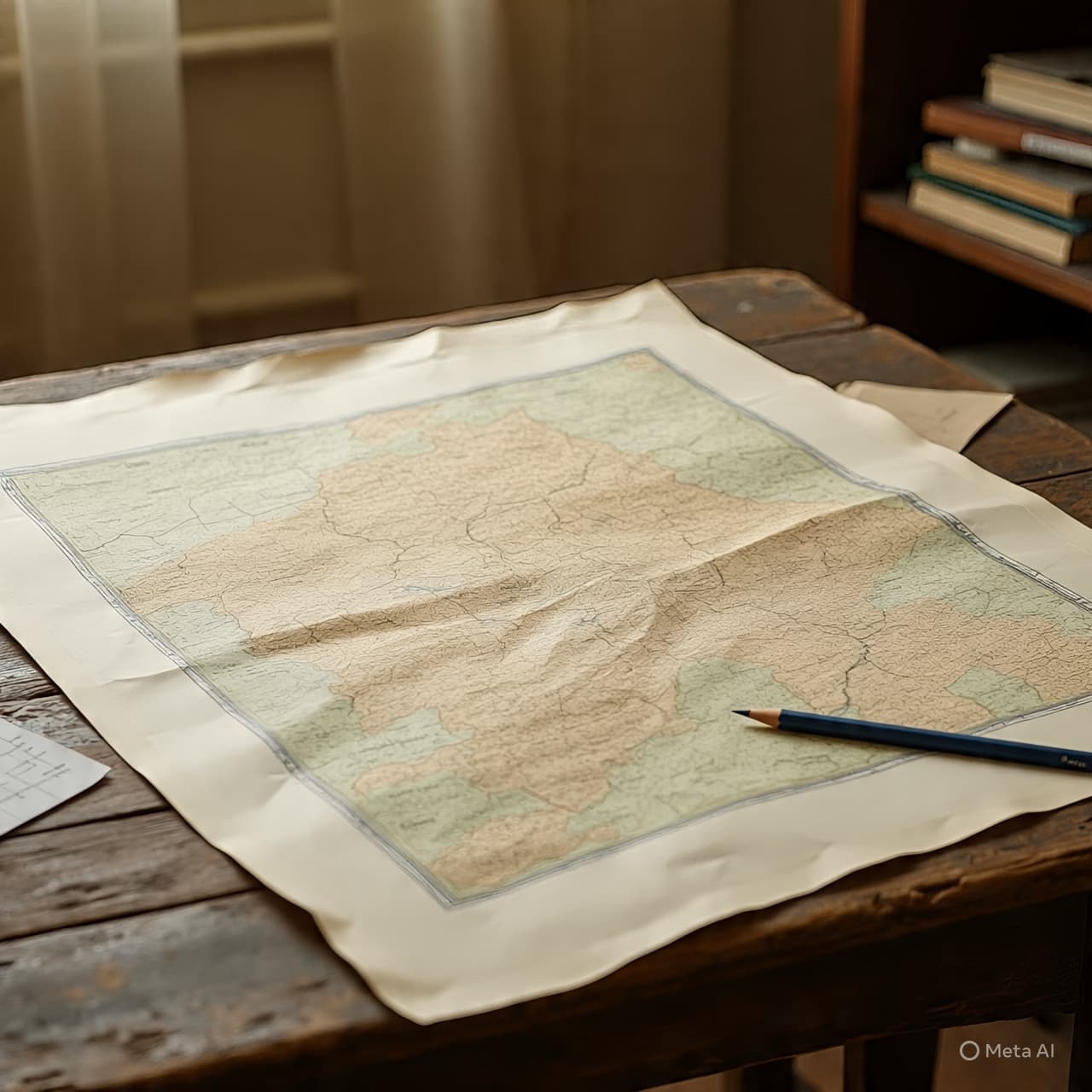
In the dry light that settles over Jerusalem’s stone facades, maps are rarely just maps. They are stories, arguments, inheritances passed between generations. Lines drawn in ink carry echoes of scripture, war, exile, and return. Some are fixed by treaties; others live only in speeches, pamphlets, or the quiet convictions of those who imagine borders differently.
The phrase “Greater Israel” does not describe a single policy or official program. It is an idea—sometimes theological, sometimes political—about expanding or maintaining Israeli sovereignty over territories beyond the country’s internationally recognized borders. For some, it refers to the biblical “Land of Israel,” a concept rooted in Jewish religious texts that describe a territory stretching beyond today’s boundaries. For others, it is a modern nationalist vision shaped by the wars and territorial shifts of the twentieth century.
After the 1967 Six-Day War, when Israel captured the West Bank, East Jerusalem, Gaza, the Golan Heights, and the Sinai Peninsula, the question of land and permanence moved from theory into daily governance. The Sinai was later returned to Egypt under a peace treaty. Gaza was evacuated by Israel in 2005. But the West Bank and East Jerusalem remain at the center of debate, both domestically and internationally.
Within Israel, support for a maximalist “Greater Israel” vision—meaning formal annexation of all territories between the Jordan River and the Mediterranean Sea without the creation of a Palestinian state—exists primarily on the nationalist and religious right. Certain political parties and settler movements advocate extending sovereignty over much or all of the West Bank, often framing it in historical or security terms. The settlement enterprise itself, supported to varying degrees by successive governments, reflects at least partial alignment with retaining long-term control over the territory.
At the same time, Israeli public opinion is far from uniform. Surveys over the years have shown fluctuating support for different outcomes: a two-state solution, partial annexation, maintaining the status quo, or other hybrid arrangements. While right-leaning coalitions have gained strength in recent elections, that does not necessarily translate into broad, explicit support for a fully realized “Greater Israel” encompassing all disputed lands without political separation.
Many Israelis prioritize security concerns over ideological expansion, especially following periods of violence. Others emphasize the demographic implications of annexing territories with large Palestinian populations, raising questions about citizenship, voting rights, and the country’s identity as both Jewish and democratic. For still others, the concept of “Greater Israel” feels abstract—less a concrete agenda than a rhetorical symbol invoked in political argument.
Internationally, the term often appears in critical discussions, sometimes used by opponents of Israeli policy to suggest long-term territorial ambitions. Inside Israel, however, it is not a formal government doctrine. Policies toward the West Bank have included settlement expansion in some periods and negotiation efforts in others, reflecting shifting coalitions and external pressures.
The idea, then, exists at the intersection of history and politics. It draws on ancient narratives while operating within modern diplomatic realities. It inspires some, worries others, and leaves many navigating the space between principle and pragmatism.
In clear terms: “Greater Israel” refers to a political or religious vision advocating Israeli sovereignty over territories beyond its recognized borders, especially the West Bank. While supported by segments of the Israeli right and some settler groups, it does not command unanimous public backing. Israeli opinion remains divided, shaped by security, demographic, political, and diplomatic considerations.
AI Image Disclaimer Visuals are AI-generated and serve as conceptual representations.
Sources (Media Names Only) Reuters Associated Press BBC News The Guardian Haaretz
Published by Banx Network. This article is part of the Banx decentralized media programme, powered by the BXE token on the XRP Ledger.