

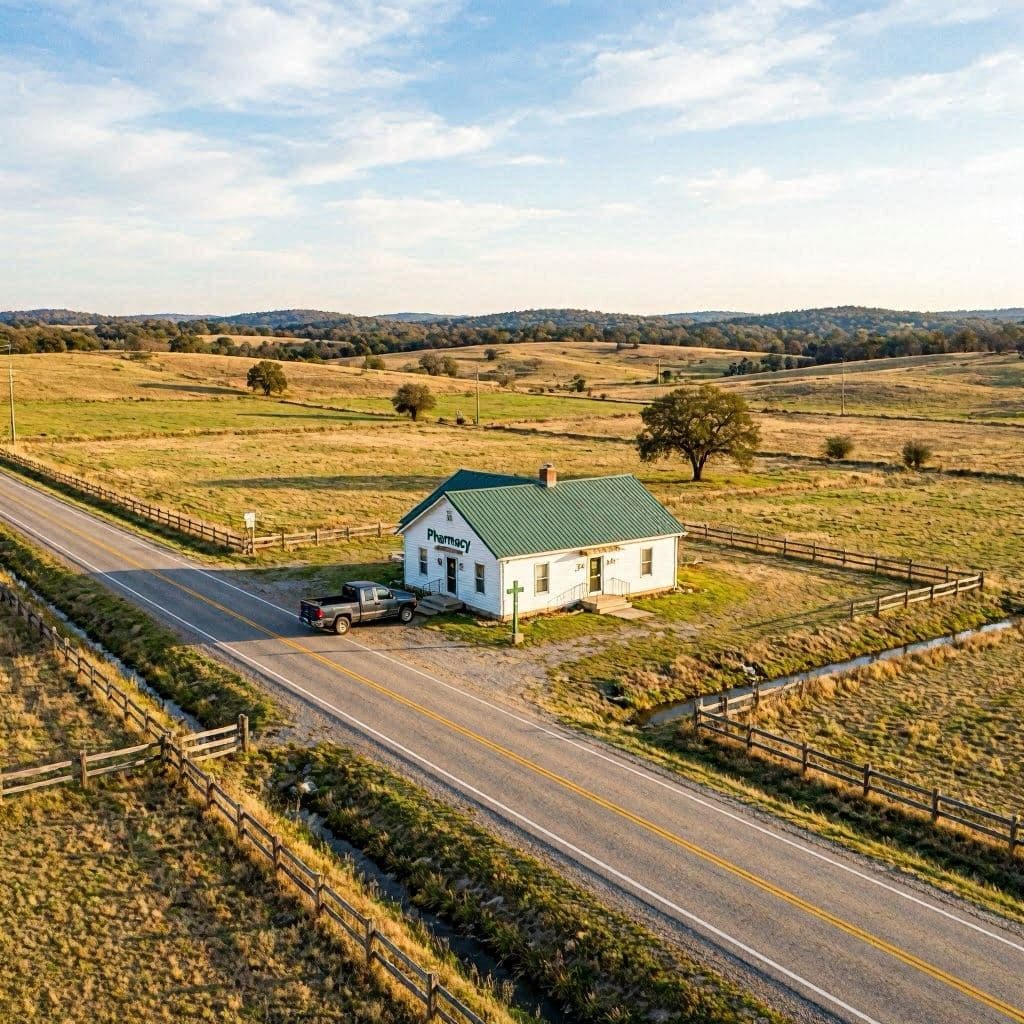
Key Highlights
- New mapping initiative reveals pharmacy deserts in Australia.
- Significant disparities in pharmacy access identified in remote and suburban areas.
- Calls for policy changes to improve healthcare equity.
Access to healthcare is often envisioned as a universal right, yet the geography of a nation can create invisible barriers that separate communities from essential services. In Australia, a new mapping initiative has highlighted the stark reality of "pharmacy deserts," areas where residents face significant challenges in obtaining medication and professional advice. These gaps are not merely statistical anomalies but represent daily hurdles for thousands of Australians living in remote communities and the sprawling outer suburbs of major cities.
The study, which analyzed community pharmacy density across the continent, reveals a pattern of disparity that mirrors broader socioeconomic divides. Remote areas, particularly in the Northern Territory and parts of Western Australia, show some of the lowest concentrations of pharmacies per capita. However, the issue is not confined to the outback; outer-city regions in Melbourne, such as Manningham East, and similar zones in other metropolitan areas, also exhibit critically low access levels.
For residents in these identified deserts, a simple trip to pick up a prescription can become a logistical ordeal. The distance to the nearest pharmacy may require a lengthy drive, posing difficulties for those without private transport, the elderly, or individuals with mobility issues. This lack of proximity can lead to delayed treatments, missed doses, and a general erosion of preventive health practices that rely on regular interaction with healthcare professionals.
The causes of these deserts are multifaceted, involving economic viability, regulatory frameworks, and workforce distribution. Pharmacies, like any business, must remain financially sustainable, and in areas with lower population density or purchasing power, this balance is harder to achieve. Consequently, some regions see closures or a lack of new openings, creating a vacuum that public health systems struggle to fill with alternative models of care.
Researchers emphasize that the impact extends beyond convenience. Pharmacists play a crucial role in primary healthcare, offering vaccinations, health screenings, and advice on minor ailments. In areas without easy access to these services, the burden shifts to emergency departments and general practitioners, potentially straining resources that are already under pressure. The mapping project serves as a tool to identify these pressure points and advocate for targeted interventions.
Policy responses have begun to emerge, with discussions around incentives for pharmacists to practice in underserved areas and the expansion of telehealth services. While digital solutions offer a bridge, they cannot fully replace the tangible reassurance and immediate assistance provided by a local pharmacy. The challenge lies in creating a hybrid model that leverages technology while maintaining a physical presence in communities that need it most.
Community advocates argue that addressing pharmacy deserts is a matter of equity. Just as roads and schools are considered essential infrastructure, so too should be access to medication and health advice. The map provides a clear visual argument for policymakers, highlighting exactly where investments are needed to ensure that no Australian is left behind due to their postcode.
As the conversation around healthcare access continues, the identification of pharmacy deserts marks a significant step toward understanding the spatial dimensions of health inequality. By bringing these gaps into focus, stakeholders can work toward solutions that ensure every community, whether remote or suburban, has the support it needs to thrive.
Published by Banx Network. This article is part of the Banx decentralized media programme, powered by the BXE token on the XRP Ledger.




