
Key Highlights
- Fatal Incident:One elderly resident died in a house collapse due to an earthquake aftershock.
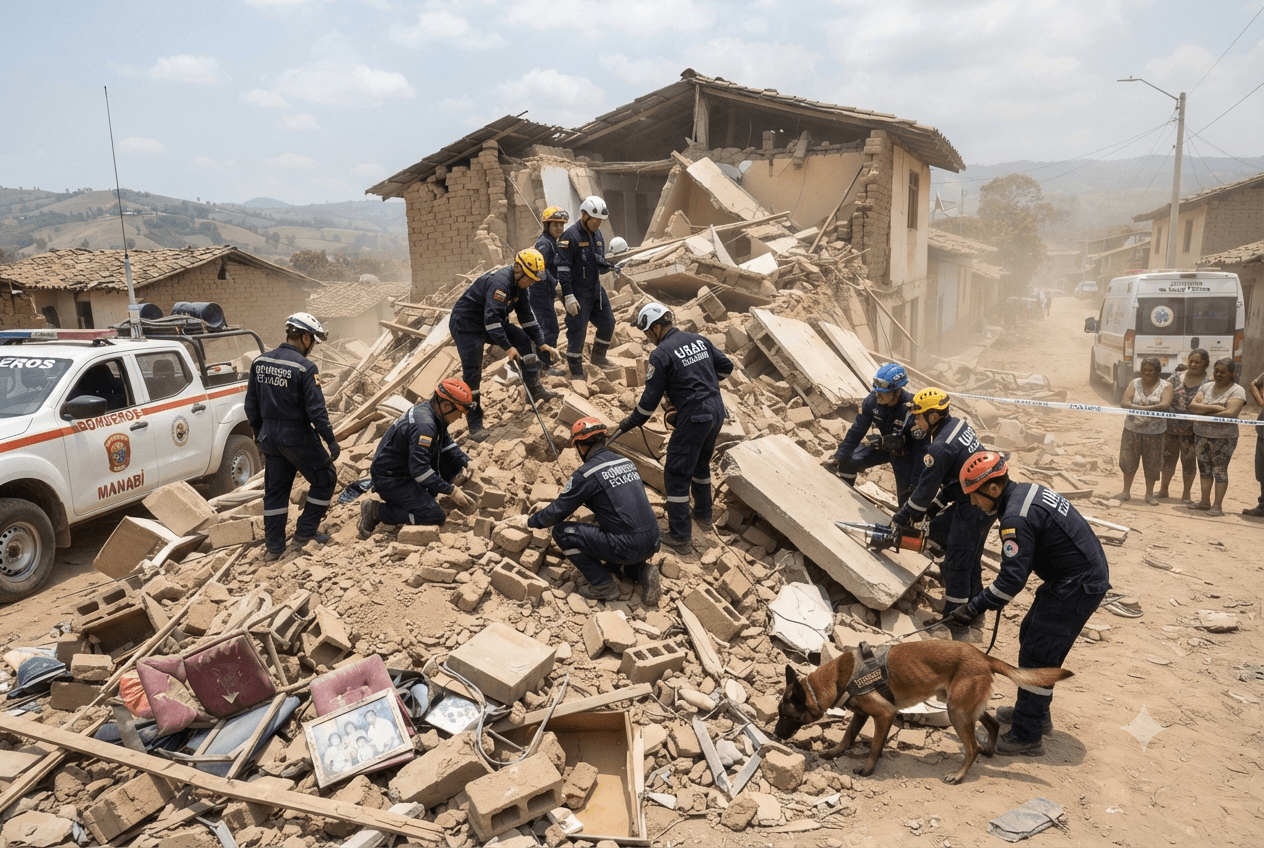
- Emergency Response:Rescue teams saved two survivors from the rubble in Manabi, Ecuador.
- Ongoing Risk:Seismologists warn of continued aftershocks and structural risks in the region.
Manabi, Ecuador—Emergency rescue squads sifted through mounds of shattered concrete and adobe bricks today after a powerful earthquake aftershock triggered a residential house collapse. The tremor struck at dawn, registering a moderate magnitude on regional seismographs but delivering sharp vertical jolts to vulnerable coastal structures. A two-story adobe dwelling buckled instantly under the seismic stress, burying several sleeping occupants beneath heavy masonry rubble. Neighbors rushed to the scene with hand tools, managing to pull two survivors from the wreckage before civil defense units arrived with heavy lifting gear. One elderly resident was pronounced dead at the scene by responding paramedics after suffering fatal crush injuries during the structural failure.
"The aftershock was sharp and vertical, causing compromised adobe walls from previous seismic events to pancake instantly," explained municipal rescue coordinator Javier Zambrano. This incident highlights the ongoing vulnerability of many homes in the region, particularly those constructed with traditional materials that may not withstand seismic activity.
In response to the disaster, risk management secretariat inspectors mobilized across coastal districts to evaluate structural damage to hundreds of aging homes following the seismic event. Municipal authorities established emergency shelters inside public sports coliseums to house families displaced by structural safety concerns. Engineers warned residents against returning to homes showing deep wall fractures or compromised foundation pillars until official structural inspections are completed. Regional hospitals treated fifteen people for minor injuries sustained during panic evacuations and falling debris across downtown neighborhoods.
Federal housing agencies faced renewed criticism over delays in post-earthquake reconstruction grants promised to vulnerable coastal communities. "Many families are still living in structurally vulnerable dwellings because promised reconstruction funds have stalled in bureaucratic red tape," stated local community leader Sofia Mendoza. This situation underscores the need for timely government action to ensure the safety and well-being of residents in earthquake-prone areas.
Public utility crews worked rapidly to inspect water mains and electrical substations following minor disruptions reported across the provincial capital. Seismologists noted that dozens of minor aftershocks continue to rattle the coastal fault zone, keeping emergency response units on high alert. Civil defense teams distributed emergency food rations and tarps to families camping outside their damaged homes in municipal parks. Municipal councils enforced temporary cordons around several abandoned buildings deemed at risk of secondary collapse. National geological monitoring institutes urged citizens to remain vigilant as seismic instability persists across the coastal zone.
"We are maintaining maximum alert status as seismic monitoring equipment registers continuous tectonic adjustments in the subsoil," Zambrano stated, emphasizing the importance of preparedness in the face of ongoing geological threats.
As the community grapples with the aftermath of this disaster, the focus remains on ensuring safety and providing support to those affected by the earthquake and its aftershocks. The resilience of the residents will be tested as they navigate the challenges posed by their environment and the need for effective governmental response.
Published by Banx Network. This article is part of the Banx decentralized media programme, powered by the BXE token on the XRP Ledger.



