
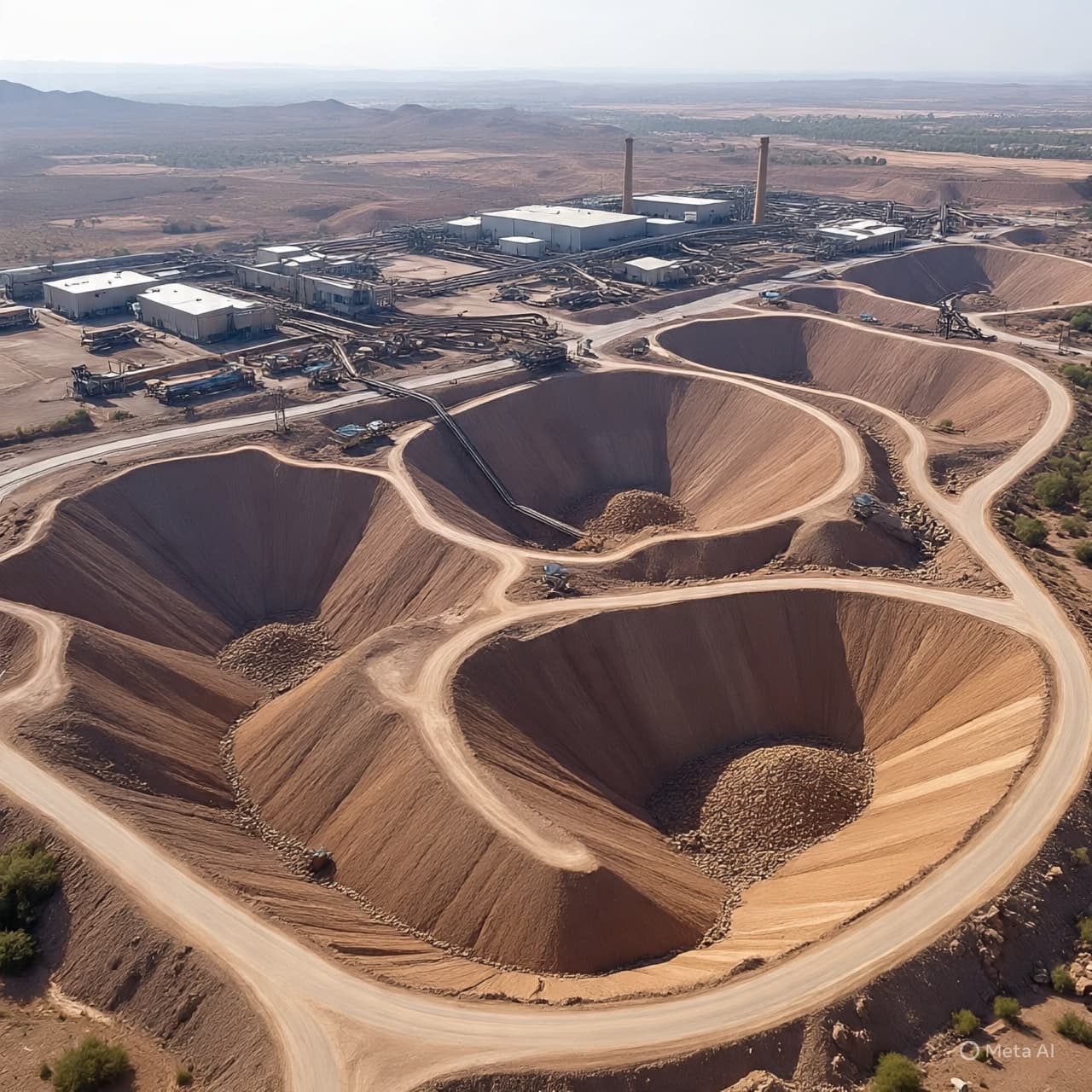
Key Highlights
- License Renewal:Mali extends Barrick Mining's Loulo license for ten years.
- Economic Impact:The Loulo complex is crucial for Mali's gold output and export revenue.
- Regulatory Changes:The renewal occurs amid Mali's efforts to revise mining agreements.
Mali has officially renewed Barrick Mining’s license for the Loulo gold complex, granting the company another decade to operate one of the nation’s most significant mining assets. This extension is particularly important as it provides stability during a time of regulatory change and political transition in the West African country.
The Loulo-Gounkoto mining complex, located in western Mali near the Senegalese border, has been a cornerstone of Barrick's operations for years. The renewal allows Barrick to continue its vital role in Mali’s gold production, which is the primary source of foreign exchange for the country. As gold prices fluctuate globally, the performance of large-scale mining projects remains central to Mali's national finances.
In recent years, Mali’s military-led government has been actively revisiting mining agreements to secure greater state participation and revenue from natural resources. This shift reflects a broader trend across Africa, where several nations are reassessing the balance between attracting foreign investment and maximizing domestic benefits from their mineral wealth.
The renewed license provides Barrick with operational certainty and signals ongoing engagement with Malian authorities. Companies operating in the Sahel region face a complex environment characterized by security risks, infrastructure challenges, and evolving regulatory frameworks. A long-term license extension is crucial for effective planning regarding production, workforce management, and potential investments in exploration or efficiency improvements.
For the Malian government, maintaining investor confidence while advancing reforms is essential. Gold production plays a vital role in funding public services and stabilizing the economy, making it a strategic priority to ensure that major mines remain operational. The government’s approach aims to balance the need for foreign investment with the desire for increased domestic benefits from mining activities.
Industry analysts note that license renewals in politically sensitive environments often reflect a compromise between the state and mining companies. While specific details of the agreement have not been fully disclosed, such renewals typically involve negotiations over fiscal terms, community development commitments, and compliance with updated mining legislation.
As global gold prices remain a focal point amid economic uncertainty and shifting monetary policies, the renewed license for Barrick’s Loulo operations positions the company to continue contributing significantly to Mali’s mining sector. This agreement underscores the delicate balance between national resource sovereignty and the necessity for sustained foreign investment in one of Africa’s leading gold-producing nations.
Published by Banx Network. This article is part of the Banx decentralized media programme, powered by the BXE token on the XRP Ledger.



