

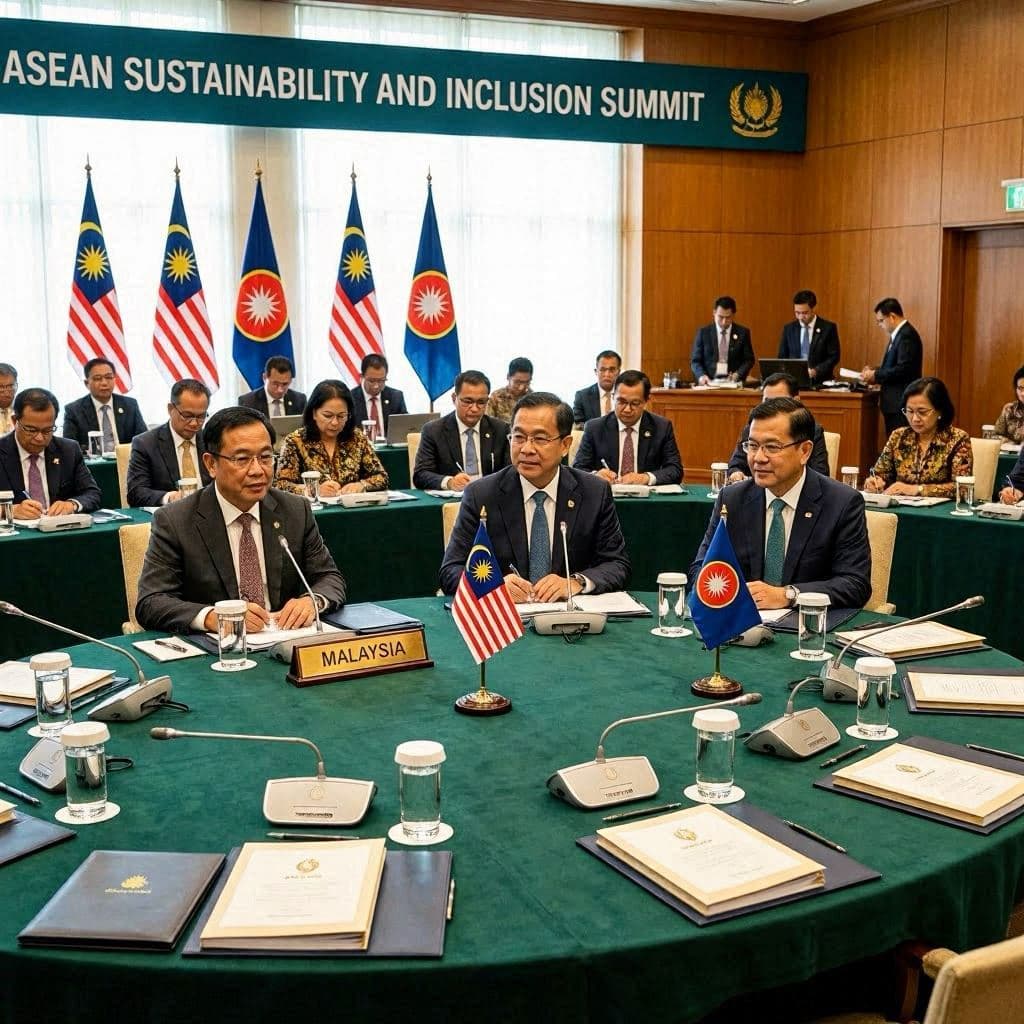
Key Highlights
- Malaysia's ASEAN chairmanship in 2025 emphasizes inclusivity and sustainability.
- Policymakers advocate for balancing economic growth with environmental protection.
- Engagement with businesses and civil society is crucial for regional policymaking.
As Southeast Asia continues to evolve amid shifting geopolitical and economic currents, regional diplomacy increasingly resembles the careful tending of a shared garden. Every nation brings its own priorities, yet long-term prosperity depends on collective stewardship. Malaysia's renewed push for inclusivity and sustainability within ASEAN reflects this broader understanding.
Malaysian officials have emphasized that future regional cooperation should not focus solely on economic expansion, but also on ensuring that development benefits all segments of society. Inclusivity, they argue, remains essential for maintaining social cohesion and regional stability. This perspective aligns with the growing recognition that economic growth must be accompanied by social equity to foster a resilient community.
Sustainability has emerged as another key pillar of Malaysia's regional agenda. Policymakers have highlighted the importance of balancing economic growth with environmental protection, particularly as Southeast Asia confronts challenges related to climate change, urbanization, and resource management. The region's vulnerability to environmental issues necessitates a proactive approach to sustainable development, ensuring that future generations inherit a viable ecosystem.
The agenda also calls for strengthening cooperation in areas such as digital transformation, green investment, and sustainable infrastructure. These initiatives are viewed as necessary components for enhancing ASEAN's long-term competitiveness. By investing in technology and sustainable practices, Malaysia aims to position ASEAN as a leader in the global economy while addressing pressing environmental concerns.
Regional observers note that narrowing development gaps among member states remains an ongoing challenge. Differences in economic capacity and technological readiness continue to shape the pace of integration across the bloc. Malaysia's leadership will be crucial in fostering collaboration and sharing best practices to uplift less developed nations within ASEAN.
Malaysia has further advocated for deeper engagement with businesses, civil society organizations, and young people in regional policymaking. Broader participation, officials say, can help ensure that ASEAN remains responsive to emerging societal needs. By involving diverse stakeholders, Malaysia seeks to create a more inclusive framework that reflects the aspirations of all ASEAN citizens.
Economic integration remains an important objective, yet policymakers increasingly recognize that growth alone may not guarantee resilience. Social inclusion and environmental sustainability are now seen as complementary foundations for lasting prosperity. As ASEAN moves forward, Malaysia's emphasis on inclusivity and sustainability highlights an evolving regional vision—one that seeks to align economic ambition with social responsibility and environmental stewardship.
Published by Banx Network. This article is part of the Banx decentralized media programme, powered by the BXE token on the XRP Ledger.




