

Key Highlights
- Blockade Initiated:The U.S. Navy has begun a blockade of vessels in the Strait of Hormuz.
- Diplomatic Failure:This decision follows unsuccessful talks between the U.S. and Iran regarding nuclear disarmament.
- Global Impact:The blockade threatens to disrupt global oil markets, as the Strait is a critical shipping route.
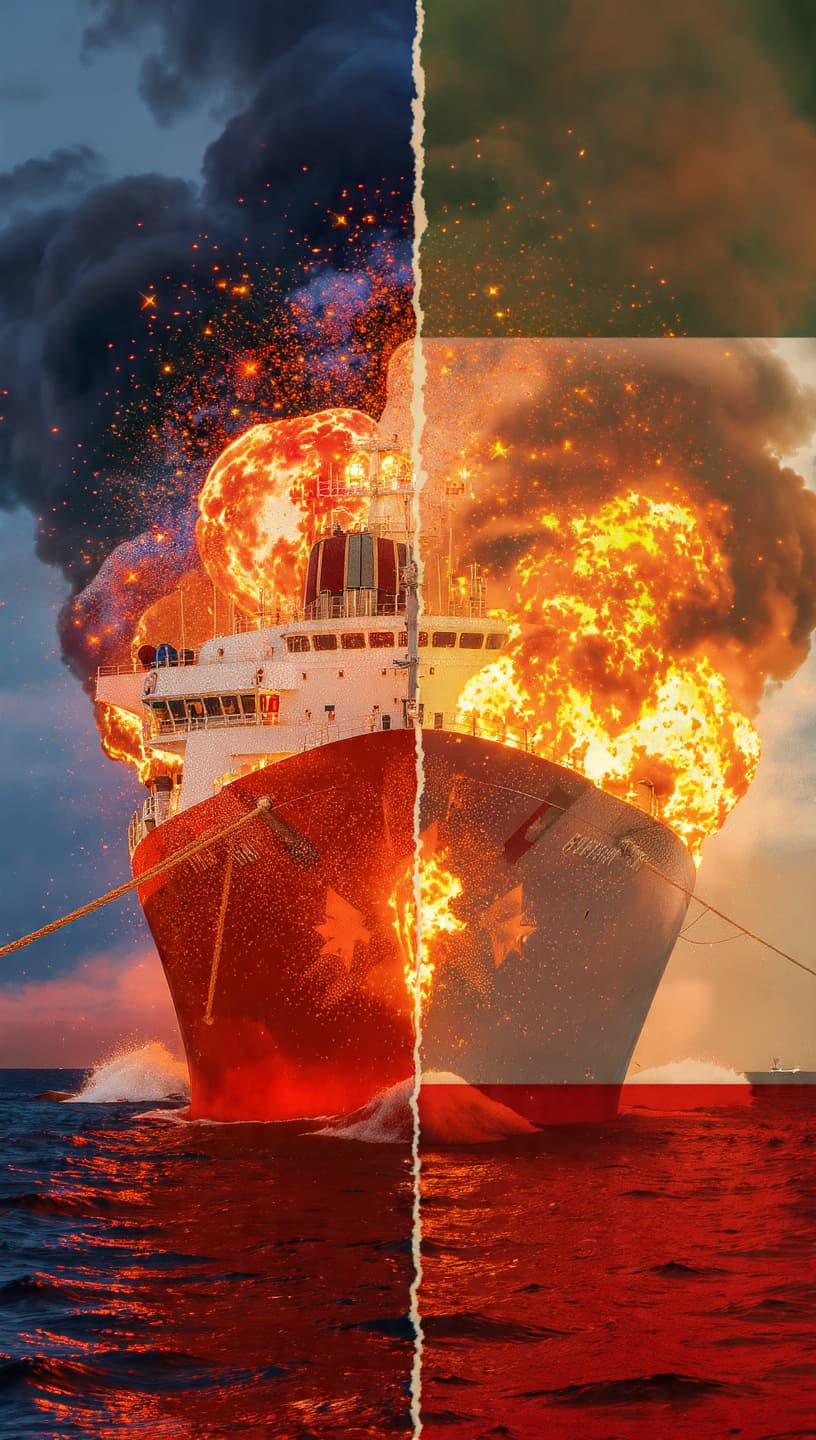
The United States has officially commenced a naval blockade in the Strait of Hormuz, a strategic maritime chokepoint that is vital for global oil transport. President Trump announced the blockade via Truth Social, stating, "The U.S. Navy, the greatest in the world, will immediately begin the process of BLOCKADING all vessels attempting to enter or exit the Strait of Hormuz." U.S. Central Command (CENTCOM) confirmed that the blockade, effective immediately, will apply to all vessels heading to or from Iranian ports, while ships merely transiting between non-Iranian ports will remain unaffected.
This escalation comes on the heels of failed diplomatic efforts between the United States and Iran, which took place in Islamabad just a day prior. Vice President JD Vance presented what was termed a "final offer" to Iranian officials, but discussions collapsed primarily due to Iran's steadfast commitment to its nuclear program. The blockade follows a tumultuous period marked by the 2026 war, which was ignited by joint U.S.-Israeli military strikes last February, significantly crippling Iran's military and economic capabilities.
The Strait of Hormuz is particularly significant, as it is only 21 miles wide at its narrowest point and facilitates the passage of nearly one-fifth of the world's oil supply. Experts warn that any closure or partial blockage could lead to a dramatic surge in crude oil prices and substantial disruptions in global energy markets, potentially affecting economies worldwide.
In response to the blockade, Iranian military officials have condemned the action as "an act of piracy" and "illegal." The Revolutionary Guards issued a stern warning, declaring that "no port in the Gulf will be safe" if Iranian ports are threatened. Tehran has indicated it may resort to asymmetric warfare tactics, leveraging its fast naval forces and anti-ship missile capabilities to counter the blockade.
The Iranian regime, already under immense pressure from ongoing conflicts and sanctions, appears to be gearing up for a prolonged state of conflict, often referred to as a "war economy." Military analysts suggest that sustaining the blockade will necessitate at least two U.S. carrier strike groups in the region, raising concerns about potential confrontations with third-party nations whose vessels engage in trade with Iran.
As of now, no incidents have been reported, but the atmosphere in the region is charged with tension. Observers are wary that this blockade could escalate into a broader naval conflict, with the potential to draw in other nations. The international community is closely monitoring the situation, questioning whether this blockade signifies the beginning of the end for Iran's nuclear ambitions or if it will ignite a larger regional conflict. The coming hours are critical as the world watches to see how this situation unfolds.
Published by Banx Network. This article is part of the Banx decentralized media programme, powered by the BXE token on the XRP Ledger.




