
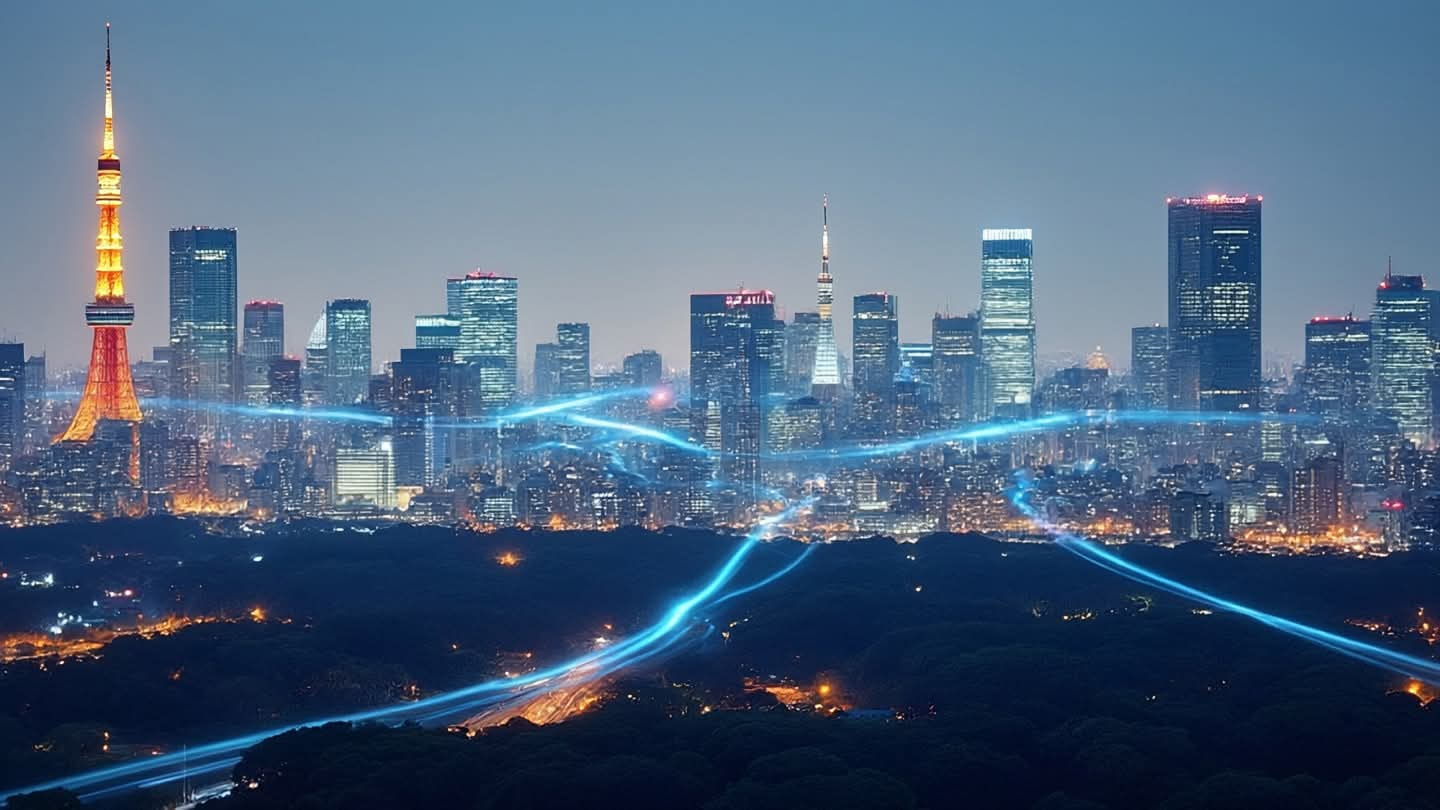
In the quiet hours before dawn, when the vast metropolis of Tokyo usually rests in a hush of neon and shadow, the earth beneath it stirred with sudden intensity. A magnitude 5.9 earthquake, centered in southern Ibaraki Prefecture, sent tremors rippling through the eastern Kanto region, waking millions from their sleep. The event, occurring at approximately 2:00 a.m. on Sunday, served as a stark reminder of the geological forces that underpin life in Japan, a nation built on the delicate balance between modern resilience and natural volatility.
The quake struck at a depth of roughly 58 kilometers, generating strong shaking that was felt across Tokyo, Chiba, Saitama, and Kanagawa prefectures. In many areas, the intensity reached lower 5 on the Japanese seismic scale, enough to rattle windows, sway tall buildings, and trigger automatic safety systems in trains and elevators. For residents, the experience was a jarring interruption to the night, a moment where the solid ground beneath them betrayed its usual stability, invoking a mix of instinctual caution and practiced calm.
Emergency services and local authorities responded swiftly, checking for infrastructure damage and ensuring public safety. While there were no immediate reports of major structural failures or casualties, the incident disrupted early morning commutes as rail operators conducted safety inspections. The efficiency of these protocols is a testament to Japan’s rigorous preparedness, honed by decades of living in one of the world’s most seismically active zones. It is a system designed not just to react, but to protect.
For those living in high-rise apartments, the sensation of swaying can be particularly disorienting. Modern engineering allows these structures to flex with the earth’s movements, preventing collapse but creating a visceral experience of instability. Residents described feeling the building rock gently, a surreal motion that contrasts sharply with the stillness of the night. This architectural resilience is a crucial component of urban survival, allowing life to continue even when the ground does not.
The psychological impact of such events, even when minor, is significant. In a city where routine is prized, an earthquake disrupts the sense of normalcy, reminding everyone of the potential for larger disasters. Community networks often activate in the aftermath, with neighbors checking on one another and sharing information. This social cohesion is a vital resource, providing emotional support and practical assistance in times of uncertainty.
Seismologists note that while this quake was moderate, it highlights the ongoing activity in the region. The Kanto area is monitored closely due to its history of significant seismic events. Each tremor provides data that helps refine predictive models and improve building codes. Science and policy work in tandem to mitigate risk, ensuring that the city remains safe despite its precarious location.
Public communication played a key role in managing the response. Alerts were sent to mobile phones, and broadcast media provided timely updates on the situation. Clear and accurate information helps prevent panic and allows individuals to make informed decisions about their safety. In the digital age, this rapid dissemination of knowledge is as important as physical infrastructure in disaster management.
In the end, the earthquake in Tokyo is a moment of reflection on human adaptability. It shows how a society can live with risk, preparing for the worst while hoping for the best. For the residents of the Kanto region, it is another day of resilience, a testament to their strength and readiness. The hope is that such preparedness will always outweigh the power of the earth itself.
AI Image Disclaimer: The visual elements in this article are AI-generated illustrations depicting urban landscapes at night and abstract representations of seismic waves, designed to reflect the themes of earthquake preparedness and city life without showing real proprietary damage footage or specific individuals in distress.
Published by Banx Network. This article is part of the Banx decentralized media programme, powered by the BXE token on the XRP Ledger.



