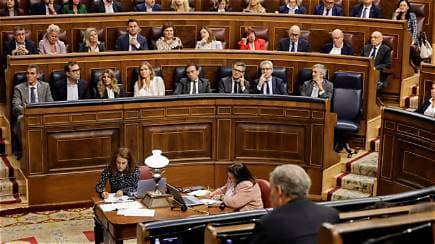
There is a particular desperation that settles into a city when the cost of living there exceeds the ability to live—when the place you call home becomes a commodity to be traded, a line on a spreadsheet, a source of profit rather than shelter. In Madrid this weekend, that desperation took to the streets. Hundreds of thousands of people marched through the capital, their numbers disputed but their message unequivocal: housing has become unaffordable, and the government's response has been insufficient. The protest, one of the largest in Spain in years, came a day after Parliament rejected two decrees proposed by Prime Minister Pedro Sánchez's minority government to address rising rents and evictions .
The trigger for the demonstrations was the eviction of Maricarmen Abascal, an eighty-seven-year-old pensioner who was forced to leave the Madrid apartment where she had lived for more than seven decades after an investment fund acquired the building and raised her rent by 275 percent . The image of an elderly woman removed from her lifelong home struck a nerve in a country where the average rent has nearly doubled in a decade, while home sale prices have risen by roughly ninety percent, according to the real estate portal Idealista . Abascal was eventually allowed to return to her apartment after the new owners agreed to a lower rent, but by then the protests had already begun .
The numbers from Saturday's march reflect the depth of the anger. Authorities estimated 70,000 people in Madrid. Organizers claimed 500,000. The truth likely lies somewhere between, but the scale was undeniable: four separate columns of marchers converged on Plaza de Cibeles, where thousands gathered, including activists who had been camping in Puerta del Sol for more than a week . The slogan of the day was "Towards a general strike," and the Tenants' Union, which organized the protests, is demanding a fifty percent reduction in rents, indefinite contracts, and the expropriation of housing held by speculative funds .
The political context is precarious. Sánchez's government has struggled to pass legislation since the Catalan separatist party Junts withdrew its support nearly a year ago. The two housing decrees—which would have prevented evictions of vulnerable tenants, imposed stricter rules on short-term rentals, and made temporary rental contracts indefinite—were defeated when Junts joined the conservative Partido Popular and the far-right Vox in voting against them . The defeat has renewed speculation that Sánchez may call early elections. According to El País, he is considering a November vote, though his office has declined to comment .
Protests also took place in more than fifty other cities, including Barcelona, Valencia, Palma de Mallorca, and Toledo. In Valencia, police clashed with demonstrators outside a real estate investment forum, using tear gas and rubber bullets; five people were detained . For the tenants who marched, the issue is not abstract. A twenty-six-year-old librarian told the AFP that a one-bedroom apartment now costs a thousand euros a month—half the median salary in Madrid. A thirty-one-year-old solar panel installer said he spends half his income on a tiny room . The protest was peaceful in the capital, but the anger beneath it was not. "The power is back on the street," said Valeria Racu, a spokesperson for the Madrid Tenants' Union . The question now is whether the government will respond, or whether the street will have to speak again.
AI Image Disclaimer: The visual elements in this article were created using AI generation tools and are intended for illustrative purposes only.
Sources: Tagesschau, Euronews, Deutschlandfunk, Radio Romania, VRT, Perfil, RTM
Published by Banx Network. This article is part of the Banx decentralized media programme, powered by the BXE token on the XRP Ledger.