
Key Highlights
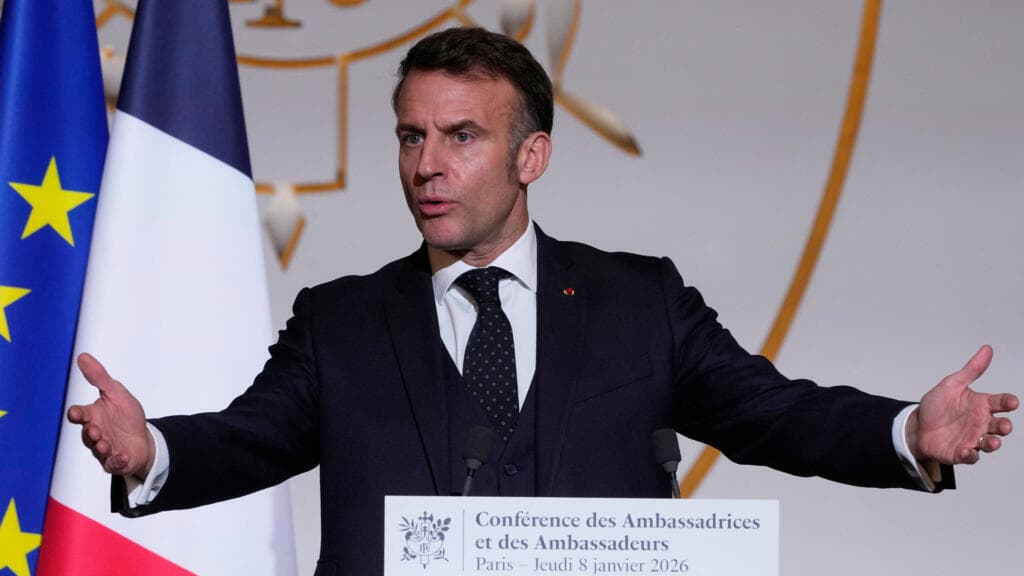
- Macron's Address: President Emmanuel Macron criticized the division of the world among great powers.
- Call for Cooperation:He emphasized the need for multilateralism to tackle global challenges.
- Global Tensions:Macron's remarks reflect concerns over rising geopolitical rivalries.
In a bold address, President Emmanuel Macron of France criticized what he termed the "temptation of dividing the world among great powers." This statement underscores his concern regarding the increasing geopolitical rivalry and the evolving global political landscape, where major nations are vying for dominance. Macron's remarks were made during a recent international conference focused on cooperation and security, where he articulated the pressing need for unity in the face of rising tensions.
Macron stressed that the world cannot afford to revert to a mindset characterized by territorial and ideological divisions, which historically lead to conflict rather than cooperation. "We should reject the idea of a few countries deciding the fate of others," he asserted, highlighting the dangers of unilateralism in international relations. His comments resonate with ongoing tensions between countries such as the United States, China, and Russia, each seeking to expand their global influence.
The French president advocates for a multilateral approach, urging nations to collaborate in addressing shared challenges such as climate change, security threats, and economic instability. He called for stronger international institutions and increased dialogue among nations, emphasizing that collective security and prosperity can only be achieved through cooperation rather than division. "In these times of change, solidarity between nations must prevail over personal ambitions," Macron stated, reinforcing the importance of unity in addressing global issues.
Macron's speech aligns with the sentiments of other world leaders who have similarly warned against the rise of nationalism and isolationism. As the challenges facing the international community become more complex, the need for cooperation is more critical than ever. The responses from other world leaders will be pivotal in shaping future international relationships and determining whether the global community can navigate these complexities without fracturing alliances.
In conclusion, Macron's advocacy for unity serves as a reminder that collaborative efforts are essential for tackling the pressing challenges of our time. His call for multilateralism and cooperation reflects a broader desire for a more stable and interconnected world, where nations work together rather than against each other.
Published by Banx Network. This article is part of the Banx decentralized media programme, powered by the BXE token on the XRP Ledger.



