
Key Highlights
- UN Secretary-General warns of escalating nuclear proliferation risks.
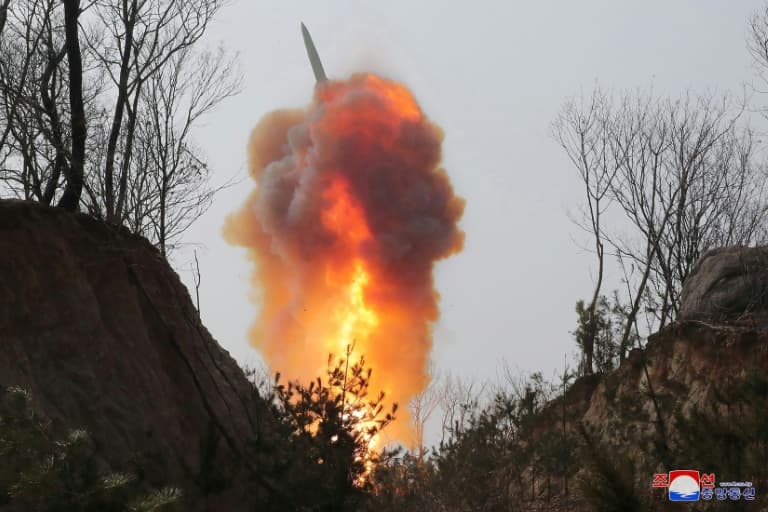
- France's Foreign Minister cites unprecedented threats from Iran and North Korea.
- Nine nuclear-armed states possess over 12,000 warheads, raising disarmament concerns.
Signatories of the nuclear non-proliferation treaty (NPT) convened at the United Nations on Monday, amid escalating concerns over a potential arms race. UN Secretary-General Antonio Guterres highlighted that "the drivers of proliferation are accelerating," warning that the stability provided by the treaty has been weakening over time.
Guterres stated, "For too long, the treaty has been eroding. Commitments remain unfulfilled. Trust and credibility are wearing thin." He expressed that humanity is merely "one misunderstanding, one miscalculation away from nuclear annihilation," stressing the urgent need for revitalization of the NPT. His remarks underscore the precarious state of global nuclear governance as tensions rise among nuclear and non-nuclear states alike.
France's Foreign Minister Jean-Noel Barrot remarked that the current risk of nuclear proliferation is unprecedented, particularly due to the ongoing programs in Iran and North Korea. He emphasized that geopolitical frictions exacerbated by conflicts have halted significant progress toward disarmament since the NPT's last review in 2022. The implications of these developments are profound, as they threaten to unravel decades of diplomatic efforts aimed at curbing the spread of nuclear weapons.
The conference president, Do Hung Viet, emphasized that while no immediate solutions are anticipated, a balanced outcome reaffirming core commitments could help stabilize the treaty's integrity. He noted that "the prospects of a new nuclear arms race are looming over us." This statement reflects a growing consensus among experts that without renewed commitment to disarmament, the world may face a dangerous escalation in nuclear capabilities.
The NPT aims to prevent the spread of nuclear weapons, promote disarmament, and foster cooperation regarding civilian nuclear energy. However, the nine nuclear-armed states collectively possess 12,241 nuclear warheads, with Russia and the United States holding nearly 90% of them. Recent modernization efforts and increasing tensions have resulted in grave concerns for disarmament advocates, who fear that the current trajectory could lead to a new arms race.
As the conference progresses, the presence of division over crucial issues, such as Iran's vice presidency at the meeting—deemed an "affront" by the U.S. envoy—may complicate consensus on key decisions, further raising alarms over the potential for a renewed nuclear arms race. The stakes are high, and the international community is watching closely as discussions unfold, hoping for a path forward that prioritizes peace and stability in a nuclear-armed world.
Published by Banx Network. This article is part of the Banx decentralized media programme, powered by the BXE token on the XRP Ledger.



