The sky has a way of reminding us of our place in the cosmos, often with a quiet grace that speaks louder than words. On August 12, 2026, the United Kingdom will witness its most significant solar eclipse since the historic event of 1999. For residents of the West Country, a region steeped in myth and natural beauty, this celestial dance offers a rare opportunity to look up and share in a moment of collective wonder. It is not just an astronomical event but a cultural touchstone, connecting generations through the shared experience of watching the day turn briefly into twilight.
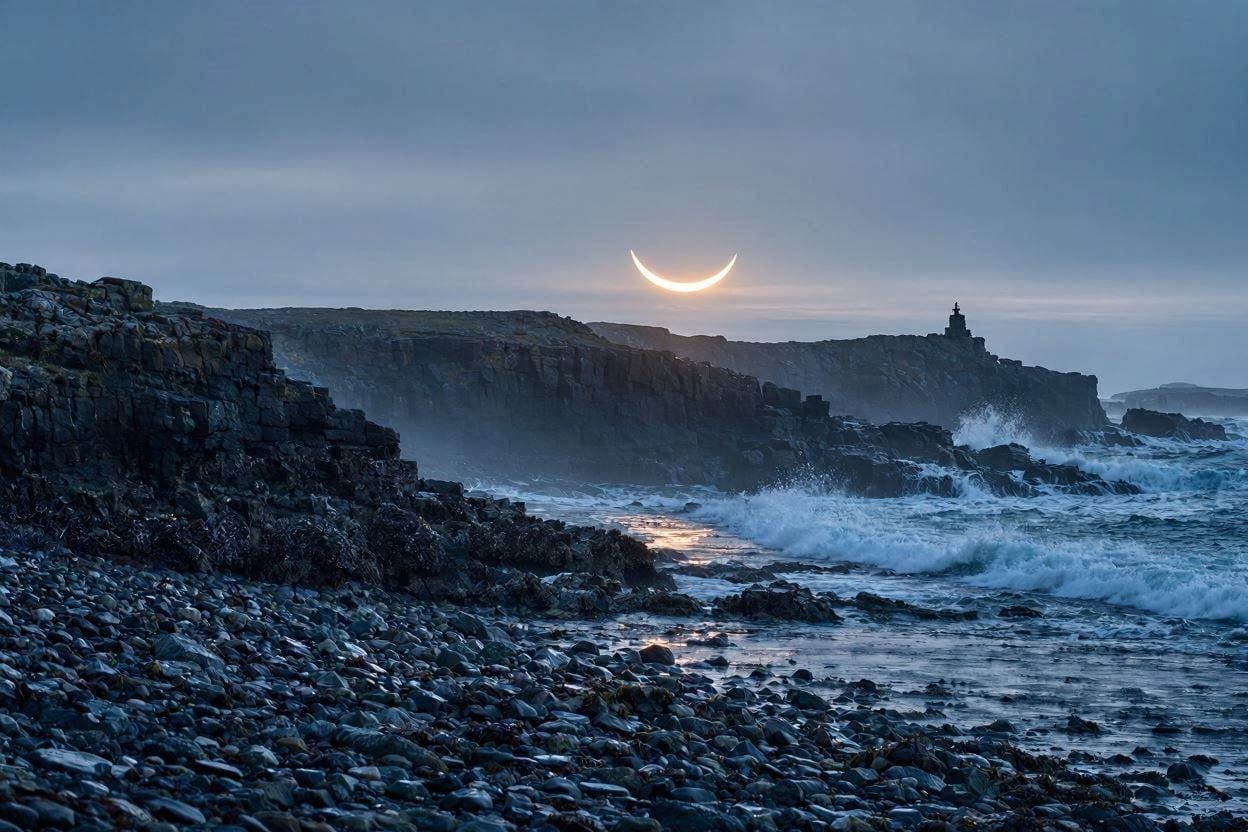
While the total eclipse will be visible only from Iceland, Greenland, and parts of Spain, the West Country of England is poised for a spectacular partial eclipse. In areas such as Cornwall and Devon, up to 95% of the Sun will be obscured by the Moon, creating a dramatic dimming of the light and a surreal atmosphere. This level of coverage is the highest seen in the UK since 1999, when the path of totality swept across the same counties, leaving an indelible mark on the collective memory of those who witnessed it.
For many, the 1999 eclipse was a defining moment, a day when schools closed and streets emptied as people gathered to watch the heavens. The upcoming event promises to evoke similar feelings of awe and community. In the West Country, where the landscape ranges from rugged coastlines to rolling hills, viewers will have numerous vantage points to observe the phenomenon. The interplay of light and shadow against the backdrop of historic landmarks adds a unique dimension to the experience.
Safety remains a paramount concern, as looking directly at the Sun can cause permanent eye damage. Experts urge observers to use certified eclipse glasses or indirect viewing methods, such as pinhole projectors. Local astronomy clubs and science centers are organizing events to guide the public, ensuring that everyone can enjoy the spectacle safely. These community efforts highlight the educational value of the event, turning a natural phenomenon into a lesson in physics and patience.
The timing of the eclipse, in the late afternoon, means that the Sun will be lower in the sky, potentially offering clearer views despite the summer heat. Weather forecasts will play a crucial role, as cloud cover can obscure the view. However, the West Country’s microclimates often provide unexpected breaks in the clouds, offering fleeting but breathtaking glimpses of the partially eclipsed Sun. Patience and flexibility are key virtues for any aspiring eclipse watcher.
Beyond the visual spectacle, the eclipse serves as a reminder of the precise mechanics of our solar system. The alignment of the Earth, Moon, and Sun is a testament to the predictable rhythms of nature, even in an era of rapid change. For a few minutes, the daily rush of life pauses, allowing people to connect with something timeless and universal. It is a moment of stillness in a busy world.
As the Moon begins to move away and the Sun returns to its full glory, the West Country will emerge from the brief twilight with a renewed sense of connection. The eclipse of 2026 may not bring totality, but its magnitude ensures it will be remembered as a significant event. It invites us to look up, to wonder, and to appreciate the delicate balance that allows life to flourish on our planet.
AI Image Disclaimer: The visual elements accompanying this report are AI-generated interpretations designed to reflect the atmospheric and astronomical context of the eclipse.
Sources: BBC News Royal Museums Greenwich Sky at Night Magazine
Published by Banx Network. This article is part of the Banx decentralized media programme, powered by the BXE token on the XRP Ledger.