The search for understanding often begins with a simple act: looking outward and asking what lies beyond familiar horizons. For astronomers studying distant worlds, that question has inspired increasingly ambitious instruments designed to peer deeper into the cosmos. The proposed Nautilus observatory concept reflects this enduring pursuit.
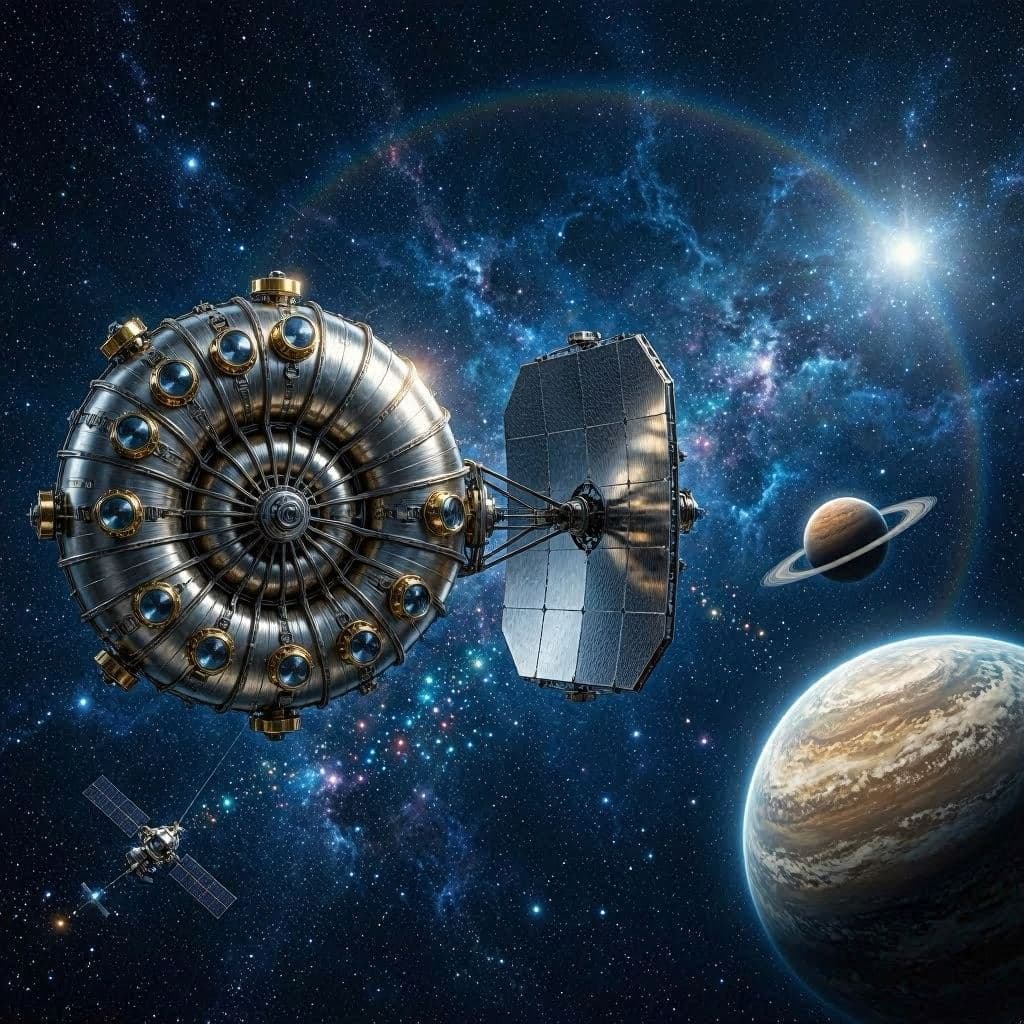
Researchers have introduced a new space observatory concept known as Nautilus, envisioned as a powerful instrument capable of studying the atmospheres of planets orbiting distant stars. The proposal seeks to expand humanity's ability to characterize exoplanets and search for potential signs of habitability.
Unlike traditional single-telescope missions, the Nautilus concept explores the possibility of using multiple coordinated observatories working together to collect unprecedented amounts of light from distant planetary systems.
Scientists explain that atmospheric observations are essential for understanding the composition, climate, and evolution of exoplanets. By analyzing light passing through or reflected by planetary atmospheres, researchers can identify molecules such as water vapor, carbon dioxide, methane, and oxygen.
The discovery of such compounds does not necessarily indicate life. However, studying atmospheric chemistry helps scientists determine whether distant planets possess conditions that might support biological processes.
Interest in exoplanet research has expanded dramatically over the past two decades. Thousands of planets beyond the solar system have already been confirmed, revealing extraordinary diversity among planetary environments.
Future observatories, including proposed concepts like Nautilus, are expected to complement existing facilities such as the James Webb Space Telescope by providing additional observational capabilities and broader survey coverage.
Although Nautilus remains a conceptual project requiring further development and evaluation, the proposal highlights the scientific community's continued commitment to exploring one of humanity's oldest questions: whether life exists elsewhere in the universe.
AI-generated image disclaimer: The illustrations accompanying this article are AI-generated visual representations created for editorial purposes.
Source Verification Check Sources verified from: arXiv scientific papers, NASA, peer-reviewed astronomy research, scientific institutions
Published by Banx Network. This article is part of the Banx decentralized media programme, powered by the BXE token on the XRP Ledger.