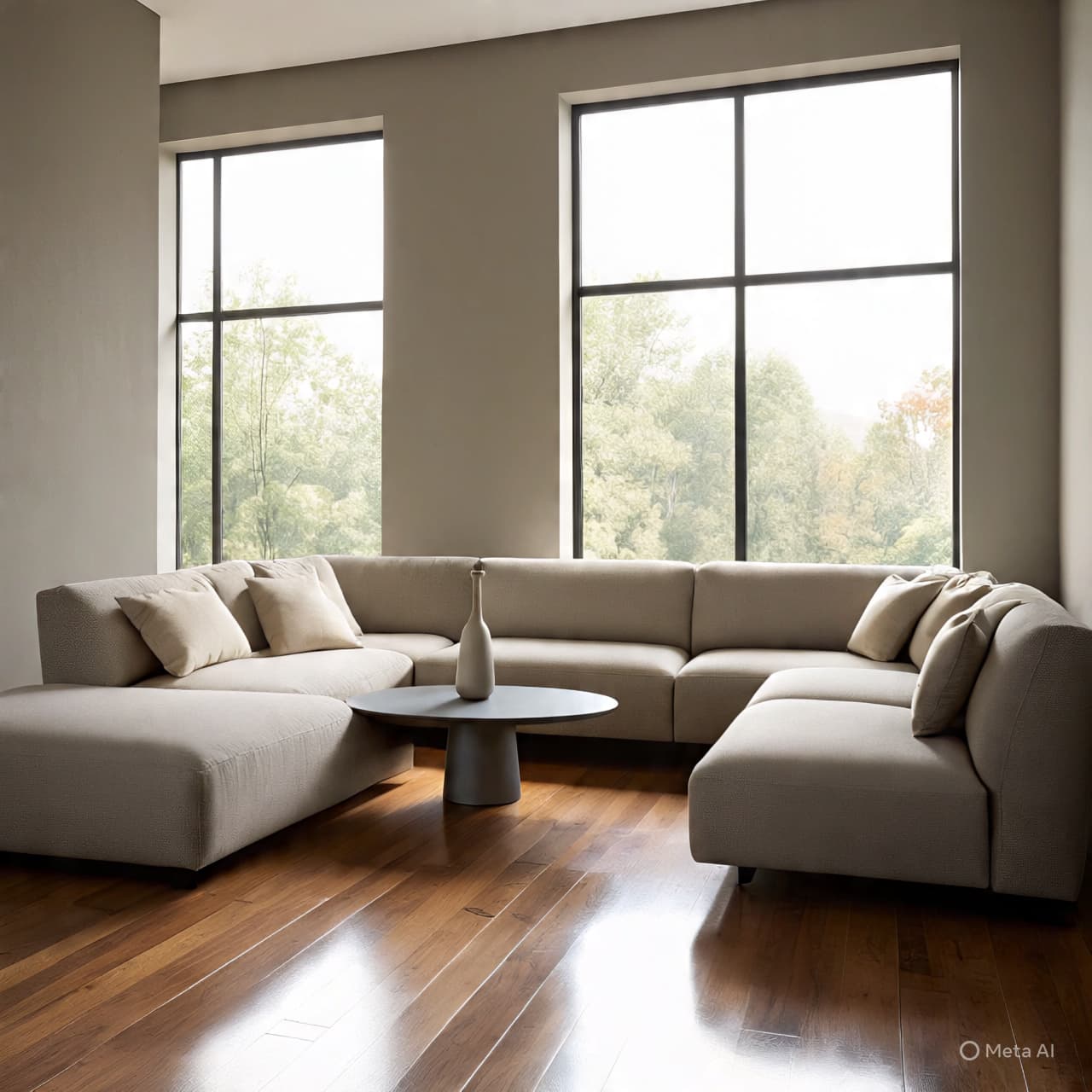
There is a particular hush that arrives when a room holds only what it needs. It is not silence, exactly, but a sense of ease — as if the walls themselves have exhaled. In a world that continually asks us to acquire, to store, to keep, choosing to live with less can feel like a small, private rebellion, carried out without noise or announcement.
Clutter rarely appears all at once. It accumulates gently, object by object, until spaces begin to feel crowded not only with things, but with decisions deferred and attention divided. Many people describe their homes as full, yet their days as restless. The connection between the two is subtle, but increasingly recognized: physical excess can quietly mirror mental strain.
Those who step toward decluttering often begin with practical intentions — to organize a drawer, clear a closet, simplify a shelf. Yet the experience frequently unfolds into something deeper. Removing what no longer serves creates pauses in daily life, moments where movement becomes easier and choices feel lighter. It is less about austerity than alignment, less about emptiness than clarity.
Psychologists note that environments shape behavior more than we often realize. Visual noise competes for attention, while simplified spaces allow the mind to rest. This does not require uniformity or minimal décor, only a thoughtful relationship with possessions. What remains gains presence. What leaves takes its quiet weight with it.
Living with less also alters how time is spent. Fewer items mean fewer distractions to manage, repair, or replace. Cleaning becomes simpler. Searching becomes shorter. Even decision-making softens. The result is not a dramatic transformation, but a steady one — an accumulation of small reliefs that, together, change the tone of daily life.
There is no single correct measure of “enough.” For some, it is a clear desk; for others, a pared-down calendar or a closet that finally closes without resistance. The liberation comes not from strict rules, but from intention — from choosing presence over possession, and space over excess.
In the end, living with less clutter does not demand withdrawal from the world. It offers a quieter way to meet it. In rooms that breathe and shelves that rest, many discover something unexpected: not loss, but room enough to feel at home again.
AI Image Disclaimer Images in this article are AI-generated illustrations, meant for concept only.
Sources The New York Times The Atlantic The Guardian Psychology Today Harvard Business Review
Published by Banx Network. This article is part of the Banx decentralized media programme, powered by the BXE token on the XRP Ledger.