The earth beneath our feet is usually stable, but occasionally it shudders with a force that reminds us of the planet’s dynamic interior. Predicting these seismic events has long been the holy grail of geology, elusive and fraught with uncertainty. Now, artificial intelligence is offering a new path forward, detecting subtle, hidden warning signs in seismic data that precede major earthquakes. This technological leap promises to enhance early warning systems and potentially save lives.
Traditional earthquake prediction relies on monitoring known fault lines and historical patterns. However, many quakes occur without clear precursors, making them difficult to forecast. AI algorithms, trained on vast datasets of seismic activity, can identify complex patterns and anomalies that human analysts might miss. These include minute changes in ground deformation, electromagnetic signals, or acoustic emissions that occur days or weeks before a significant event.
Recent studies have shown that machine learning models can achieve higher accuracy in predicting the timing and location of earthquakes compared to conventional methods. By analyzing real-time data from global sensor networks, these systems can flag potential risks with greater precision. This capability allows authorities to issue timely alerts, giving communities crucial minutes or hours to prepare.
The technology does not claim to predict every quake with perfect certainty, but it significantly reduces false alarms and improves lead time. For regions prone to seismic activity, such as California, Japan, and Turkey, this advancement is a game-changer. It transforms earthquake preparedness from a reactive measure to a proactive strategy, empowering residents and emergency responders.
Critics caution that AI is not infallible and requires continuous validation against real-world events. The complexity of geological processes means that no model can account for every variable. However, the integration of AI with traditional seismology creates a robust hybrid approach, leveraging the strengths of both human expertise and computational power.
Ethical considerations also play a role. Ensuring that warnings are communicated clearly and without causing panic is essential. Governments and tech companies must work together to establish protocols for disseminating AI-generated alerts, ensuring they are reliable and actionable. Public trust in these systems will depend on transparency and consistent performance.
As the technology matures, it holds the promise of reshaping how we live with seismic risk. It is not just about predicting disasters but about building resilience. By listening to the earth’s subtle whispers, AI helps us hear the warnings before the roar, offering a chance to protect what matters most.
Closing: Artificial intelligence is increasingly able to detect hidden precursors to major earthquakes by analyzing complex seismic data. This advancement improves early warning capabilities, offering hope for better disaster preparedness and reduced casualties in earthquake-prone regions.
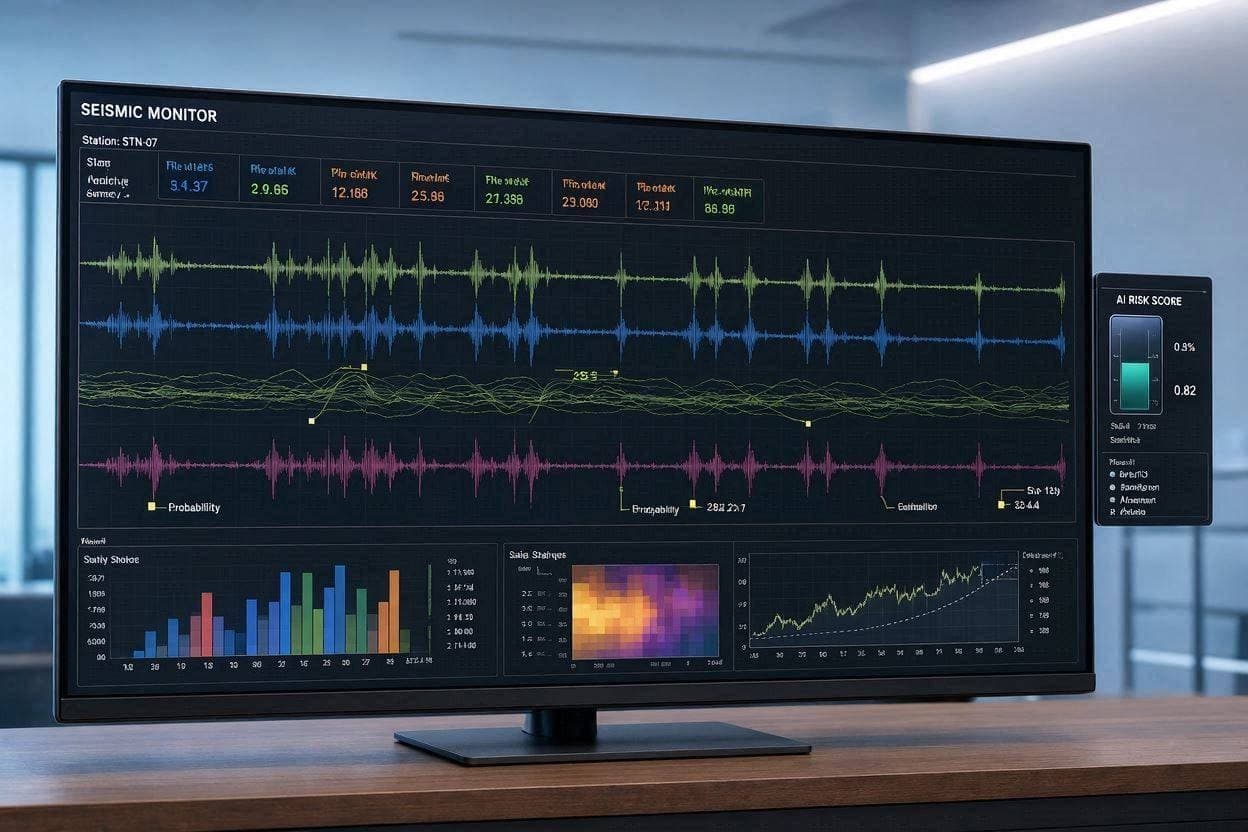
AI Image Disclaimer: Visuals accompanying this article are AI-generated and intended for illustrative purposes only.
Sources: Nature Journal, TechCrunch, Seismological Society Reports, Major News Networks
Published by Banx Network. This article is part of the Banx decentralized media programme, powered by the BXE token on the XRP Ledger.